Who is this guide for?

Photographing small glass details

You want to capture decorations or textures in close-up. Compare magnification, focusing distance and the space between the lens and the ornament. Photographing at close range also reduces depth of field. Sony UK explains working distance as the distance between the subject and the front element of the lens.

Creating consistent ornament photos

You’re photographing several ornaments in the same spot by a window and want to repeat the framing and lighting. Canon Europe recommends using a tripod for consistent product photography, so a fixed setup may matter more than a more expensive camera body.

Choosing one easy-to-use camera

You want to get started without changing lenses, and are weighing up the convenience of a fixed-lens camera against the flexibility of a mirrorless camera. The Consumers’ Association describes compact cameras as having a fixed lens; with a mirrorless camera, your lens choice depends on the mount and the lenses you select.

What should you look for when buying?

Compact camera with close-up mode

A good fit if: you want to use one camera and avoid changing separate lenses. OM Digital Solutions lists the Tough TG-7 as having a built-in zoom and the ability to focus as close as 1 cm.

Bear in mind: the stated minimum distance doesn’t tell you whether your setup will leave enough room for lighting and framing. The lens isn’t interchangeable.

Mirrorless camera with a macro lens

A good fit if: you want to choose an interchangeable lens for both detailed close-ups and wider shots. Examples include the Canon EOS R50 with RF 35mm F1.8 MACRO IS STM, the Nikon Z50II with NIKKOR Z MC 50mm f/2.8, and a Sony camera with an E-mount and E 30mm F3.5 Macro.

Bear in mind: the macro lens is a separate component, unless the offer clearly includes that specific lens. Canon lists a maximum magnification of 0.5× for the lens mentioned; Nikon and Sony specify 1:1 for their respective lenses.

What to consider What should you check? Who is this most important for?
Close-ups and working distance Compare magnification, focusing distance and working distance for each camera-and-lens combination; these are different things. If I want small decorations to fill the frame, I need to know how much detail and working space the lens actually offers. Around 36% of consumers prioritise magnifying details.
Reflections in glass See whether you can adjust your camera angle, background and window light. If you’re considering a polarising filter, check that it’s the right size and that it won’t remove the shine you want to keep. If windows or the room are reflected in my ornament, I want to be able to control the reflections without losing the shape of the glass. Around 29% of consumers prioritise reflection control.
A repeatable setup Check whether there’s room for a tripod and whether you can set up the camera securely in the position you want. When I’m photographing a series of ornaments, I want to keep the angle and background consistent. Around 21% of consumers place particular importance on repeatable photos.
Simplicity and lens choice Check which camera body and lens are included, and whether the lens is suitable for the close-ups you want. If I want to get started without choosing a separate lens, I need to know exactly what’s included in the complete kit. Around 14% of consumers prioritise a simple setup.

Common buying mistakes

  • Looking only for ‘macro’ or the shortest focusing distance

    Not every lens measures focusing distance from the front. Magnification and working distance together determine how much room you have to photograph a small glass detail.

    Check the maximum magnification, lens mount and working distance for the exact camera-and-lens combination.

  • Expecting a new camera body to solve reflections in glass

    The reflections you see also depend on the angle of the light and your viewing angle. Reducing reflections isn’t always desirable, as highlights can help show the shape of the ornament.

    First, try a different camera angle or adjust your setup. Only consider a suitable filter afterwards if you want to reduce reflections.

  • Assuming a camera body or standard zoom kit is a macro kit

    The stated 0.5× and 1:1 magnifications apply to specific lenses. They don’t automatically apply to every camera body or kit lens.

    Check the full lens name and what’s included in the bundle before comparing cameras or kits.

Brands and relevant camera models

OM SYSTEM

The Tough TG-7 is a compact camera with a built-in zoom and close-up mode. It’s worth considering if you want to try capturing small details without changing lenses.

  • OM Digital Solutions lists a minimum focusing distance of 1 cm.
  • That distance doesn’t guarantee you’ll have enough room for lighting and framing in every setup. The lens isn’t interchangeable.

Canon

The EOS R50 has an RF mount. The RF 35mm F1.8 MACRO IS STM is a separate lens for close-ups and more general photography.

  • Canon UK lists a maximum magnification of 0.5× for this lens.
  • Check whether an offer includes the camera body only, a standard zoom kit or this specific macro lens.

Nikon

The Z50II uses the Nikon Z mount. The NIKKOR Z MC 50mm f/2.8 is a separate macro lens for detailed photography.

  • Nikon UK lists 1:1 magnification and a minimum focusing distance of 0.16 m for this lens.
  • For close-up photography, Nikon states that there’s around 5 cm between the front of the lens and the subject. Bear this in mind when positioning the light and ornament.

Sony

The ILCE-6400 uses an E-mount. The E 30mm F3.5 Macro is a separate APS-C macro lens.

  • Sony UK lists 1:1 magnification for the E 30mm F3.5 Macro.
  • A close-up specification on its own doesn’t tell you how much practical space you’ll have for lighting and framing. Check exactly which camera body and lens version are included in the offer.

Cameras at Joybuy

These cameras fit into the broader camera category. For glass ornaments, check separately that your chosen camera and lens support the close-ups you want.
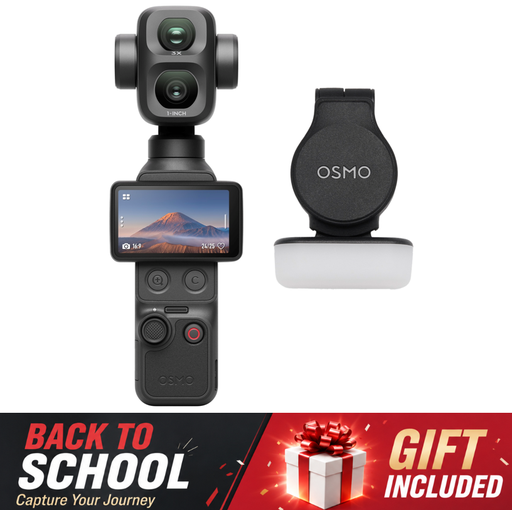
Osmo Pocket 4P Standard Combo in black

Osmo Pocket 4P – Standard Combo – Black

For glass ornaments in window light: before buying, check that this camera supports the close-ups you want and that you can control reflections with your setup.

Joybuy
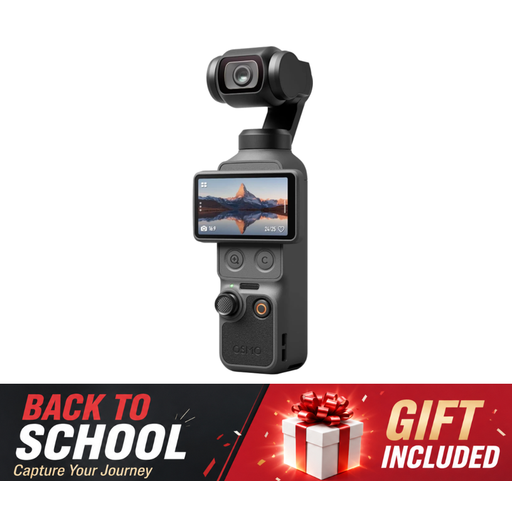
DJI Osmo Pocket 4 Standard Combo

DJI Osmo Pocket 4 Standard Combo

For glass ornaments in window light: before buying, check that this camera supports the close-ups you want and that you can control reflections with your setup.

The product name lists a 1″ CMOS sensor, 4K/240fps, 3-axis stabilisation, 2× lossless zoom, 107GB of built-in storage and a 2″ rotating screen.

Joybuy
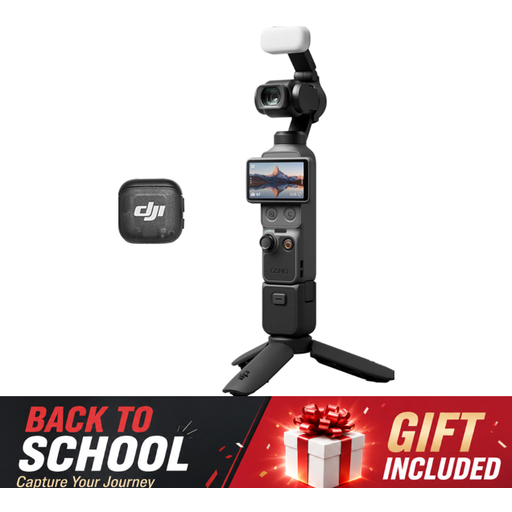
Osmo Pocket 4 Creator Combo

Osmo Pocket 4 Creator Combo

For glass ornaments in window light: before buying, check that this camera supports the close-ups you want and that you can control reflections with your setup.

The product name lists a 1″ CMOS sensor, 4K/240fps, 3-axis stabilisation, 2× lossless zoom, a 14-stop dynamic range, 107GB of built-in storage and a 1/4″ thread in the handle.

Joybuy
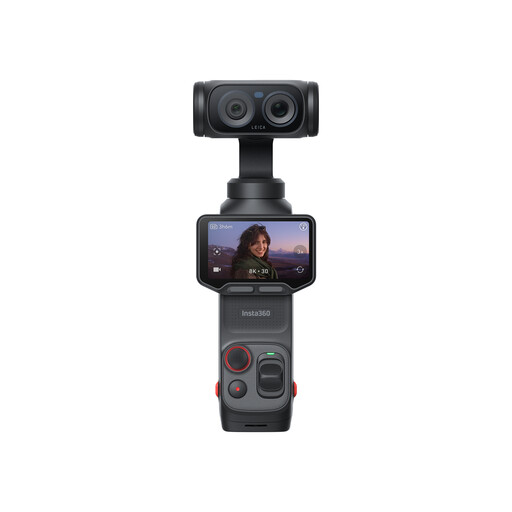
Insta360 Luna Ultra Standard Bundle in Cosmic Black

Insta360 Luna Ultra Standard Bundle – Cosmic Black

For glass ornaments in window light: before buying, check that this camera supports the close-ups you want and that you can control reflections with your setup.

Joybuy
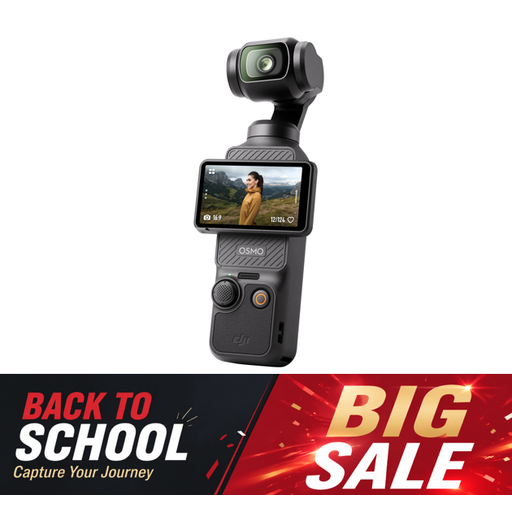
DJI Osmo Pocket 3 vlogging camera

DJI Osmo Pocket 3

For glass ornaments in window light: before buying, check that this camera supports the close-ups you want and that you can control reflections with your setup.

The product name lists a 1″ CMOS sensor, 4K/120fps, 3-axis stabilisation, fast focusing, face and subject tracking, and a 2″ rotating touchscreen.

Joybuy

Frequently asked questions

Do I always need a macro lens for a glass ornament?

No, not if you mainly want to photograph the whole ornament. If you want small details to fill a large part of the frame, magnification and working distance matter more than simply having ‘macro’ in the name. A compact camera with a close-up mode is another option.

How should I set up a camera by the window for a series of ornament photos?

Use a stable surface or a tripod if you want to repeat the framing. Keep the background consistent and check which parts of the window or room are reflected in the glass before each shot. Adjust the camera angle if needed.

Should I factor in a polarising filter and a tripod?

Only if your setup needs them. A tripod can help keep the camera position and framing steady. A suitable polarising filter can reduce certain reflections in glass, but it may also remove highlights you want to keep. Check separately whether accessories are included in the kit on offer.

What are my rights when buying a camera online in the Netherlands?

For eligible online purchases from a business, the Dutch government says you’ll often have a 14-day cooling-off period, with exceptions depending on the sale and the product. If a product is faulty, you can claim under the statutory guarantee from the seller. The Dutch government states that there is no fixed statutory guarantee period covering all products in the Netherlands.
