Which camera is right for you?

Photographing the whole tart

You want to capture the tart, its plate and perhaps part of your table setting. Compare the field of view and the lens supplied with the camera, not just the camera body. Canon Nederland Store covers both wide shots of tarts and close-ups in its food photography guide.

Photographing fruit details

You want to fill the frame with fruit, icing or pastry crust. So pay particular attention to the close-up capabilities of the specific lens. Canon Europe and Nikon Nederland describe macro lenses for this type of detailed photography.

Getting started with ease

You want to take photos at home with as few separate components as possible, and are weighing up a fixed zoom lens against a mirrorless camera with interchangeable lenses. Canon’s model specifications show that these two options offer different lens choices.

What should you look for?

What to consider What should you check? Who is this important for?
Getting the whole tart in the frame Check which lens is included and whether its field of view suits your working distance and desired composition. If I want to capture the whole tart, including the plate and styling, I’ll focus on the field of view and the lens included; around 33% of consumers prioritise a full shot of the tart.
Getting close to small details Look up the maximum magnification and focusing distance of the specific lens, and check whether it’s included with the camera. If I want to fill the frame with the texture of fruit, icing or pastry crust, close-up capability is my main concern; around 27% of consumers prioritise detail.
Colour and lighting Check the model’s white balance and RAW settings, and think about how you’ll keep the lighting consistent while taking photos. If I want to control the colours of the fruit and the lighting in my home studio, I’ll look for control over both; around 20% of consumers prioritise colour and lighting.
A simple, complete set-up Check whether the offer includes a body with a lens, a body only or a camera with a fixed lens. If I want to get started without lots of separate components, I’ll weigh up a fixed lens against the option of changing lenses later; around 20% of consumers make simplicity their top priority.

What to watch out for when buying

  • Comparing camera bodies alone

    With a mirrorless camera, your framing and magnification depend in part on the lens. The camera body alone won’t tell you which close-ups you can take with the set on offer.

    Check the full model names of both the body and lens, and make sure the lens is actually included in the offer.

    If the set doesn’t include the lens you need, you’ll need to buy a suitable one separately for that shot.

  • Assuming ‘macro’ means 1:1 magnification

    Maximum magnification varies by lens and focusing mode. Canon specifies a maximum of 0.25× for the RF-S 18-45mm in manual focus mode; according to Nikon, the Nikon Z MC 50mm f/2.8 offers 1:1 magnification.

    Compare the magnification ratios of the specific lenses and decide whether you want a close-up of the tart or a small detail that fills the frame.

    For very small details, you may need a different lens if the set you’ve chosen can’t achieve the composition you want.

  • Expecting a new camera to automatically compensate for changing light

    Canon explains that light sources affect how colours appear, and that white balance and RAW settings play a part.

    Keep your lighting set-up as consistent as possible throughout a series of photos, and check the white balance in a test shot.

Camera brands to compare

Canon

The Canon EOS R50 is an interchangeable-lens camera, while the PowerShot G7 X Mark III has a fixed zoom lens.

  • Canon specifies an RF mount for the EOS R50, with support for RF and RF-S lenses.
  • According to Canon, the RF-S 18-45mm achieves a maximum magnification of 0.25× in manual focus mode.
  • According to Canon, the EOS R50 doesn’t have sensor-shift stabilisation. Also check whether the lens you want is included in the set you’re considering.
  • The fixed lens on the PowerShot G7 X Mark III can’t be replaced with another lens.

Nikon

The Z50II offers an interchangeable-lens option for shots of whole tarts, as well as the option to use a separate macro lens.

  • Nikon describes the Z50II as having a tilting touchscreen and adjustable Picture Controls.
  • According to Nikon, the separate NIKKOR Z MC 50mm f/2.8 offers 1:1 macro magnification and can also be used with Z-series DX cameras.
  • Check whether the NIKKOR Z MC 50mm f/2.8 is included in the specific offer; it’s a separate lens model.
  • Picture Controls are settings and don’t, on their own, measure colour accuracy.

Sony

The ILCE-6400 is an APS-C mirrorless camera with an E mount. The lens you choose will partly determine how you can frame your tart.

  • Sony specifies 24.2 effective megapixels and RAW support for the ILCE-6400.
  • Sony lists the FE 50mm F2.8 Macro as compatible with APS-C cameras with an E mount.
  • The FE 50mm F2.8 Macro is a separate lens; the camera’s name doesn’t confirm that it’s included in the offer.
  • These specifications don’t prove that this camera takes better food photos than models from other brands.

Joybuy products for home studio photography

This selection includes compact cameras and video cameras whose product names also describe them as suitable for photography. For fruit tart photos, check that the specific version can focus close enough and capture enough detail in still images.

DJI Osmo Pocket 4 Standard Combo pocket camera

DJI Osmo Pocket 4 Standard Combo

The product name describes this model as a camera for photography and video. Check its close-up capabilities and the detail captured in still images for your tart photos.

The product name lists a 1″ CMOS sensor, 4K/240fps, 2× lossless zoom, 107GB of built-in storage and a rotating 2″ screen.

Joybuy

KOMERY G7 5K digital camera, white

KOMERY G7 5K, white

The product name describes this camera as portable and suitable for photography. Check whether its lens can focus close enough to capture small details on a tart.

The product name lists 80MP UHD and 18X zoom. The zoom specification alone doesn’t tell you how much magnification you can achieve at close range.

Joybuy
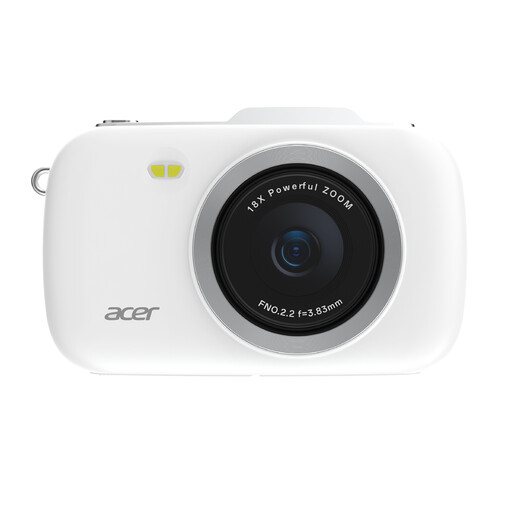
KOMERY G7-A 4K digital camera, white

KOMERY G7-A 4K, white

The product name describes a portable camera for photography. Check the close-up capabilities of the specific version before choosing it for detailed shots of fruit or pastry crust.

The product name lists 80MP UHD and 18X zoom. This zoom figure alone doesn’t tell you how close the camera can focus.

Joybuy

Songdian Pocket Camera 4K 44MP, pink

Songdian Pocket Camera 4K 44MP, pink

The product name describes this as a camera for photography and video. Check whether its focusing distance suits the type of tart photos you want to take.

The product name lists 44MP and 16X zoom. The stated zoom figure alone doesn’t tell you what kind of close-up framing is possible.

Joybuy
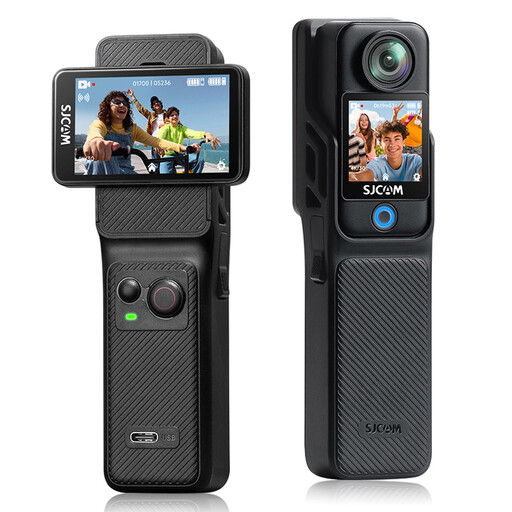
SJCAM C400 4K action camera

SJCAM C400 4K action camera

This model is described as an action camera. Check whether its field of view and focusing capabilities suit the framing and still photos you want.

The product name lists 16MP photos, 4K/30fps and a 154° field of view.

Joybuy

Frequently asked questions

Do you need a 1:1 macro lens straight away for a fruit tart?

No, not for every type of shot. First decide whether you want to photograph the whole tart or fill the frame with a small piece of fruit. Canon specifies a maximum of 0.25× for the RF-S 18-45mm in manual focus mode; according to Nikon, the Nikon Z MC 50mm f/2.8 offers 1:1 magnification for small details.

What can help when setting up your camera and lighting?

Take some test shots and assess the exposure and white balance under the lighting you’ll use to photograph the tart. Canon describes a professional food photographer doing this and using a tripod; it’s a practical approach, not a requirement or a guarantee of a particular result.

What should you check after using your camera or if it develops a fault?

Follow the instructions for the specific camera model and lens when cleaning and storing them. If a product breaks sooner than you could reasonably expect during normal use, ACM ConsuWijzer points out that you have a legal guarantee from the seller; this is separate from any manufacturer’s warranty.

Can you return a camera bought online in the Netherlands?

According to ACM ConsuWijzer, for an online purchase you have up to 14 days to change your mind after the product has been delivered. Check the terms and conditions that apply to your purchase; the right to change your mind is different from a guarantee in the event of a fault.

Can you publish a photo of a cake you made yourself?

According to the Dutch government, copyright generally arises automatically on photos you take yourself. If your publication also uses copyright-protected photos taken by someone else, you’ll need the creator’s permission.
