Who should consider this camera choice?

Online shop owner with regular photo shoots

You want fruit colours and presentation to look consistent from one shoot to the next. So start with lighting, white balance and a fixed setup. Adobe describes controlled lighting and an uncluttered background as elements of product photography.

Creator of detailed product shots

You want to show small parts of an arrangement individually. Compare the magnification and working distance of the exact lens, not just the camera body; Canon and Nikon specify their close-up capabilities for each lens.

Beginner working with different arrangements

You want to frame both small and large arrangements without buying a specialist lens straight away. First, assess test shots taken with your current smartphone or a standard zoom lens; Adobe lists a smartphone as one possible way to take product photos.

What should you look for in a camera for fruit photos?

Existing smartphone

Choose this option if: you mainly photograph complete arrangements and want to find out whether your current camera captures enough detail and produces consistent colours.

Trade-off: you won’t need to buy a camera straight away, but you won’t automatically get the lens choice needed to fill the frame with small details.

Mirrorless camera with standard zoom

Choose this option if: you regularly photograph arrangements in different sizes and want to control the framing and lens choice yourself.

Trade-off: magnification depends on the lens supplied. Canon lists a maximum of 0.25× in MF mode for the RF-S 18-45mm; the Nikon Z50II kit includes a 16-50mm zoom, not a separate macro lens.

Mirrorless camera with a separate close-up lens

Choose this option if: you need small details, such as the texture of fruit, to fill the frame and the working distance suits your table and lighting setup.

Trade-off: you’ll be adding a lens and need to allow enough room for the camera and lighting. Nikon lists 1:1 magnification for the separate NIKKOR Z MC 50mm f/2.8, not for the standard zoom kit.

What to consider What to look for when buying Who is this most important to?
Consistent fruit colours Check whether you can reproduce the exposure and white balance throughout a photo series. RAW files can help with editing, but they can’t replace consistent lighting. When I photograph product ranges, I want the same type of fruit to look similar in every photo. Around 36% of consumers put colour consistency first.
Showing small details Compare the maximum magnification and working distance of the exact kit lens or additional lens. When small details need to fill the frame, I want to know whether there’s enough room for the camera and lighting. Around 29% of consumers give detail the highest priority.
Framing complete arrangements Check the zoom range, the distance from the table and which lens is included in the kit. When arrangements vary, I want to frame the whole product without having to rebuild my setup each time. Around 21% of consumers start with the overview framing they want.
Simple workflow Compare the controls and file options with the way you currently take and edit photos. When I photograph lots of products myself, I want the setup and file handling to fit the way I work. Around 14% of consumers make their workflow their top priority.

Pitfalls when buying a camera for fruit photography

  • Assuming a standard zoom is a complete macro solution

    The magnification of a separate macro lens doesn’t automatically apply to the lens in a camera kit. A standard zoom may be designed for overview shots, while small details may require a different lens.

    Before buying, compare the kit contents, maximum magnification and working distance of the exact lens you plan to use.

  • Upgrading your camera without controlling the lighting

    A new camera won’t automatically prevent colour differences caused by changing light sources during a photo series.

    Test the same fruit arrangement in lighting that’s as consistent as possible, and check the white balance before comparing camera bodies.

    A fixed setup can also take time to prepare, including setting up the lighting and background.

  • Assuming consumer rules automatically apply to a business purchase

    The Netherlands Authority for Consumers and Markets’ guidance on statutory guarantees concerns products sold to consumers. So don’t assume, without checking, that the same terms apply to every business purchase.

    Before placing your order, ask the seller which warranty and returns terms apply to your purchase as a business customer.

Camera brands to consider

Canon

The EOS R50 with RF-S 18-45mm is a standard zoom option to consider for overview shots; a separate RF lens may offer different close-up capabilities.

  • Canon Netherlands lists an 18–45 mm zoom range and maximum magnification of 0.25× in MF mode for the RF-S 18-45mm.
  • That magnification doesn’t mean the kit includes a separate macro lens. Check exactly which lens is included.

Nikon

The Z50II with NIKKOR Z DX 16-50mm VR is a standard zoom option; Nikon also offers a separate Z MC 50mm f/2.8 for close-up details.

  • Nikon lists 1:1 magnification for the separate Z MC 50mm f/2.8.
  • This specification doesn’t apply to the 16-50mm kit lens. Check whether you need the additional lens and whether it fits your budget.

Sony

The ZV-E10 may suit a workflow that combines photos with other content, with interchangeable lenses and RAW shooting.

  • Sony Netherlands specifies 24.2 effective megapixels and RAW shooting for the ZV-E10.
  • Sony lists maximum magnification of 0.215× for the separate E PZ 16-50mm OSS. Check the exact lens version included in the kit you’re considering.

Fujifilm

The X-S20 kit with XC15-45mm is a standard zoom option for anyone considering a RAW workflow.

  • Fujifilm specifies an X mount, 26.1 effective megapixels and RAW shooting for the X-S20; the kit mentioned includes the XC15-45mm.
  • The body specifications alone don’t show whether the kit lens is suitable for macro details that fill the frame.

Joybuy cameras

You can assess the Joybuy cameras below, model by model, to see how well they suit fruit photography. Check whether the exact lens, the framing you want and the shooting workflow suit your fixed or changing setup.
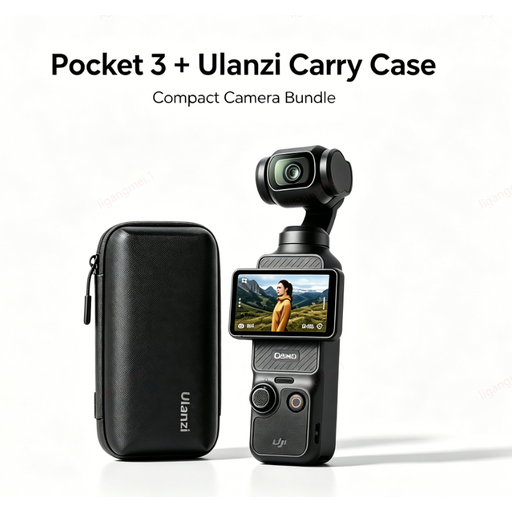
DJI Pocket 3 Camera with Ulanzi Custom Storage Carry Case

DJI Pocket 3 Camera with Ulanzi Custom Storage Carry Case

Assess this pocket camera for fruit photography based on the framing you want and the colour consistency of your setup.

The product name mentions a Ulanzi Custom Storage Carry Case.

View at Joybuy
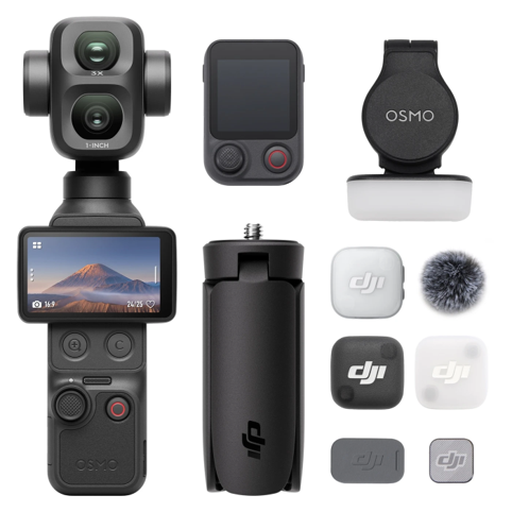
Osmo Pocket 4P Vlog Combo, black

Osmo Pocket 4P Vlog Combo, black

Consider this model only if its product framing and workflow suit the way you take fruit photos.

The product name specifies the Vlog Combo version in black.

View at Joybuy
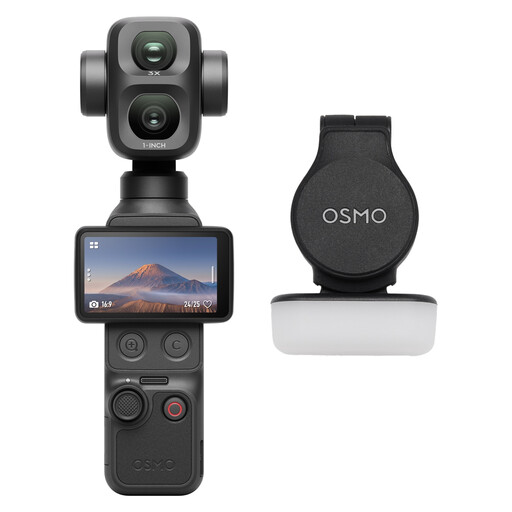
Osmo Pocket 4P Standard Combo, black

Osmo Pocket 4P Standard Combo, black

Compare this version with the framing you want and your fixed shooting setup before choosing it for fruit photography.

The product name specifies the Standard Combo in black.

View at Joybuy

DJI Osmo Pocket 4 Standard Combo

DJI Osmo Pocket 4 Standard Combo

The listed zoom may be useful if you want to compare different framings from the same position; also check whether the shooting workflow suits your product photos.

The product name lists a 1″ CMOS sensor, 4K/240fps, 3-axis stabilisation, 2× lossless zoom, 107GB of built-in storage and a 2″ rotating screen.

View at Joybuy
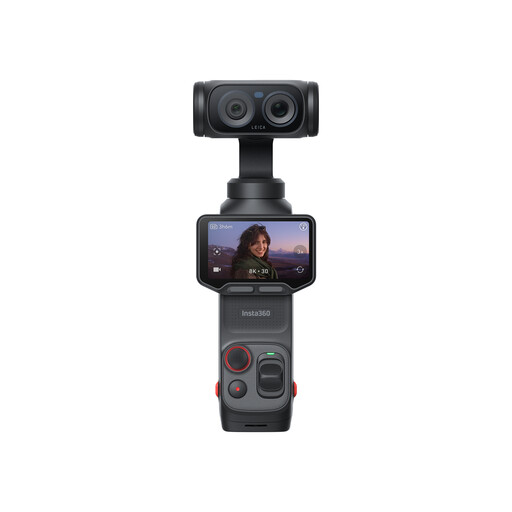
Insta360 Luna Ultra Standard Bundle Cosmic Black

Insta360 Luna Ultra Standard Bundle Cosmic Black

Assess this version based on the lens and shooting specifications that matter for the fruit photos you want to take.

The product name specifies the Standard Bundle in Cosmic Black.

View at Joybuy

Frequently asked questions

Do you need to buy a new camera straight away for fruit photos?

No, not necessarily. First, take some test shots with your current smartphone in controlled lighting against a simple background. Then assess whether the framing, detail and consistency are good enough for your needs; Adobe lists a smartphone as one possible way to take product photos.

How can you keep fruit colours consistent between photo shoots?

Keep your lighting setup as consistent as possible and check the white balance if the lighting changes. Nikon recommends setting the white balance in advance and aiming for consistent lighting. RAW files can make adjustments afterwards easier, but they won’t eliminate changes in lighting.

Does a mirrorless camera usually come with a macro lens?

Not with the Canon EOS R50 kit with RF-S 18-45mm or Nikon Z50II kit with 16-50mm VR described here: both kits include a standard zoom. The 1:1 magnification listed by Nikon applies to the separate Z MC 50mm f/2.8.

What costs and terms should you check before buying a camera for your business?

If you need them, factor an additional lens, lighting, a tripod and a memory card into your choice. Ask the seller which warranty and returns terms apply to your business purchase. The Netherlands Authority for Consumers and Markets’ guidance on statutory guarantees concerns sales to consumers and doesn’t set the same terms for every business purchase.

What should you bear in mind when taking photos for a Dutch fruit shop?

Make sure your photos don’t give a misleading impression of the product you’re selling; the Netherlands Authority for Consumers and Markets warns sellers not to mislead consumers about what they offer. Photos may be protected by copyright, so check the usage rights if someone else took them.
