
Photographers of complete fruit still lifes
You want to frame a bowl or table arrangement from different angles. A manageable lens and control over the window light are important.


For a complete fruit arrangement, a camera with a suitable standard zoom is a sensible starting point; for small details, the lens’s magnification and working distance matter most. When window light varies, control over exposure and white balance can help, while a tripod lets you keep a still arrangement in place and use slower shutter speeds. A different camera body won’t, by itself, replace the lens or setup that suits the framing you want.
You want to frame a bowl or table arrangement from different angles. A manageable lens and control over the window light are important.
You want to capture small textures at a larger scale. So look at lens magnification, working distance and a stable setup, not just the camera body.
You take photos repeatedly in changing daylight and want to control exposure and white balance so the colours look consistent across a series of images.
Choose this option: if you mainly want to photograph the whole fruit bowl and try different crops.
Bear in mind: being able to focus at close range doesn’t automatically mean small details will fill the frame.
Choose this option: if veins, droplets or individual small fruits need to fill the frame.
Bear in mind: an extra lens needs a compatible mount and more room in your setup; check the working distance too.
Choose this option: if your current camera can achieve the framing you want, but the lighting or colours need attention.
Bear in mind: better lighting won’t give you greater magnification or a new lens mount.
| What to consider | What should you look for? | Who is this important for? |
|---|---|---|
| Framing the whole arrangement | Check which lens is included, its zoom range and the space around your table. The Canon kit lens mentioned is 18–45 mm; the Nikon Z50II standard kit includes a 16–50mm lens. | If I want to photograph a bowl from different angles, I want to adjust the framing without constantly changing lenses. Around 33% of consumers give the complete arrangement top priority. |
| Photographing small details | Compare the specific lens’s maximum magnification, working distance and mount. A short minimum focusing distance alone doesn’t tell you how large a detail will appear in the frame. | If I want to capture small textures so they fill the frame, I focus on magnification and the space between the lens, fruit and light. Around 27% of consumers prioritise close-ups. |
| Sharpness in changing window light | Check whether you can adjust the exposure and whether a tripod will fit in your shooting space. A tripod keeps the whole setup still; image stabilisation doesn’t. | When daylight changes during my session, I want to keep the exposure and sharpness of a still arrangement under control. Around 27% of consumers give window light and exposure top priority. |
| Consistent colour | Check the white balance settings. If consistent colours matter, a neutral colour reference in the same lighting setup can help. | If I take a series of fruit photos in changing daylight, I want the colours to look consistent from one image to the next. Around 13% of consumers prioritise colour consistency. |
The Canon RF-S 18-45mm kit zoom and the separate RF macro lens have different maximum magnifications. Working distance matters for close-ups too.
Compare the lens’s magnification, mount and working distance with the size of the details you want to photograph.
A tripod can keep your framing in place at slower shutter speeds while you adjust the fruit or lighting.
Decide whether you’ll mainly shoot handheld or from a fixed position at the table, and allow for the space a tripod takes up.
In the Sony offer reviewed, the Joybuy title says ‘OSS II’, while the visible product text only identifies α6400 / ILCE-6400 and doesn’t clearly specify the lens version.
Before buying, check the full model code and what’s included in the kit; don’t rely on a similar product title alone.
If the kit includes a different lens from the one you need, you may have to buy a compatible lens separately.
The EOS R50 with RF-S 18-45mm is a specific APS-C option for complete compositions; the RF 35mm F1.8 MACRO is a separate lens for close-ups.
The Z50II kit with NIKKOR Z DX 16-50mm is a standard zoom option for varying the framing of a still life.
The α6400 has an E-mount; the separate E 30mm F3.5 Macro is one possible close-up option for cameras with this mount.
The X-T5 is an APS-C body; choose an X-mount lens separately, based on the framing you want and the space available on your table.
The products below are camera options to consider alongside the framing and shooting style you want. Before buying, check that the lens and features suit fruit arrangements in window light.
 No image available
Consider whether this camera suits the framing and setup you want to use for your fruit photos.
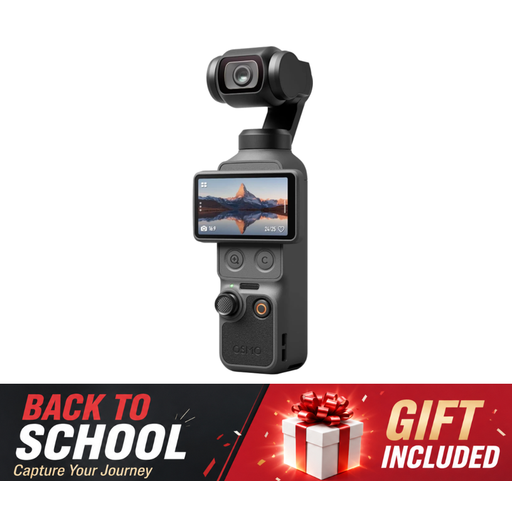 No image available
Consider this camera if you’re looking for a compact option, and check whether the lens suits the composition you want.
The product title lists a 1″ CMOS sensor, 4K/240fps video, 2× lossless zoom, 107 GB of built-in storage and a 2″ rotating screen.
 No image available
Compare the stated zoom with the framing you need for your fruit composition.
The product title lists 4K, 80MP and 18X zoom.
 No image available
Check whether the stated zoom and other features suit the framing you want to achieve.
The product title lists 12X optical zoom, 4K and 64MP.
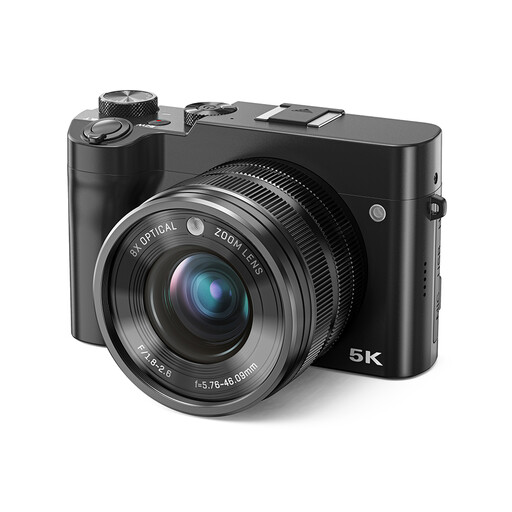 No image available
See whether this camera suits the way you want to frame and focus on your fruit arrangement.
The product title lists 8X optical zoom, 5K and 64MP.
Not necessarily: a standard zoom can be a practical choice for the complete arrangement. Choose a macro lens if small details don’t appear large enough with your current lens, and check the working distance too.
For still fruit, you can mount the camera on a sturdy tripod and use a slower shutter speed if needed. After adjusting the composition, check again that the camera is stable and the part you want is in focus.
Before buying, check which lens and other components are actually included; a camera body and a separate macro lens are not the same purchase. The Government of the Netherlands says that when you buy as a consumer, you’re entitled to a product that works as it should, and if there’s a problem, you should generally contact the seller. An additional warranty doesn’t replace this statutory right.
For online consumer purchases, a 14-day cooling-off period applies in many cases. The Government of the Netherlands lists some exceptions, so check which rules apply to your specific purchase.