Start with the smallest nib detail you want to fill the frame, and consider how much room you’ll have in front of the lens for lighting. The OM SYSTEM Tough TG-7 lets you shoot close-ups without a separate lens. With a mirrorless camera, you can choose a suitable macro lens, but check the mount, magnification, working distance and what’s included in the kit. A short minimum focusing distance isn’t automatically the most practical choice if the camera blocks light from reaching the nib.
Who is this camera advice for?
Photographing nib details
You want to capture engravings and nib details close up, so you’re comparing the magnification and working distance of the actual lens. Nikon Netherlands, Canon Netherlands and Sony Netherlands provide information on the relevant lens specifications.
Photographing with limited table space
You want to switch between a full view and a close-up without a bulky lens setup, while still leaving room for lighting in front of the camera. OM Digital Solutions and Sony Netherlands provide information on close-up photography and working distance.
Mirrorless camera owners
You want to find out whether a compatible macro lens will work with your existing camera body before choosing a whole new system. Canon Netherlands and Nikon Netherlands provide information about mounts and separate macro lenses.
What to look for in a camera for fountain pen photography
Compact camera with a close-up mode
Choose this when: you want to switch between the whole pen and small details without a separate lens.
Bear in mind: shooting very close up can leave little room for lighting, and the lens cannot be changed.
Mirrorless camera with a macro lens
Choose this when: you want to select a lens and magnification to suit your preferred composition.
Bear in mind: check that the specific lens fits the mount and is actually included in the kit.
Use an existing compatible camera
Choose this when: you already own a mirrorless camera and want to consider a suitable macro lens first.
Bear in mind: even with a suitable lens, the working distance may leave little room for lighting.
Don’t just compare how close a camera can focus. The magnification of your chosen lens and the space available for lighting both affect how well you can frame the pen and nib.
| What to consider |
What should you check? |
Who is this for? |
| Capturing nib details |
Compare the maximum magnification of the specific lens or close-up mode, along with the working distance for your preferred composition. |
If I want to capture engravings and small details close up, I look at both the lens magnification and the space available for lighting. Around 33% of consumers prioritise nib details. |
| Table space |
Measure the available space and check the working distance. Try framing both the whole pen and a close-up. |
When I have limited table space, I want to position the camera and lighting so the lens doesn’t block the light. Around 25% of consumers prioritise setup space. |
| Lighting and depth of field |
Check whether the exact model supports focus stacking and whether you can use a stable camera setup and suitable lighting. |
If I want the nib and more of the pen to be in focus and well lit, I look at the available focusing features and a stable setup. Around 25% of consumers prioritise lighting and depth of field. |
| Existing equipment and kit contents |
Check the mount and compare the full kit contents, including the name of the included lens. |
If I want to make use of my existing camera or know in advance which components I’ll need, I check the mount and the lens included in the kit first. Around 17% of consumers prioritise existing equipment or kit contents. |
Common buying mistakes
-
Looking only at the minimum focusing distance
This isn’t the same as the distance from the front of the lens. With a short working distance, it can be difficult to direct light onto the nib.
Compare the stated working distance too, and try out your preferred shooting angle with the lighting in place.
-
Assuming a standard kit achieves the stated macro magnification
The maximum magnifications of 1:2 for the Canon RF 35mm F1.8 Macro and 1:1 for the Nikon Z MC 50mm f/2.8 apply to those individual lenses, not automatically to every kit.
Before buying, check the full kit contents, mount and exact lens name.
You may need a separate, compatible macro lens to achieve the magnification you want.
-
Treating focus stacking as a substitute for a stable setup
Focus stacking combines images taken at different focus positions. A stable camera helps keep the framing consistent between shots.
Check that the exact model supports the feature, set the camera up securely and take a test sequence first. Nikon recommends using a tripod for macro photography.
Camera brands to consider
OM SYSTEM
The TG-7 offers a fixed-lens option for close-up photography without a separate macro lens.
- According to OM Digital Solutions, the TG-7 can shoot as close as 1 cm from the subject in microscope mode and supports focus stacking.
- The lens cannot be changed, and the short distance doesn’t make it easy to position the lighting.
Canon
The EOS R50 is an interchangeable-lens option. Check the mount and kit contents to see whether a macro lens is included.
- Canon Netherlands confirms that the R50 supports RF and RF-S lenses. Canon states that the separate RF 35mm F1.8 Macro has a maximum magnification of 1:2.
- That magnification applies to the lens named above, not automatically to a camera kit or standard lens.
Nikon
The Z50II can be paired with a suitable Z-mount macro lens.
- Nikon Netherlands lists a Z mount for the Z50II and a 1:1 magnification ratio for the separate NIKKOR Z MC 50mm f/2.8.
- Check whether that lens is included in the kit you choose; the specification doesn’t automatically apply to other Nikon kits.
Sony
The SEL30M35 is a macro lens for owners of a compatible Sony camera with an E mount.
- Sony Netherlands lists a 1:1 magnification ratio, a minimum focusing distance of 9,5 cm and a working distance of around 2 cm for the SEL30M35.
- Minimum focusing distance and working distance are different measurements. A short working distance can limit where you place the lighting, so check compatibility with your specific camera body.
Joybuy camera options for this subject
Joybuy product options related to this subject.
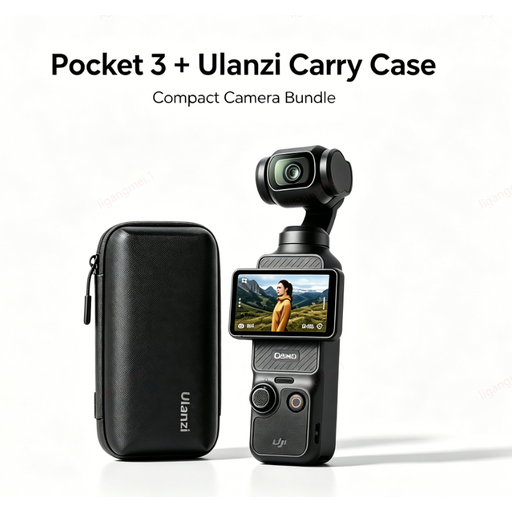 Image unavailable
DJI Pocket 3 camera with Ulanzi Custom Storage Carry Case
The product name specifies a DJI Pocket 3 camera with a Ulanzi Custom Storage Carry Case. Check that the camera offers the framing and focusing you need for nib details.
View at Joybuy
Frequently asked questions
Does a 1 cm focusing distance mean there’s 1 cm of space for lighting?
No. OM Digital Solutions describes the TG-7 as capable of shooting as close as 1 cm from the subject; Sony distinguishes between the minimum focusing distance measured from the sensor plane and the working distance measured from the front of the lens. Check which measurement the manufacturer gives for the camera or lens.
How can I keep both the nib and more of the pen in focus?
Set up the pen and camera securely. If the exact camera model supports focus stacking, it can combine shots taken at different focus positions. Check that the feature is available on the model you’re considering.
Do I need a separate macro lens for a mirrorless camera?
It depends on the exact kit. Canon lists the RF 35mm F1.8 Macro and Nikon the Z MC 50mm f/2.8 as separate lenses, so check the lens name and kit contents before assuming a macro lens is included.
What are my rights when buying a camera online in the Netherlands?
According to ACM ConsuWijzer, online consumer purchases generally come with a statutory 14-day cooling-off period, which ends 14 days after delivery, subject to legal exceptions. If a product doesn’t meet the expectations you could reasonably have when used normally, you can ask the seller to put things right free of charge.


