First decide whether easy carrying, close-up flower details or the option to change lenses matters most to you. A compact camera saves you from changing lenses, but check its focusing capabilities at the zoom setting you plan to use for close-ups. With a mirrorless camera, the included lens and the complete kit are key considerations. Image stabilisation helps reduce camera shake, but it can’t replace an appropriate shutter speed when tulips are moving in the wind.
Which camera is right for you?
For photographing flower details
You want to make a flower or small detail fill the frame, so compare the close-up mode, magnification and focusing distance at the framing you have in mind. Canon Netherlands and OM SYSTEM describe different model-specific features for this.
For travelling light on a walk
You want to be able to grab your camera quickly while you’re out, and would rather not change lenses. Compare the complete kit and the range of a fixed lens; the Consumers’ Association lists size and zoom range as factors to consider when choosing a camera.
For capturing the whole flower bed and flowers in the distance
You want to switch between a wide view and a flower further away. Check the range of the lens or lenses actually included in your chosen kit; the Consumers’ Association and Nikon Netherlands highlight zoom range and kit contents as relevant points to consider.
What should you consider when choosing?
Compact camera with fixed zoom
Choose this option if: you want to switch between a flower bed and flowers in the distance on a single walk, without changing lenses. Sony specifies a 24–200 mm 35mm-equivalent range for the RX100 VII and a weight of approximately 302 g, including battery and card.
Bear in mind: the lens isn’t interchangeable. For this model, Sony lists a minimum focusing distance of approximately 8 cm at wide angle and approximately 100 cm at telephoto.
Compact camera with close-up mode
Choose this option if: capturing flower details and having a camera for wet conditions are your priorities. OM SYSTEM describes a close-up mode from 1 cm and waterproofing to 15 m for the Tough TG-7.
Bear in mind: the stated close-up distance applies to that mode, not automatically to every zoom setting. According to OM SYSTEM, the fixed lens has a 25–100 mm 35mm-equivalent range.
Mirrorless camera with interchangeable lens
Choose this option if: you want the flexibility to use different lenses for flower-bed views and potentially more powerful close-ups. Nikon offers the Z50II in a kit with 16–50 mm and 50–250 mm lenses, among other options.
Bear in mind: consider the complete kit and which lens you’ll take with you. For the RF-S 18–45 mm at 45 mm with autofocus, Canon specifies a maximum magnification of 0.16×; it isn’t a dedicated macro lens.
| Concern |
What to look for |
Who should consider this most? |
| Capturing flower details close up |
Compare focusing distance and magnification at the zoom setting you plan to use; with a mirrorless camera, check whether the suitable lens is included. |
If I want small flower details to fill the frame, I compare these specifications for the framing I have in mind. Around 29% of consumers put flower details first. |
| Easy carrying and quick shots |
Compare complete kits on the same weight basis and include the lens when considering a mirrorless camera; think about whether you want to change lenses while out. |
If I want to grab my camera quickly while walking and carry as little as possible, the weight of the complete kit matters a lot to me. Around 29% of consumers give easy carrying top priority. |
| Framing a flower bed and flowers in the distance |
Compare focal lengths on the same 35mm-equivalent basis and check how many lenses are included in the chosen kit. |
If I want to photograph both a wide flower bed and a flower further away, I look at the range and whether I might need to change lenses. Around 21% of consumers prioritise flexible framing. |
| Changing morning light and wind |
Check the stabilisation of your chosen body-and-lens combination, and whether you can adjust shutter speed, ISO and exposure. |
When the light changes or flowers are moving, I want to be able to adjust the settings and check that my shots are sharp. For around 21% of consumers, photographing in changing light or wind is the top priority. |
Avoid common buying mistakes
-
Assuming a powerful zoom means high magnification for macro photography
A wide zoom range doesn’t automatically tell you how close you can focus or how large a flower detail will appear in the frame. The stated minimum focusing distance for the Sony RX100 VII varies between wide angle and telephoto; according to Canon, the RF-S 18–45 mm has a maximum magnification of 0.16× with autofocus.
Compare focusing distance and magnification at the zoom setting you’ll use to photograph the tulip.
-
Comparing only the camera body’s weight
The body’s weight doesn’t tell you how much your complete walking kit will weigh. If you’re considering a kit with two lenses, also think about which lens you’ll take and when you might need to change it.
Compare complete kits on the same basis, and include the lenses you plan to take on your walk.
-
Expecting stabilisation to solve every blurry flower photo
Image stabilisation reduces camera shake, but it won’t automatically prevent motion blur when a flower itself is moving in the wind.
Try different settings in the conditions you’re shooting in and check that your photos are sharp before you move on.
Camera brands to consider
Canon
The EOS R50 with an RF-S standard zoom is a useful option to consider if you want to start with a mirrorless camera and choose a different lens later.
- Canon specifies an RF mount for the body.
- The body doesn’t have in-body image stabilisation. According to Canon, the RF-S 18–45 mm achieves a maximum magnification of 0.16× at 45 mm with autofocus; this isn’t full macro magnification.
Sony
The RX100 VII is a useful option to consider if you want a compact camera with a fixed zoom for capturing different compositions while you’re out.
- Sony specifies a 24–200 mm 35mm-equivalent range and a weight of approximately 302 g, including battery and card.
- The lens can’t be changed. The stated minimum AF distance varies considerably between wide angle and telephoto: approximately 8 cm compared with approximately 100 cm.
OM SYSTEM
The Tough TG-7 is a compact fixed-lens camera for anyone looking to combine flower-detail photography with a body suitable for wet conditions.
- OM SYSTEM describes a close-up mode from 1 cm and waterproofing to 15 m.
- The stated close-up distance applies to that particular mode. According to OM SYSTEM, the fixed lens has a 25–100 mm 35mm-equivalent range.
Nikon
The Z50II is a mirrorless camera for anyone who values an electronic viewfinder and the choice of individual Z lenses.
- Nikon describes an electronic viewfinder and offers a kit with 16–50 mm and 50–250 mm lenses, among other options.
- To cover both ranges, you’ll need to take two separate lenses and change them when necessary.
Cameras at Joybuy
These cameras are options to compare for a walk where you want to photograph tulips and other subjects. Check whether each model’s focusing capabilities and included accessories suit the framing you have in mind.
 No image available
Songdian Pocket Camera, 4K, 44 MP, 16× digital zoom, pink
The pocket camera description and listed zoom make this an option to consider if you want to try different compositions while out walking.
The product name lists 4K, 44 MP and 16× digital zoom. Check whether its focusing capabilities are suitable for individual flower details.
Joybuy
 No image available
Songdian Digital Camera, 5K, 64 MP, 8× optical zoom, dual lens, white
The listed optical zoom is relevant if you want to frame your shots in different ways while out walking. Separately, check that the camera can focus close enough for the flower details you have in mind.
The product name lists 5K, 64 MP, 8× optical zoom and dual lens.
Joybuy
 No image available
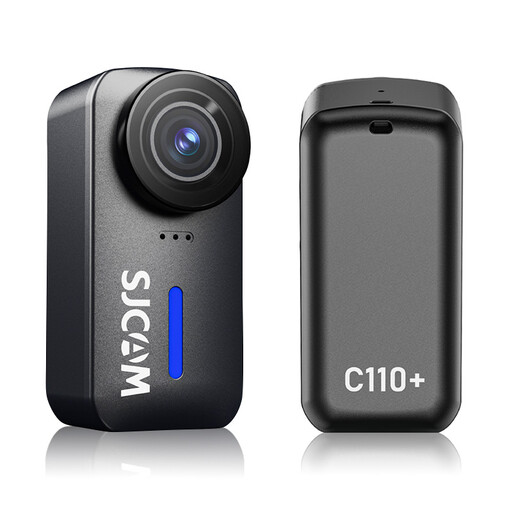
SJCAM C110+ 4K action camera, 170° lens, 20 MP, with case
The listed wide-angle lens may suit anyone who mainly wants to frame a wide scene; for a single tulip, it’s worth considering the composition you want separately.
The product name lists a 170° lens, an f/1.8 aperture, 20 MP photos and a case.
Joybuy
 No image available
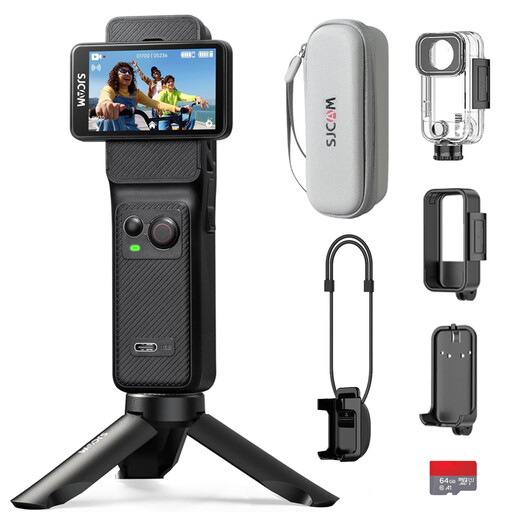
SJCAM C400 4K action camera, 6-axis stabilisation, includes 64 GB card
This action camera is worth comparing if stabilisation and an included memory card are relevant to how you’ll use it. Stabilisation doesn’t replace an appropriate shutter speed when flowers are moving.
The product name lists 4K, 6-axis stabilisation, waterproofing to 30 m and an included 64 GB card.
Joybuy
 No image available
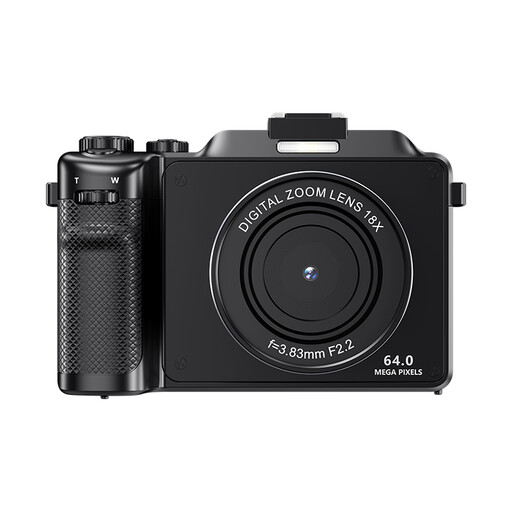
Komery X9 4K camera, 64 MP, autofocus, 18× digital zoom, black
The listed autofocus may be useful if you want to capture subjects while out walking; also check that the focusing distance is suitable for flower details.
The product name lists 4K, 64 MP and 18× digital zoom. The digital zoom on this model is flagged as potentially reducing image quality.
Joybuy
Frequently asked questions
Do I need a macro lens to photograph a single tulip?
Not necessarily; first decide how large you want the flower or detail to appear in the frame. OM SYSTEM describes a close-up mode from 1 cm for the TG-7, while Canon specifies a maximum magnification of 0.16× for the RF-S 18–45 mm at 45 mm with autofocus. Compare these capabilities for the composition you want before choosing an additional lens.
Does image stabilisation help when tulips are moving in the wind?
Image stabilisation is designed to reduce camera movement, not to freeze a moving flower. So pay attention to shutter speed and other camera settings, and take test shots if needed. Canon specifically discusses photographing flowers moving in the wind.
What should I consider when buying an extra lens, and what about the warranty?
First check which lens comes with your chosen kit and whether an additional lens suits the composition you have in mind. According to the Dutch government, when you buy as a consumer in the Netherlands, you’re entitled to a product that works properly; there’s no fixed statutory warranty period in the Netherlands. If there’s a problem, contact the retailer.
Can I visit Keukenhof for an early morning walk?
This applies only if Keukenhof is the location you’ve chosen. According to the official visitor information, the published 2027 season runs from 18 March to 9 May, from 8:00 to 19:00. Other gardens have their own admission arrangements.


