First decide how large you want your fruit or vegetables to appear in the frame, and how much room you have for your camera and lighting. Then assess the camera and lens together. A mirrorless camera with a suitable macro lens lets you switch between wider product shots and fine details. A compact camera with a close-up mode means fewer separate components, but has a fixed lens. A stable set-up and manageable lighting are important whichever route you choose.
Who is this guide for?
Detail photographers of fruit and vegetables
If you want to capture small details in skin, leaves or seeds at a larger scale, consider both the lens magnification and the space available for lighting. Canon Nederland, Nikon Nederland and Sony Netherlands describe different lens options for close-ups.
Creators of product ranges
If you photograph seasonal produce in a consistent style, a repeatable composition and consistent lighting and colour settings can help. Canon Nederland explains how window light can change, while Consumentenbond discusses factors including camera choice and ease of use.
Home photographers with limited space
If you want to photograph both a whole still life and close-ups, check that the camera and lens fit at your preferred shooting distance without getting in the way of the lighting. The OM Digital Solutions manual describes close-up photography with the TG-7 from as close as 1 cm.
What should you look for when choosing?
Mirrorless camera with interchangeable lens
A good fit if: you want to switch between wider product shots and fine details.
Bear in mind: a suitable macro lens may be a separate part of the set-up.
Compact camera with close-up mode
A good fit if: you want to shoot close-ups without changing lenses and the fixed angle of view suits your still life.
Bear in mind: you cannot replace the fixed lens later, and a short shooting distance means you will need to think carefully about where to position the lighting.
Keep your current camera
A good fit if: your current lens already makes the product large enough in the frame and you mainly want to improve your set-up.
Bear in mind: a tripod or different lighting will not increase the lens’s optical magnification.
| What to consider |
What to look for |
Best suited to |
| Fine details |
Check the maximum magnification and lens mount of the exact combination, as well as the space in front of the lens for lighting. |
If I want to capture seeds, veins or the texture of a peel at a larger scale, I want to know how the lens actually reproduces them on the sensor. Around 33% of consumers prioritise magnification for detail. |
| Consistent colour and exposure |
Check the white balance and RAW options on the exact model, and consider how you will keep the lighting consistent between shots. |
For a series of seasonal products, I want to be able to match the colour and exposure across shots, even when the window light changes. Around 27% of consumers prioritise consistent, repeatable colour and exposure. |
| Framing and workspace |
Compare the lens’s angle of view and shooting distance with the size of your still life and the space available for the background and lighting. |
If my workspace is small, I want to frame both a bowl of produce and a close-up without the camera and lights getting in the way. Around 20% of consumers base their choice on the space available. |
| Simplicity and a complete set-up |
Check which lens and accessories are included with the version you are buying, and what extra components you will need for the shots you want. |
If I would rather keep separate components to a minimum, I want to know in advance what the camera can do straight away and what I still need to add. Around 20% of consumers prioritise simplicity and knowing what is included in the complete set-up. |
Common buying mistakes
-
Assuming a camera body or standard zoom is a complete macro set-up
Magnification depends in part on the lens you use. A kit with a 16–50mm zoom does not automatically include a dedicated macro lens.
Before buying, check the exact kit contents, lens mount and maximum magnification of the included lens.
A suitable macro lens may be a separate part of the set-up.
-
Confusing an equivalent ratio with sensor magnification
Nikon states that the NIKKOR Z DX MC 35mm f/1.7 has a maximum reproduction ratio of 0.67× on the sensor, and also refers to a 1:1 equivalent in FX format. These are different ways of describing it.
Compare lenses on the same basis and check whether the actual reproduction ratio suits the details you want to photograph.
-
Comparing megapixels alone
When photographing a product range, a consistent composition and changes in window light also affect your shots. More megapixels alone will not tell you whether the lens offers the magnification you need.
First decide what magnification you need and how you will keep the lighting and composition consistent. Then compare the camera body specifications.
A tripod or adjusted lighting may be needed for a consistent composition or greater control over the light.
Camera brands to compare
Canon
The EOS R50 is an APS-C mirrorless camera that supports RF and RF-S lenses. The RF 35mm F1.8 MACRO IS STM is a separate close-up lens.
- Canon Nederland lists 24.2 effective megapixels for the EOS R50 and up to 1:2 magnification for the RF 35mm macro lens.
- According to Canon Nederland, the EOS R50 does not have in-body image stabilisation. Compare the lens magnification with what you need for your subject details.
Nikon
The Z50II can be paired with a separate NIKKOR Z DX macro lens for detailed shots and general product compositions.
- Nikon Nederland lists a maximum reproduction ratio of 0.67× on the sensor for the NIKKOR Z DX MC 35mm f/1.7.
- The 1:1 equivalent in FX format cited by Nikon is not the same as 1:1 optical magnification on the DX sensor.
Sony
The APS-C ILCE-6400 uses an E-mount; the SEL30M35 is a separate macro lens for close-ups.
- Sony Netherlands lists 24.2 effective megapixels for the ILCE-6400 and describes the SEL30M35 as a 1:1 macro lens.
- A kit with a 16–50mm zoom is a different lens combination from a set with the SEL30M35. Check which lens is included with the version you are buying.
Fujifilm
The X-S20 and the separate XF30mmF2.8 R LM WR Macro can be combined for product compositions and macro details.
- Fujifilm X Nederland lists 26.1 effective megapixels and in-body image stabilisation for the X-S20, and a 1:1 ratio for the XF30mm macro lens.
- The macro lens is sold separately. Also check whether its shooting distance suits the space you have for your camera and lighting.
OM SYSTEM
The TG-7 is a compact camera with a built-in close-up mode for anyone who would rather not use an interchangeable lens.
- The OM Digital Solutions manual describes shooting from as close as 1 cm to the subject, as well as focus bracketing in close-up mode.
- The lens is fixed. The short shooting distance means you need to pay extra attention to where you position the camera and lighting.
Cameras at Joybuy
The Joybuy selection below includes compact digital cameras and a pocket gimbal camera. For close-ups of peel, seeds or leaf veins, check the macro function and lens details for the exact version.
 No image available
DJI Osmo Pocket 4 Standard Combo
The product title mentions a rotating screen and stabilisation. Check separately whether its close-up capabilities suit your product photography.
The title lists a 1-inch CMOS sensor, 3-axis stabilisation, 4K/240fps video, 2× lossless zoom and 107 GB of built-in storage.
View at Joybuy
 No image available
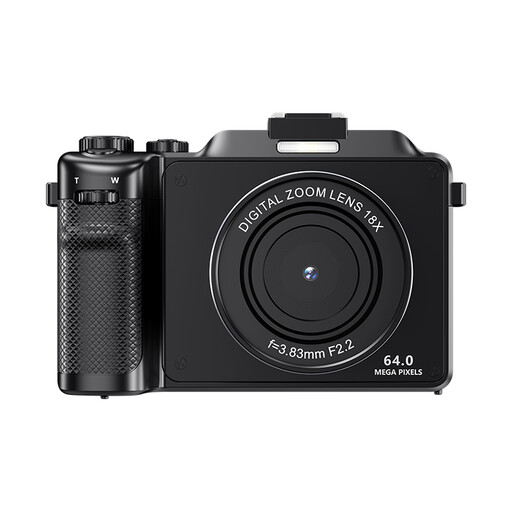
KOMERY X9
The product title mentions autofocus and a built-in flash. For macro details, check the features and lens specifications of this version.
The title lists 4K, 64 MP and 18× digital zoom.
View at Joybuy
 No image available
KOMERY G7, white
The title describes a portable camera with zoom. Check whether the lens and close-up capabilities suit the composition you have in mind.
The title lists 5K, 80 MP and 18× zoom.
View at Joybuy
 No image available
Komery W6
The title mentions optical zoom. Check whether the range and close-up capabilities suit the distance at which you work in your home studio.
The title lists 12× optical zoom, 4K video, 64 MP and Wi-Fi.
View at Joybuy
 No image available
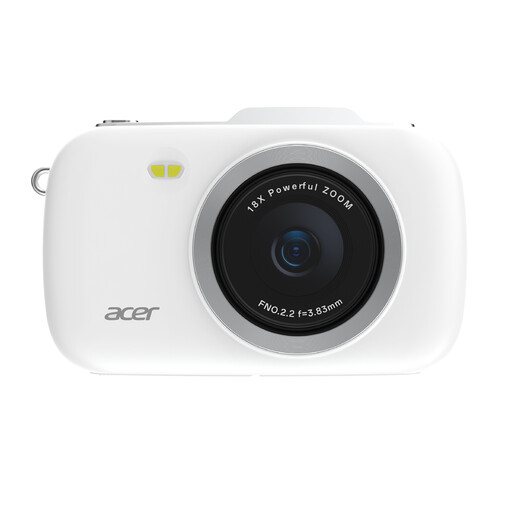
KOMERY G7-A, white
The product title mentions zoom and a portable camera set-up. Check the lens specifications and close-up capabilities before choosing this camera for detail work.
The title lists 4K, 80 MP and 18× zoom.
View at Joybuy
Frequently asked questions
Do you always need a new camera to capture small details on fruit or vegetables?
Not necessarily. First check the maximum magnification and mount of your current lens: the lens plays a part in determining how large the detail appears on the sensor. A stable set-up can make framing easier, but it does not change the optical magnification.
How can you keep a series of seasonal photos consistent?
Set up your camera securely and manage the lighting and white balance consistently. With window light, the time of day and weather can change the exposure. If you want to adjust colours afterwards, check whether your exact camera supports RAW capture.
What should you consider when maintaining a camera in a home studio?
Follow the manual for your exact camera model for cleaning and storage. The official OM SYSTEM TG-7 manual includes specific instructions for this; they do not automatically apply to other models.
Who can help if a product is faulty, and do you have a cooling-off period when buying online in the Netherlands?
For a consumer purchase, the seller must offer a solution if the product is faulty; a manufacturer’s warranty does not replace your statutory rights. According to the Dutch government, when you buy remotely from a professional seller, you will often have a 14-day cooling-off period. These distance-selling rules do not apply to online purchases from a private individual.
Do you need a CE mark or permit to photograph products at home?
A CE mark is required for products when applicable harmonised EU product rules say so, including certain electrical and electronic equipment. The Your Europe guidance from the European Union concerns products placed on the EU market; it does not set out any photography permit requirements for a home studio.


