
Seller of glossy pottery
You want the glaze and subtle colours to remain true to life, without distracting reflections. That’s why your lighting setup and white balance should also inform your choice.


Choose a compact camera if you want one device for both overall shots and close-ups; a mirrorless camera gives you more choice of lenses when you need to capture small glaze details up close. With either option, check which lens is actually included: a standard zoom isn’t automatically suitable for macro photography. Controlled lighting, a neutral background and carefully set white balance matter just as much as the camera body.
You want the glaze and subtle colours to remain true to life, without distracting reflections. That’s why your lighting setup and white balance should also inform your choice.
As well as an overall view, you want to show marks, texture and damage clearly. So check the close-up capabilities of the lens you’re actually buying.
You want to carry as little equipment as possible and transfer photos easily. Changing light and a clutter-free background are also worth bearing in mind.
Best for: you want to carry one device and switch quickly between overall shots and close-ups.
Bear in mind: the lens can’t be changed; a wide zoom range alone doesn’t mean that small damage will be clear when photographed up close.
Best for: you want to take overall shots and might choose a different lens later. The Canon EOS R50 is compatible with RF and RF-S lenses.
Bear in mind: Canon lists a maximum autofocus magnification of 0.16× at 45 mm for the RF-S 18-45mm kit lens; a standard zoom is therefore not automatically a macro lens.
Best for: you need to show small cracks, marks or glaze texture in close detail. Nikon lists 1:1 magnification for the separate NIKKOR Z MC 50mm f/2.8.
Bear in mind: the macro lens is a separate purchase. Nikon says there is around 5 cm of space in front of the lens at the minimum focus distance, which can limit where you position your lighting.
| What to consider | What should you look for? | Who is this important for? |
|---|---|---|
| Colour and glaze reflections | Check whether you can adjust the white balance; assess glossy areas using soft light and a neutral background. | If I photograph glossy pottery, I want the colours to look true to life and reflections to be under control. Around 36% of consumers put colour and glaze reflections first. |
| Details and visible condition | Compare the maximum magnification and minimum focus distance of the exact lens or close-up function; also allow room for lighting. | When selling unique pieces, I want to show marks, texture and signs of wear clearly. Around 29% of consumers give condition details top priority. |
| Portability and transfer | Check the size, screen position and how photos can be transferred to your smartphone. | If I take photos at a market, I want to carry less and transfer images easily. Around 21% of consumers put portability and transfer first. |
| Total cost and ease of use | Check exactly which lens and accessories are included in the kit, and whether the supplied lens can capture the details you want. | If you want to get started without unnecessary extra purchases, focus on what’s included in the set. Around 14% of consumers give a complete, straightforward set top priority. |
How large a small mark appears in the frame also depends on the lens you use. Glossy surfaces and reflections also make lighting important.
Compare the smallest detail you want to show with the magnification of the exact lens included, and leave room for soft lighting.
A wide zoom range alone doesn’t tell you how clearly a small area of damage will appear up close.
Look at sample photos of similar objects and check which close-up function the specific camera offers.
A camera body, a kit with a zoom lens and a separate macro lens are different offers. A feature of a standalone lens doesn’t automatically apply to another kit.
Before buying, check the full model name and which lens, battery and charger are included.
The EOS R50 with RF-S 18-45mm is an option for overall shots, with the flexibility to choose a different RF or RF-S lens later.
The LUMIX DC-TZ99 has a fixed lens and is a compact option if you want one camera for both overall shots and close-ups.
The ZV-E10 II kit with E PZ 16-50mm OSS II is worth considering if you want to shoot product videos as well as listing photos.
The Z50II is an option for those who want to choose a suitable Z lens; Nikon also offers the NIKKOR Z MC 50mm f/2.8 separately for detailed close-ups.
This selection includes cameras for taking photos on the go and a Sony kit with a 16–50mm zoom. Check with sample photos whether small glaze details appear large and clear enough.
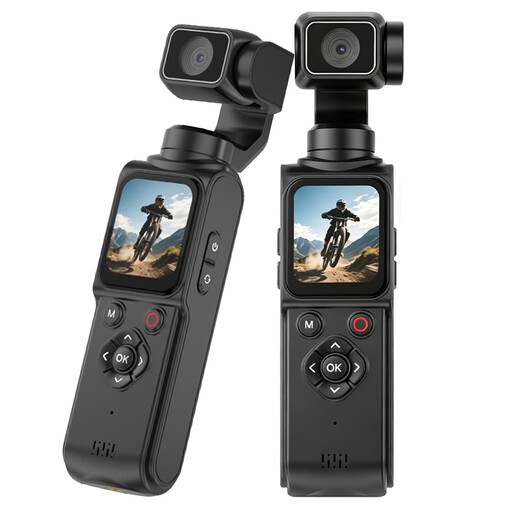 No image available
The product information mentions Wi-Fi transfer to a smartphone; use a sample photo to check whether the smallest details of your pottery are clear enough. The title lists 64 MP, a 330° rotating lens, a 1.72-inch touchscreen and a tripod.
 No image available
The product title describes a portable point-and-shoot camera for taking with you; take a sample photo to see whether the framing suits your pottery. The title lists 80 MP, 4K and 18× zoom.
 No image available
The product title describes a portable point-and-shoot camera for taking with you; use a sample photo to check whether small signs of wear are captured clearly enough. The title lists 80 MP, 5K and 18× zoom.
 No image available
The kit description lists a 16–50mm zoom lens and Wi-Fi transfer to smart devices; use sample photos to check whether the lens is suitable for the details you want to show. The description lists a 24.2 MP sensor and a vari-angle screen. According to the kit description, an SD memory card and adapter/charger are not included.
Where possible, use soft, even lighting and a neutral background. Reset the white balance if the lighting changes, and compare the photo with the item before using it.
Not necessarily: first try cropping a photo taken with the lens you’re actually buying. Canon specifies a maximum autofocus magnification of 0.16× at 45 mm for the RF-S 18-45mm; Nikon lists 1:1 for the separate Z MC 50mm f/2.8. These figures apply to different lenses.
Put the camera on a tripod or a stable surface, and use the self-timer if needed. This helps reduce movement during the shot, especially when there’s less light.
If you buy from a business as a consumer, you should be able to contact the seller to resolve an issue with a faulty product, according to the Dutch government. Many online purchases from businesses also come with a 14-day cooling-off period; the same rule doesn’t apply when buying from a private individual.
A recognisable person in a publicly posted photo can raise privacy concerns. The Dutch Data Protection Authority notes that recognisable people may be identifiable personal data, so it’s best to photograph the pottery without recognisable bystanders.