For repeatable patchwork photos, start with a stable overhead setup and consistent, even lighting: Adobe recommends a stable camera mount for flat-lay photography, while MagicBOX advises using diffused lighting and keeping the shooting angle fixed. Then choose a camera and lens that can capture the whole piece from the height available to you. RAW and adjustable white balance can give you more control when assessing colours, but they require considered settings and may involve post-processing. For individual stitching details, you should also check the minimum focusing distance of the lens you choose.
Who is this guide for?
Makers with a dedicated photography spot
You want to capture different stages of the same patchwork from a recognisable overhead angle. A stable camera position and repeatable framing come first; Adobe describes a stable camera mount as part of flat-lay photography.
Makers comparing fabric colours
You want to compare colours reliably between sessions, so you also need to consider lighting, white balance and the option to process RAW files. Canon Netherlands explains that the colour temperature of ambient light can affect how a camera renders colours.
Makers showing stitching
Alongside an overall shot, you need individual detail images of seams and fabric texture. Your choice of lens and shooting distance will help determine how you can capture these details.
What should you look for when choosing?
First, test whether your current camera can capture the patchwork well from a fixed position. Only then consider a different camera or a separate lens, depending on the framing, colour control and details you need.
| What to consider |
What to look for when buying |
Who is this important for? |
| Repeatable framing |
Try to capture the whole patchwork from the height available to you, and check that you can position the camera securely there. |
If I want to compare successive photos easily, I prioritise a fixed angle and framing; around 36% of consumers would consider repeatable framing their main priority. |
| Consistent fabric colour |
Check the white balance settings and take test shots under the lighting you plan to use. RAW can give you more scope for post-processing. |
When I want to compare the same fabric’s colours between sessions, I pay attention to the lighting and colour settings; around 29% of consumers would consider fabric colour their main concern. |
| Stitching details and texture |
Test both an overall shot and a close-up; check the minimum focusing distance of the exact lens you plan to use, as well as the space available for lighting. |
If seams and fabric texture need to be clearly visible in their own right, I focus on close-up capabilities; around 21% of consumers would put detail first. |
| Complete setup |
Check whether you’re buying a body or a kit, and which lens, mount and lighting you’ll still need. |
If I want to know straight away which components I need for my workflow, I check everything included in the box; around 14% of consumers would mainly look for a complete setup. |
Common mistakes
-
Buying a new camera body before testing your overhead setup
The camera alone won’t keep the angle and lighting consistent between sessions, which can still make your shots difficult to compare.
First, take a test series with your current camera from the intended fixed position and assess the framing.
A suitable mount and lighting may involve extra costs.
-
Assuming automatic white balance guarantees consistent fabric colours
Changing light can make the same fabric look different. Canon Netherlands explains how the colour temperature of ambient light affects colour rendition.
Use lighting that is as consistent as possible and assess test shots using a fixed or manually set white balance.
-
Assuming a body or standard kit is a complete setup for detail shots
The minimum focusing distance and usable framing depend on the exact lens, not just the camera body.
Check everything included in the kit and test both an overall shot and a stitching detail from your intended working distance.
Camera brands compared
Canon
The EOS R50 is an RF mirrorless camera worth comparing if you want to shoot in RAW and choose your own lens for overall or detail shots.
- Canon specifies approximately 24.2 effective megapixels and RAW/C-RAW for the EOS R50.
- Without a lens, the body isn’t a complete shooting setup. Canon states that EF and EF-S lenses require an adapter, while EF-M lenses are not compatible.
Sony
The ILCE-6400 is an E-mount mirrorless camera worth comparing if you want to choose a lens to suit your working height and shoot in RAW.
- Sony Netherlands specifies approximately 24.2 effective megapixels and RAW for the ILCE-6400.
- Check whether a specific E-mount lens lets you frame both the whole patchwork and the details you want to capture.
Nikon
The Z50II is a Nikon Z mirrorless camera worth comparing if a vari-angle screen would be useful with your camera positioned high up.
- Nikon lists 20.9 million effective pixels, a vari-angle touchscreen and a Z mount for the Z50II.
- Whether the whole patchwork or a close-up fits in the frame depends partly on your chosen lens and the space available to work in.
Panasonic
The Netherlands-market LUMIX G100D kit DC-G100DW is a Micro Four Thirds kit worth comparing if you want to match the supplied lenses to your working distances.
- Panasonic specifies a 12–32mm lens and a 45–150mm lens for the kit, along with 20.30 effective megapixels and RAW for photos.
- According to Panasonic, the listed 5-axis HYBRID I.S. applies to video recording only, not photos. Check whether the kit lets you frame the whole patchwork from your working height.
Cameras at Joybuy
Assess these cameras and camera kit based on the working height available to you, the repeatable framing you want and the details you need to capture.
 No image available
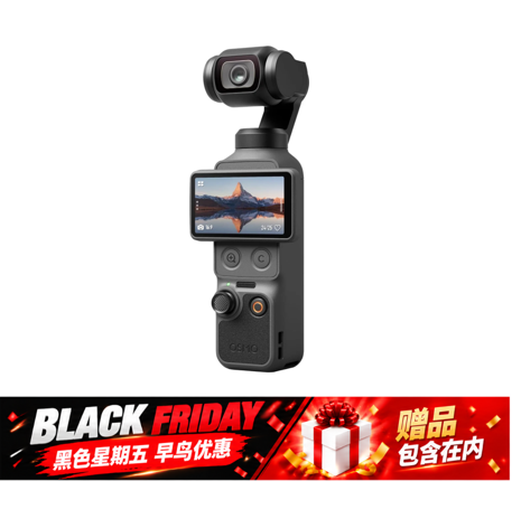
DJI Osmo Pocket 4 Standard Combo
According to the product title, this is a camera for photography with a rotating screen; take a test shot to see whether it suits your fixed framing setup.
1″ CMOS sensor; 2× lossless zoom; 2″ rotating screen; 107 GB built-in storage.
View at Joybuy
 No image available
Sony ZV-E10 with 16–50mm zoom lens, Black
The kit includes a 16–50mm zoom lens; check from your intended working height whether it lets you capture the whole patchwork and the framing you want.
16–50mm zoom lens.
View at Joybuy
Frequently asked questions
Do you need to buy a new camera to get the same composition every time?
Not before taking a test shot. Set up your camera securely above the patchwork and check whether your current camera can capture the whole piece and the details you want from that position.
How can you keep white balance consistent when taking photos on different days?
Keep the lighting as consistent as possible and check the white balance under those conditions. Canon Netherlands and Nikon explain that automatic white balance can produce different colour results under different light sources. RAW gives you room to make corrections later, but it can’t replace a consistent lighting setup.
Is a supplied zoom lens automatically suitable for close-ups of stitching?
No. Check whether the exact lens can focus close enough from a practical distance, and take a test shot of a detail. Also consider how much room you’ll have for lighting at that distance.
What warranty applies when you buy a camera in the Netherlands?
According to the Dutch government, you’re entitled to a product that works properly; the Netherlands has no fixed statutory warranty period. If a product is faulty, the seller is your point of contact for a solution. A manufacturer’s warranty or an additional warranty is separate from your statutory rights.
Can you always return a camera bought online within 14 days?
No, there are exceptions. According to the Dutch government, distance purchases often come with a 14-day cooling-off period, but a purchase from a private individual isn’t automatically covered by these rules.


