Who is this camera guide for?

Medal detail photographer

You want to capture small lettering, relief or damage in close-up, so you need to consider both magnification and space for lighting. Canon Nederland discusses the precision required for close-up photography; Nikon Nederland and Sony Nederland provide lens specifications that can help you assess magnification and working distance.

Collection photographer

You want to photograph medals consistently, so you’re looking for a stable setup, good framing and reflections you can control. Wiki Munten en papiergeld discusses reflections when photographing coins; try applying similar tips in a test shot of your own medal.

Beginner with a small table

You want to get started without having to choose a complicated lens, and find out whether a built-in close-up mode can capture both the whole medal and the details you want. Catawiki discusses a macro mode for similar coin photos; OM SYSTEM lists a built-in microscope mode on the TG-7.

What should you look for in a camera for medals?

Compact camera with close-up mode

Choose this option: if you want to take both overview shots and close-ups without separate lenses.

Bear in mind: the fixed lens can’t be changed, and a close-up mode won’t automatically solve reflections.

Mirrorless camera with standard zoom lens

Choose this option: if you mainly want to photograph whole medals and would like the option to choose a different lens later.

Bear in mind: a standard zoom isn’t automatically a macro lens; check the magnification of the lens included in the kit.

Mirrorless camera with macro lens

Choose this option: if you need to fill the frame with small engravings or damage, and can choose the camera body, mount and lens as a set.

Bear in mind: a macro lens may mean an extra purchase and less room in front of the lens; check both for your table setup.

What to consider What should you check? Who should prioritise this?
Detail magnification Compare the maximum magnification of the exact lens with the framing you need; take a test shot if possible. If small lettering or relief is your main priority, you’ll want to know whether those details will appear large enough in the frame. Around 33% of consumers say detail magnification is their top priority.
Reflections and relief Measure the clear space in front of the lens and try lighting your own medal from different directions. If reflections on the metal obscure details, you’ll want room to reposition the light. Around 27% of consumers say controlling reflections is their top priority.
Easy close-ups Check whether the close-up mode can capture both the whole medal and the details you want on your table. If you want to get started without a separate lens, first check whether the fixed setup suits the framing you need. Around 20% of consumers say getting started easily is their top priority.
Expandable camera kit Check the exact kit contents, along with the lens mount and magnification of the supplied lens. If you want to take both close-ups of medal details and wider shots, and may want to expand your kit later, you’ll want to know what’s already included. Around 20% of consumers say a versatile camera kit is their top priority.

Common mistakes when choosing a camera

  • Assuming a kit zoom is a macro lens

    The magnification of a supplied zoom lens won’t necessarily match that of a dedicated macro lens. For example, Canon specifies a maximum of 0.16× with autofocus at 45 mm and 0.26× with manual focus at 45 mm for the RF-S 18-45mm; Nikon specifies 1:1 for the separate NIKKOR Z MC 50mm f/2.8.

    Compare the specifications of the lens actually included in the kit with the smallest details you want to photograph.

    The separate macro lens isn’t listed as part of the Nikon Z50II kit we looked at, so remember to factor it into your choice separately.

  • Looking only at the minimum focusing distance

    The distance at which a lens can focus isn’t the same as the clear working space between the front of the lens and the medal. That space can determine where you’re able to position a light.

    Check the working distance from the front of the lens, and try positioning your lighting within the available table space.

  • Choosing another camera to fix reflections

    Lighting and reflections are also part of your setup; changing the camera body won’t automatically change the direction of the light on the metal.

    Set up the camera securely and try different lighting directions before assuming that a missing camera feature is the cause.

    You may not need to buy another camera body if the main thing to address is the direction of the light in your current setup.

Brands and systems to consider

OM SYSTEM

The TG-7 is a compact camera option with a built-in microscope mode, for anyone who’d rather not choose a separate macro lens.

  • OM SYSTEM lists a 12MP sensor and a fixed lens with a 25–100mm-equivalent range.
  • The lens is fixed, so check whether the close-up mode can capture your medal with the framing you want.

Canon

The EOS R50 kit with RF-S 18-45mm is an expandable option for overview shots; assess the kit lens separately if you want to photograph macro details.

  • Canon confirms that the RF-S 18-45mm lens is included in the kit we looked at.
  • Canon specifies a maximum of 0.16× with autofocus at 45 mm and 0.26× with manual focus at 45 mm; these are lens specifications, not results from photographing medals.

Nikon

The Z50II standard zoom kit is an expandable mirrorless camera option; the separate NIKKOR Z MC 50mm f/2.8 is Nikon’s macro lens, specified at 1:1.

  • Nikon lists around 5 cm of space from the front of the MC 50mm lens at its minimum focusing distance.
  • The Z50II kit we looked at includes the Z DX 16-50mm zoom, not the separate MC 50mm macro lens.

Sony

The E 30mm F3.5 Macro is a lens option for a compatible Sony E-mount camera when small details are your main focus.

  • Sony specifies 1.0× magnification and a minimum focusing distance of 9.5 cm.
  • Sony gives a working distance of 2.4 cm from the front of the lens, so bear in mind that there’s limited room for lighting. These specifications don’t show that it delivers better image quality than other systems.

Cameras on Joybuy

The product names below describe compact, action or vlog cameras. Before choosing one, check separately whether its lens and close-up capabilities suit the framing and lighting you need for medals.
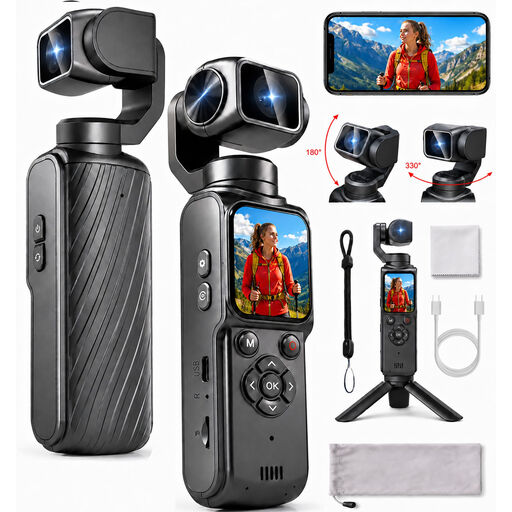
4K action camera with rotating lens and touchscreen

4K action camera with rotating lens

For medal photography on a small table, this camera is only suitable if its close-up framing meets your needs.

The product name lists a 330° rotating lens and a 1.72-inch touchscreen.

View on Joybuy
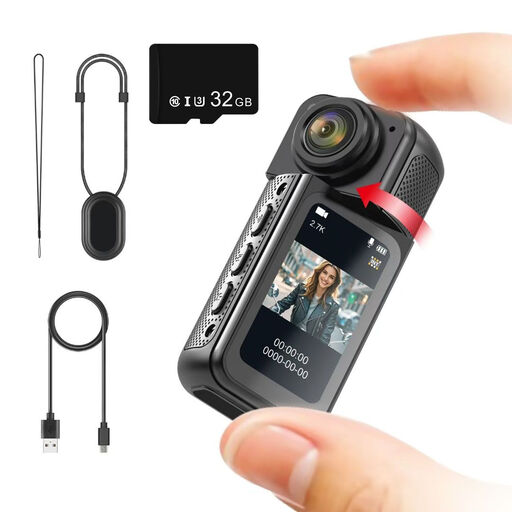
NAXSIR Mini Action Camera 2.7K with rotating lens

NAXSIR Mini Action Camera 2.7K

Before choosing this camera, check that it can capture the medal details you want, in focus and at a large enough size.

The product name lists a 180° rotating lens, a 1.47-inch IPS screen, a magnetic mount and an included 32GB memory card.

View on Joybuy

Komery W6 digital camera with 12× optical zoom

Komery W6 digital camera

If you need to adjust your framing, check that the zoom and focus are suitable for the distance and composition you need on your table.

The product name lists 12× optical zoom.

View on Joybuy

DJI Osmo Pocket 3 Creator Combo

DJI Osmo Pocket 3 Creator Combo

Before considering this option for medal photography, check whether the lens can achieve the close-up you want within the space available on your table.

The product name lists a 1-inch CMOS sensor and 4K/120fps video.

View on Joybuy

DJI Osmo Pocket 3 with rotating touchscreen

DJI Osmo Pocket 3

For medal photography, check whether you can achieve the framing and lighting you want with this camera on your small table.

The product name lists a 1-inch CMOS sensor, 4K/120fps video and a 2-inch rotating touchscreen.

View on Joybuy

Frequently asked questions about photographing medals

Do I need a 1:1 macro lens to photograph a whole medal?

Not necessarily. First, try whether a close-up mode or your existing lens can capture the whole medal in focus and at a large enough size; 1:1 can be useful if you need to fill the frame with small details. Catawiki discusses a compact camera and macro mode for similar coin photos, but doesn’t guarantee the same results for every medal.

Why isn’t the minimum focusing distance the same as the space needed for a lamp?

These distances may be measured from different points. Sony specifies a minimum focusing distance of 9.5 cm for the E 30mm F3.5 Macro, but a minimum working distance of 2.4 cm from the front of the lens. Check that second measurement when deciding where to place a light in your setup.

How should I start lighting a shiny medal?

Set up the camera securely and change the direction of the light, checking which details remain visible. Wiki Munten en papiergeld’s tips on reflections when photographing coins can be a useful starting point for a test shot, but they won’t provide a one-size-fits-all setting for every metal or finish.

What should I check in a camera kit?

Check exactly which camera body, lens and accessories are included, and whether the supplied lens can achieve the close-up you need. The Canon EOS R50 kit we looked at includes an RF-S 18-45mm lens; the Nikon Z50II kit we looked at includes a Z DX 16-50mm zoom, not the macro lens discussed separately.
