What should you look for when choosing?
Start with the type of photo you take most often. For whole cards, first try a fixed shooting position and consistent lighting. Consider a different lens if small details don’t look sharp or large enough in the frame.
| What to consider |
What to look for |
Who should prioritise this? |
| Consistent colours |
Set the white balance and keep the lighting consistent throughout a series of shots; check the setting again when the lighting changes. |
If the colour of the paper and ink needs to match across several product photos, you’ll want to spot and correct changes in the lighting. Around 33% of consumers prioritise colour consistency. |
| Focusing on small details |
Check the minimum focusing distance and maximum magnification of the specific lens, and allow room for lighting. |
If you photograph embossing, paper texture or small embellishments, the lens needs to capture those details from your working distance. Around 27% of consumers give detail the highest priority. |
| Taking repeatable photos of whole cards |
Measure the available height above the table and check whether the lens can frame the full card from a practical tripod position. |
If you photograph a series of cards, you’ll want to position the camera in the same place each time and use consistent framing. Around 20% of consumers mainly prioritise a repeatable setup. |
| Cost of the complete setup |
Check which lens is included with the version you’re considering, and allow for any additional lens, tripod or lighting needs. |
If you want to start with a small home studio, what you already own and what else you need are the key considerations. Around 20% of consumers focus most on the cost of a usable complete setup. |
Cameras at Joybuy
This Joybuy selection includes digital cameras for photography, including interchangeable-lens models and a compact camera. Check the lens and features included with each version, and whether the camera suits your card size, close-up photography and available space.
 Image unavailable
KOMERY G7-A 4K digital camera, pink
Worth considering if you’re looking for a digital camera for photography; check whether the lens can capture the whole card sharply from your available working height.
The product listing mentions 4K, 18× zoom and 80 MP.
Joybuy
 Image unavailable
KOMERY W6 digital camera
May suit anyone who wants to try different framings; check whether the focusing capabilities work with the distance between the camera and your cards.
The product listing mentions 12× optical zoom, 4K, Wi-Fi and 64 MP.
Joybuy
 Image unavailable
Sony ZV-E10 with 16-50mm zoom lens, black
An interchangeable-lens camera to consider if you want to compare the included lens with the framing and working distance of your setup.
This version lists an APS-C sensor, 24,2 MP and a 16–50mm lens.
Joybuy
 Image unavailable
Sony Alpha A6100 with 16-50mm f/3.5-5.6 OSS II
An option to compare if you’re looking for an interchangeable-lens camera with a zoom lens; assess the framing from the height you can use in your home studio.
The product listing mentions an APS-C sensor, 24,2 MP and a 16–50mm lens.
Joybuy
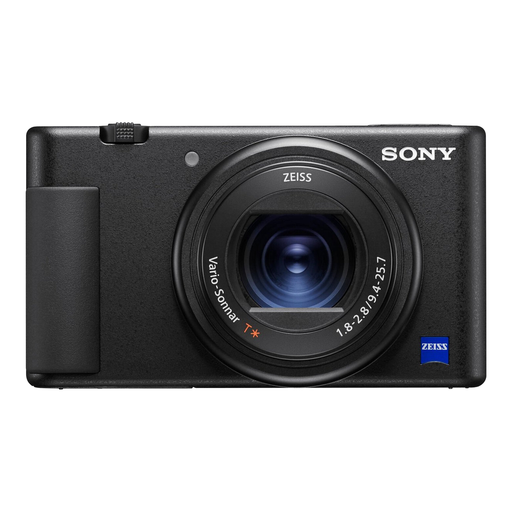 Image unavailable
Sony ZV-1 compact camera
Worth considering if you’re looking for a compact camera with a fixed lens; check whether the focusing range suits both whole cards and the details you want to capture.
The product listing mentions a 1-inch sensor, 20 MP, a 24–70mm range and JPEG and RAW recording.
Joybuy
Frequently asked questions
Should you buy a new camera straight away if your card photos aren’t consistent?
Not necessarily. If your current camera already gives you the framing and sharpness you want, first try a fixed tripod position and consistent lighting. Reset the white balance when the lighting changes.
How can you check whether a lens is suitable for embossing and small embellishments?
Check the maximum magnification, focusing distance and space for lighting required by the specific lens. Don’t assume it offers 1:1 magnification just because it’s labelled ‘macro’.
What should you consider when setting up a space for photographing cards?
Choose a fixed camera position and check that the whole card fits in the frame from that height. Check the white balance again if the lighting changes, and consult the manual for operating instructions and accessories for your exact camera model.
What cooling-off period and warranty apply to online purchases in the Netherlands?
For an online purchase by a consumer, there is generally a statutory 14-day cooling-off period from delivery, with some exceptions. ACM ConsuWijzer also explains that you may have statutory rights against the seller if a product breaks sooner than you could reasonably expect under normal use; this isn’t simply a fixed two-year warranty period. If you’re buying for business purposes, check which rules apply to your purchase.
Can you publish someone else’s photos of greeting cards online?
Don’t assume you have permission just because you own the physical card or took the photo yourself. The Dutch government points out that other people’s work may be protected by copyright, and that making it available to the public or distributing it isn’t covered by the private-copying exception for personal use. For protected work, ask for permission or check which rights apply.


