To photograph the whole paperweight, a lens that can focus close enough is often all you need. For tiny inclusions that need to fill the frame, the lens’s maximum magnification is what matters most. A compact camera means you don’t need to change lenses, while a mirrorless camera lets you choose a suitable macro lens. With either type, window light, camera angle and reflections also affect how you capture the glass.
Who is this guide for?
At-home glass object photographer
You want to capture the whole paperweight clearly by a window and manage distracting reflections before buying extra equipment. Proshoots describes lighting set-ups for glass objects and using a tripod to keep the composition steady.
Collector interested in miniature details
You want to photograph inclusions, patterns or bubbles up close and in sharp focus. Magnification, working distance and depth of field all affect your lens choice; Nikon and Sony describe the features of the macro lenses mentioned here.
Photographer who wants to travel light
You want to focus close without changing lenses, and are happy to accept that a fixed-lens camera offers fewer upgrade options. OM SYSTEM describes the TG-7’s close-up mode.
What should you look for when choosing?
Compact camera with close-up mode
Best for: anyone who wants to photograph the whole paperweight or a visible detail without a separate lens. OM SYSTEM says the TG-7 can focus from 1 cm away in Microscope mode.
Trade-off: when the camera is very close to reflective glass, it may appear in the reflection, leaving less room for light cards.
Mirrorless camera with a standard zoom lens
Best for: anyone mainly looking to photograph the whole paperweight and the set-up, with the option to choose another lens later. Canon says the EOS R50 uses RF and RF-S lenses.
Trade-off: Canon gives the RF-S 18–45mm a maximum magnification of 0.26× with manual focus. If you want highly magnified details, you could consider a separate macro lens.
Mirrorless camera with a macro lens
Best for: anyone who wants tiny inclusions to fill the frame. Nikon specifies 1:1 magnification for the NIKKOR Z MC 50mm f/2.8.
Trade-off: the macro lens is a separate item, and a short working distance can make lighting and reflection control more difficult.
| What to consider |
What should you check? |
Who is this important for? |
| Reflections and shape |
Try different camera angles and white or black cards. Any polarising filter must fit the lens’s filter thread; Nikon explains that a filter like this can reduce reflections on glass. |
If I want to show the whole paperweight without distracting reflections, I start with the camera angle and lighting set-up. Reflection control is the top priority for around 33% of consumers making this choice. |
| Magnification and detail |
Compare the maximum magnification of the exact lens and its working distance; a short focusing distance alone doesn’t tell you how large the subject will appear on the sensor. |
If I want a bubble or inclusion to fill the frame, I look at the lens magnification and the space available for lighting. Detail and magnification are the main priority for around 27% of consumers. |
| Simple close-ups |
Check whether the built-in close-up mode can achieve the framing you want and whether the short shooting distance is practical with reflective glass. |
If I want to get started without changing lenses, a built-in close-up mode is a factor in my choice. Ease of use with minimal equipment is the top priority for around 20% of consumers. |
| Complete set-up |
Check the lens mount, what’s included in the bundle and whether you need a separate lens or other equipment to achieve your desired magnification. |
I prefer to compare the complete set-up rather than just the camera body, so I know what I need for my photos. The complete set-up is the most important consideration for around 20% of consumers. |
Common buying mistakes
-
Confusing a short focusing distance with high magnification
Focusing distance doesn’t tell you how large the subject will appear on the sensor. The Canon RF-S 18–45mm and the 1:1 macro lens mentioned here have different maximum magnifications.
First decide whether you want the whole paperweight or a small detail to fill the frame. Then compare the maximum magnification of the exact lens and focusing mode.
-
Expecting a different camera to solve reflections automatically
The position and softness of the light, as well as the visible surroundings, affect which reflections and glass edges appear in the photo.
First try a different camera angle, diffused window light and white or black cards. Then decide whether you need a compatible filter and whether you want to keep some reflections to show the shape.
-
Comparing a camera body with a complete camera set-up
A macro lens isn’t automatically included with a camera body. The lens mount also determines which lenses are compatible.
Check what’s included in the bundle and the lens mount, then compare complete set-ups for the photos you want to take.
Camera brands to consider
Canon
The EOS R50 with RF-S 18–45mm is an example of a mirrorless camera with a standard zoom lens, with the option to choose an RF or RF-S lens later.
- Canon gives the RF-S 18–45mm a maximum magnification of 0.26× with manual focus.
- That kit zoom isn’t a 1:1 macro lens. The RF 100mm F2.8L Macro mentioned here is a separate lens; its stated magnification of 1.4× doesn’t apply to the kit zoom.
Nikon
The Z50II can be paired with a separate NIKKOR Z MC 50mm f/2.8 for anyone who wants to use a macro lens.
- Nikon specifies 1:1 magnification and a minimum focusing distance of 0.16 m for the lens mentioned here.
- The lens is sold separately. At maximum magnification, the short distance from the front of the lens calls for careful reflection control and lighting.
OM SYSTEM
The Tough TG-7 is a compact alternative with a built-in Microscope mode, designed for anyone who doesn’t want to choose an interchangeable lens.
- OM SYSTEM specifies focusing from 1 cm away in Microscope mode and a 12-megapixel sensor.
- Taking photos from very close up can make the camera’s reflection more noticeable in reflective glass. For this indoor set-up, its ruggedness isn’t in itself a deciding factor.
Sony
The α6400 with E-mount can be paired with the separately available E 30mm F3.5 Macro SEL30M35.
- Sony specifies 1:1 magnification for the macro lens mentioned here.
- Sony uses different distance measurements for this lens: its support page gives 9,5 cm as the minimum focusing distance and around 2 cm as the working distance. Only compare distances when it’s clear which point they’re measured from.
Cameras on Joybuy
These Joybuy camera picks are relevant to photographing small objects. For each model, check whether the lens and shooting mode are suitable for the close-up of glass you want to take.
 Image unavailable
Songdian Pocket Camera 4K 44MP 16X Zoom - Pink
The product name lists 4K, 44MP and 16X Zoom; check whether the camera can focus sharply enough on your paperweight to give you the crop you want.
The product description says that a microSD card isn’t included.
Joybuy
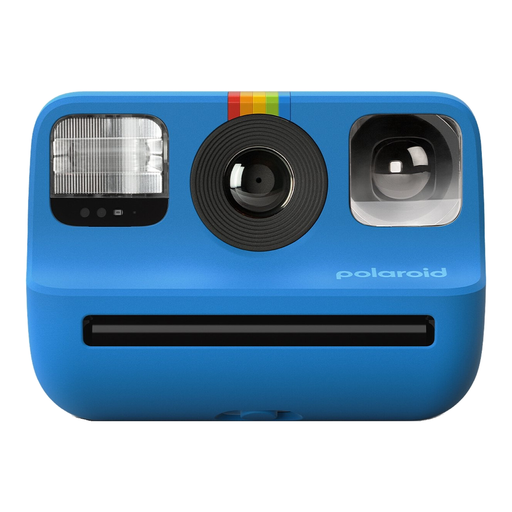 Image unavailable
Polaroid Go Gen 2 - Blue
If you want instant prints as well as taking photos, the product information lists Polaroid Go film and a built-in flash.
The camera uses Polaroid Go film; check that it suits how you want to capture and keep your paperweight photos.
Joybuy
Frequently asked questions
Do I need a 1:1 macro lens straight away to photograph a whole paperweight?
Not necessarily. First check whether your chosen lens can capture the whole object sharply and at a large enough size. For tiny inclusions that need to fill the frame, the lens’s maximum magnification matters more than the focusing distance alone.
How should I position a glass paperweight by a window?
Place the paperweight on a stable surface and try softening the light with white material. White or black cards beside the object can help shape light or dark edges; change the camera angle if you can see the camera reflected in the glass. A tripod can keep the composition steady while you adjust the set-up.
What should I check besides the camera itself?
Check whether you’re buying a body, a kit with a lens or a fixed-lens camera. A macro lens, tripod or compatible filter is only included if the specific listing says so; compare the complete set-up you need for your photos.
What warranty and cooling-off period apply when buying in the Netherlands?
According to the Dutch government, there’s no fixed statutory warranty period in the Netherlands; if something is faulty, contact the seller. For eligible distance purchases from a business, you usually have a 14-day cooling-off period. Check the terms and exceptions that apply to the specific purchase.


