Which setup is right for you?

Miniature painter looking to show paint details

If you want to capture tiny brushstrokes and parts clearly, compare the magnification and focusing distance of your chosen camera and lens combination. Make sure there’s room for light to reach the subject.

Figurine portfolio creator

For photos with consistent framing, a white background and true-to-life paint colours, use a fixed setup, pay attention to lighting and check the white balance.

Hobbyist who wants to document their work quickly

If you mainly want overview shots without changing lenses, first check whether your existing phone or compact camera can focus at the distance you need and frame the figurine as desired.

What should you look for when choosing?

Existing phone or compact camera

Suitable if: you mainly photograph whole figurines and your device can focus at the distance you need.

Consider: take a test shot to see whether the smallest paint details appear large and sharp enough. A new camera body won’t solve this on its own.

Compact camera with close-up mode

Suitable if: you want to take close-ups without changing lenses.

Consider: the built-in lens can’t be changed, so check the framing at your own workbench.

Mirrorless camera with standard zoom lens

Suitable if: you want to use the camera for other subjects too, with the option of choosing a different lens later.

Consider: the supplied zoom lens isn’t automatically a macro lens. Check the magnification of the exact lens you’re considering.

Mirrorless camera with a separate macro lens

Suitable if: you want tiny brushstrokes or parts to fill the frame.

Consider: check the lens mount and working distance, and make sure the lens is actually included with the camera. At close range, light also needs to reach the figurine.

Compact camera with a longer zoom range

Suitable if: you want one camera for other types of photography too, with a built-in zoom lens.

Consider: the focusing distance can vary at different zoom settings. Check the close-up at the setting you plan to use.

What to considerWhat should you check?Who should weigh this more heavily?
Tiny paint details Compare the magnification and focusing distance of the exact lens or compact camera. A short focusing distance alone doesn’t tell you how much magnification you’ll get. If I want to fill the frame with eye details, edge highlights or brushstrokes, I’ll focus on the close-up capabilities of the combination I choose. Around 33% of consumers put details first.
Colour against white Check whether you can adjust the white balance, and take a test shot under the lighting you plan to use. Assess both the background and the lighter areas of paint. For a portfolio, I want a series of photos with consistent paint colours and a background that looks neutral. Around 25% of consumers put colour and white backgrounds first.
Sharpness across the figurine Check which focusing settings are available and whether your workflow requires multiple shots and post-processing. For a three-dimensional figurine, I may want both the front and back in focus, even if that takes extra steps. Around 25% of consumers prioritise depth of field.
A complete, repeatable setup Check what’s included in the kit and whether you’ll need a suitable lens, stable support or lighting. If I mainly want overview shots, I want a fixed tabletop setup that’s easy to use again. Around 17% of consumers value simplicity and a complete setup most.

Common buying mistakes

  • Assuming a short focusing distance means macro magnification

    The usable distance can vary between lenses or zoom settings, and on its own it doesn’t tell you how large a paint detail will appear in the frame. Sony gives a focusing distance of approximately 8 cm from the front of the lens for the RX100 VII at the wide-angle end, and approximately 100 cm at the telephoto end. Canon gives magnification figures for the RF-S 18-45mm at different focal lengths and focusing modes.

    Compare magnification and focusing distance for the exact camera and lens combination, and for the framing you want.

  • Comparing only the mirrorless camera body

    A body without a suitable lens isn’t a complete close-up setup. The Nikon Z50II body reviewed and the macro lens discussed are separate products. A stable support can also help you achieve consistent compositions.

    Plan your complete setup in advance and check which parts are actually included with each offer.

  • Confusing a white background with accurate paint colours

    Canon notes that ambient light can make a white background look yellow. This colour cast can also make it harder to assess the paint colours accurately.

    Take a test shot under your own lighting and check the white balance before photographing a whole series.

Camera brands to consider

Canon

The EOS R50 is a mirrorless camera you can start using with a standard zoom lens, then consider pairing with a different lens later.

  • Canon specifies focus bracketing for the EOS R50. For the RF-S 18-45mm, Canon gives a maximum magnification of 0.26× at 45 mm with manual focusing.
  • That magnification is for the standard zoom lens, not a separate macro lens. Canon lists the RF 85mm F2 Macro IS STM as compatible with the EOS R50 and specifies a magnification of 0.5×.

Nikon

The Z50II body can be paired with a separately selected NIKKOR Z macro lens.

  • Nikon specifies 1:1 magnification for the NIKKOR Z MC 50mm f/2.8 and lists Z macro lenses for DX cameras such as the Z50II.
  • The Z50II body reviewed is sold without that macro lens. Also check the working distance and whether the lens you choose is included with the offer.

OM SYSTEM

The Tough TG-7 is a compact camera with a built-in microscope mode for close-ups without changing lenses.

  • OM SYSTEM states that it can focus from 1 cm in microscope mode.
  • The built-in lens can’t be changed. The micro adventure kit reviewed includes an LG-1 light guide and an extra battery; these accessories aren’t automatically included with a TG-7 sold on its own.

Sony

The RX100 VII is a compact camera with a built-in zoom, designed for people who want to use it beyond their figurine setup too.

  • Sony specifies a 24–200 mm equivalent zoom range in 35 mm format.
  • Sony gives a focusing distance from the front of the lens of approximately 8 cm at the wide-angle end and approximately 100 cm at the telephoto end. The wide-angle distance therefore doesn’t apply across the full zoom range.

Joybuy products

These Joybuy product picks are compact cameras with action- or vlogging-focused names. Before choosing, check that the exact camera can focus closely enough and capture your figurine and its paint details as you want.
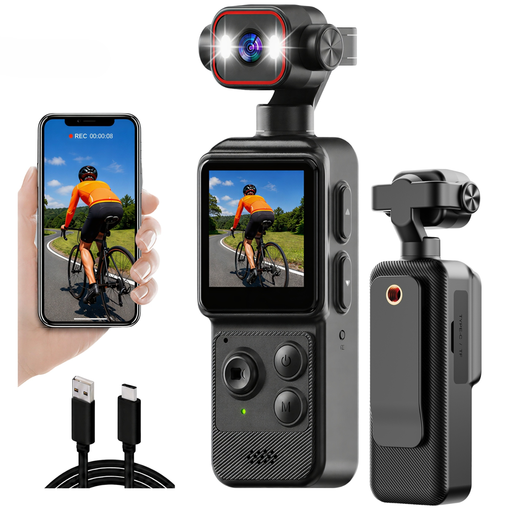
Mini Action Camera 4K with Clip, 1.54 inch Display and 140° Wide Angle

Mini Action Camera 4K with clip, 1.54 inch display and 140° wide angle

The product name lists vlogging and travel as possible uses; check its close-up capabilities for your figurines separately.

The title lists a 4K camera, clip, 1.54 inch display and 140° wide angle.

The title also mentions app control, an LED light and a 1200 mAh battery.

View at Joybuy
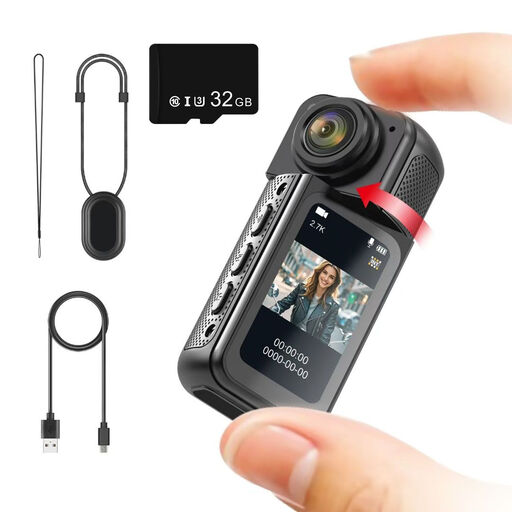
NAXSIR Mini Action Camera 2.7K with rotating lens and 32GB memory card

NAXSIR Mini Action Camera 2.7K with 180° rotating lens

The product name identifies this as a mini action camera; check that its focusing and framing suit your figurine photography.

The title lists a 2.7K camera, 180° rotating lens and a 32GB memory card.

The title mentions a magnetic mount and a 1.47-inch IPS screen.

View at Joybuy
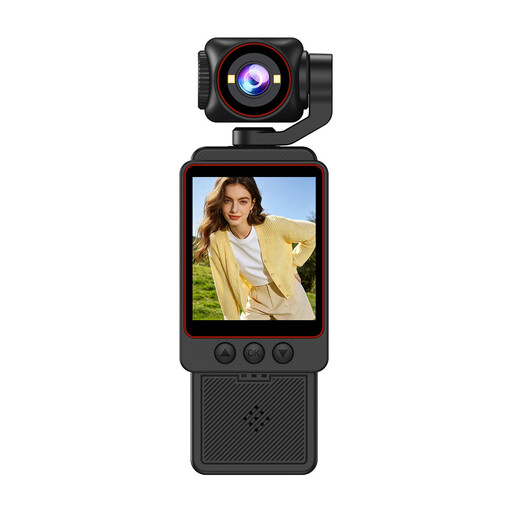
2K Pocket Vlogging Camera with 360° rotating lens, black

2K Pocket Vlogging Camera with 360° rotating lens, black

The product name positions this model for everyday vlogging; check whether it can focus closely on the details you want to photograph.

The title lists a 2K Pocket POV camera with a 360° rotating lens.

View at Joybuy
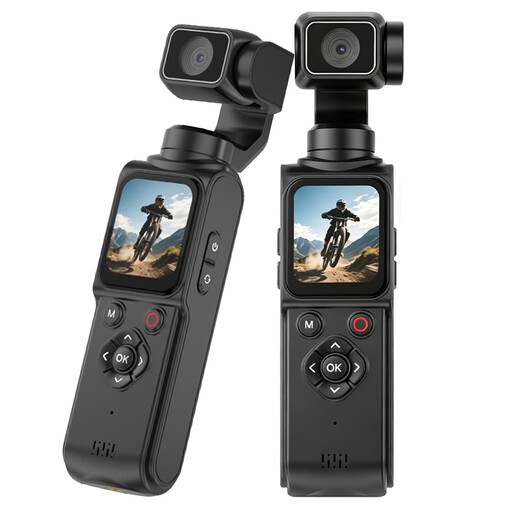
KINSI Mini Vlog Camera 4K with 64 MP, 330° rotating lens and tripod

KINSI Mini Vlog Camera 4K, 64 MP, with 330° rotating lens

The product name lists vlogging, travel and sport as possible uses; for figurines, first assess the close-up and colour reproduction of the exact camera.

The title lists 4K, 64 MP, Wi-Fi and a 1.72 inch touchscreen.

The title mentions a tripod and Type-C connection.

View at Joybuy
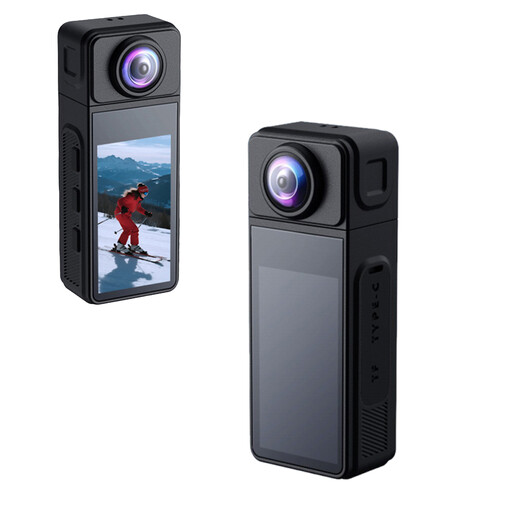
NAXSIR 2K Mini Action Camera with 270° rotating wide-angle lens

NAXSIR 2K Mini Action Camera with 270° rotating wide-angle lens

The product name identifies this as a mini action camera; check its close-up capabilities before choosing it for paint details.

The title lists a 2K camera, rotating wide-angle lens and magnetic housing.

The title mentions electronic image stabilisation.

View at Joybuy

Frequently asked questions

Do I need to buy a new camera straight away to photograph my figurines?

Not necessarily. According to the Cultural Heritage Agency of the Netherlands, a good phone camera or compact camera can also be suitable for documenting objects. Start with an overview shot, then check whether the smallest paint details are clear enough in a close-up.

How can I take photos with a white background and consistent framing?

Keep the background, figurine and camera in fixed positions, and use a tripod or other stable support. Canon recommends using a tripod for product photography. Also check the white balance under your chosen lighting, so a colour cast on the white background doesn’t make it harder to assess the paint colours.

Does focus bracketing automatically produce one completely sharp photo?

No. Focus bracketing alone doesn’t mean the shots have already been combined into one image. Canon lists focus bracketing for the EOS R50; focus stacking combines shots taken at different focus points afterwards. Check what combining steps your workflow requires.

Which components should I compare before buying?

Compare the complete setup you need: camera body, suitable lens, stable support and, if necessary, lighting. The Nikon Z50II body discussed is sold without the separately mentioned macro lens; the TG-7 micro adventure kit reviewed includes a light guide and an extra battery.

What are my rights when buying a camera online in the Netherlands?

According to the Dutch government, online distance purchases from a business often come with a 14-day cooling-off period, although exceptions apply and the type of seller matters. You also have a legal guarantee if a product is faulty: there’s no fixed statutory guarantee period in the Netherlands, and the seller is your point of contact for a solution.
