
Detail seeker
You want to capture veins, fibres and seed structures up close. So pay attention to the lens’s magnification and focusing capabilities.


First, decide how close you want to get to your dried flowers. For capturing veins and tiny textures, the lens or camera’s close-up capabilities matter more than the megapixel count alone. A compact camera with a macro mode keeps your kit simple; a mirrorless camera with a suitable macro lens gives you more options, but requires an extra lens and careful focusing, especially in low window light.
You want to capture veins, fibres and seed structures up close. So pay attention to the lens’s magnification and focusing capabilities.
You arrange flowers by the window and want to control which blooms are in focus and how the light falls across the composition.
You want to photograph flowers up close without changing lenses, and value a compact set-up more than the option to expand your kit.
Best for anyone who wants to take close-ups without choosing or changing a separate lens. OM SYSTEM lists macro modes for the Tough TG-7.
Trade-off the lens is fixed, so check that its framing suits your flower arrangements.
Best for anyone who wants to photograph both full bouquets and tiny floral details, and choose a lens to suit. Nikon, Sony and Fujifilm specify 1:1 magnification for the macro lenses mentioned.
Trade-off the camera and lens make up your kit; shooting close also reduces depth of field and makes accurate focusing more critical.
| What to consider | What should you check? | Who is this important for? |
|---|---|---|
| Tiny details | Check the maximum magnification of the exact lens, or the camera’s macro capabilities. Also consider whether your set-up leaves room to light the flowers. | If I want veins or seeds to fill the frame, I find out how close the camera can focus. Around 31% of consumers give capturing small floral details top priority. |
| Depth of field | Check whether the camera offers focus bracketing, and whether you need to combine shots in-camera or using software. | If I want several parts of a flower or arrangement to be in focus, I look at the focusing options and how to take a series of shots. Around 25% of consumers prioritise depth of field. |
| Window light | See which exposure settings you can adjust, and whether a stable set-up or tripod will fit into your workspace. | If the window light changes, I want to be able to adjust the exposure without risking unnecessary camera shake. Around 25% of consumers give working with available light top priority. |
| Complete kit | Compare a complete camera-and-lens set-up with a fixed-lens camera, and check which components are included. | If I want a straightforward purchase, I want to know in advance what I’ll need to take photos. Around 19% of consumers prioritise keeping their kit simple. |
With a mirrorless camera, close-up photography also depends on the lens you use. The body and lens must be compatible, too.
Compare a body with a specific compatible lens against a compact camera with a fixed lens.
The word ‘macro’ in a product name doesn’t automatically tell you the lens’s maximum magnification.
Check the stated magnification ratio for the exact lens model.
A wider aperture lets in more light, but reduces depth of field. With close-ups, that can leave only part of the flower in focus.
Decide which part you want in focus. For a still arrangement, consider a stable set-up or a focus-stacked series.
The EOS R system supports interchangeable lenses; Canon lists focus bracketing for the EOS R50.
The Z system can be paired with the separately sold NIKKOR Z MC 50mm f/2.8 for macro detail.
Sony’s E-mount system includes the SEL30M35, an APS-C macro lens.
The Tough TG-7 is a fixed-lens option with macro modes; the OM-5 Mark II is a mirrorless camera with interchangeable lenses.
The X system includes the XF30mmF2.8 R LM WR Macro, among other options, for macro detail and other types of photography.
This selection consists of action cameras. Before buying, check that the close-up framing and focusing distance suit the way you want to photograph dried flowers.
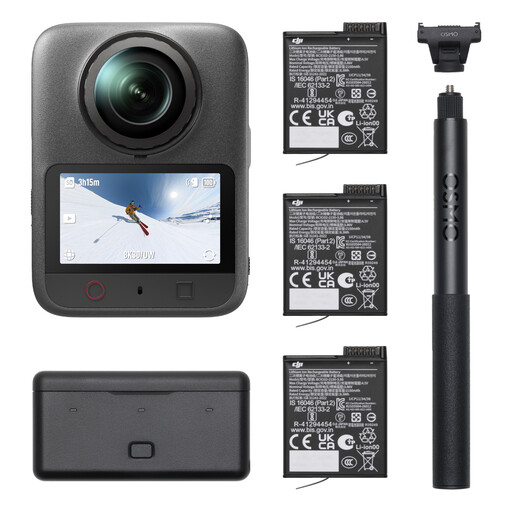 No image available
The product information identifies this as a 360° action camera. Check that its close-up framing and focusing distance suit your flower arrangement.
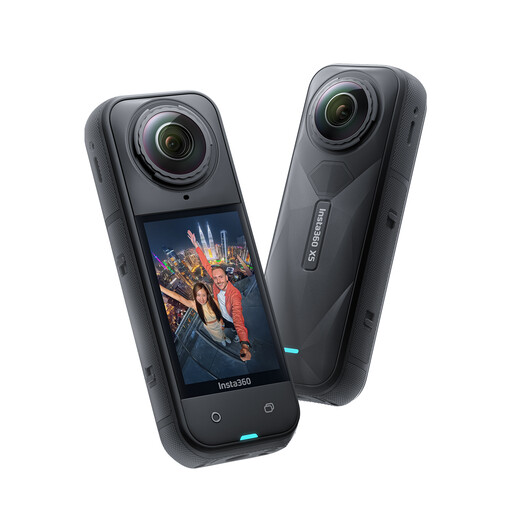 No image available
This model is described as a 360° action camera. The product title mentions 8K, waterproofing, a replaceable lens and a 3-hour battery life; check whether the camera is suitable for the close-ups of dried flowers you want to take.
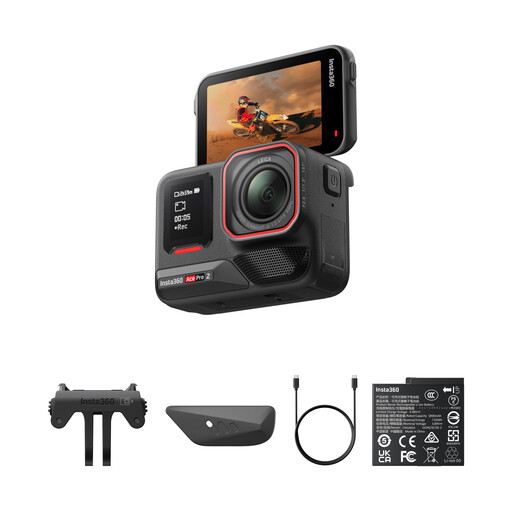 No image available
This model is described as an action camera, and the product title mentions a dual-battery bundle, 8K, waterproofing and a 1/1.3-inch sensor. Check that the camera offers the focusing distance and framing you need for dried flowers.
No. First, check how close the exact lens can focus and how large it can make the subject appear in the frame. Depth of field and accurate focusing also matter in macro photography; the megapixel count won’t answer those questions.
No, not always. If you need a slower shutter speed at your chosen aperture, a stable set-up can help reduce camera shake. Take some test shots and check that the flower details are sharp.
Read the manual for the exact model, take some test shots and check which battery and memory card you need. The Dutch government advises taking used camera batteries to an appropriate collection point, rather than putting them in general waste.
For eligible distance purchases, you generally have a 14-day cooling-off period. According to the Dutch government, an online purchase from a private individual does not fall under this definition. The seller must also provide a product that is fit for purpose. The Netherlands does not have a fixed statutory warranty period of two years.