
Demonstrating dictionary pages
If you’re showing how to look up an entry in a printed dictionary, a steady view of the open page matters more than being on camera the whole time.


If you mainly want to show dictionary pages and demonstrate how you look things up, start with a document camera that can be positioned above the book, then check that the image is clear in your video app. If you usually speak on camera and only show the book occasionally, a tilting webcam may be more practical. Framing and microphone controls also matter in a shared studio. Manufacturer specifications describe features and connections, but they don’t prove that small text will be readable in every set-up.
If you’re showing how to look up an entry in a printed dictionary, a steady view of the open page matters more than being on camera the whole time.
If you speak on camera and occasionally switch to the dictionary, think about the camera angle and which parts of the studio will appear in shot.
If you want to show both the book and yourself during a lesson, check how the camera connects and how you’ll switch between views in your set-up.
Choose this option: if the dictionary page and your search process are the main focus. IPEVO lists autofocus and a maximum capture area of 342 × 255 mm for the V4K PRO.
Bear in mind: the arm and book take up space, so check that the open page fits within the capture area.
Choose this option: if you usually speak on camera and want to show the dictionary occasionally. Logitech describes a Show Mode for the Brio 500, in which the camera tilts down to show objects on your desk.
Bear in mind: tilting the camera down won’t automatically give you a stable overhead view of an entire book page.
Choose this option: if you want to display the page directly on a monitor or projector. IPEVO lists HDMI output for the VZ-R.
Bear in mind: the VZ-R also needs USB power in HDMI mode. Check how you’ll get the image into an online session, too.
Use this guide to help you choose: start with what you need to show in your demonstration.
| What to consider | What to check before buying | Who is this important for? |
|---|---|---|
| Page readability | Compare the capture area with your open book, and check the focus and image quality at the working distance you plan to use. | If I’m showing small dictionary text, I want to check in advance how it looks in the video app. Around 36% of consumers in this situation put readability first. |
| Framing and privacy | Check that you can point the camera at the book and mute the microphone. | In a shared studio, I don’t want to capture other users on camera or on audio by mistake. Around 29% of consumers in this situation prioritise framing and privacy. |
| Switching between the speaker and the book | Check the tilt angle, mounting and how to switch views in your video app. | If I switch between explaining something and pointing out an entry, I want to know whether my set-up can handle the change. Around 21% of consumers prioritise smooth switching. |
| Connections and desk space | Check the port type you need, the power supply and the space required for any arm. | When my computer, screen and shared desk determine my set-up, I want to make sure the connections will work together in advance. Around 14% of consumers start by considering connections and set-up. |
Resolution alone won’t tell you whether small words will be clear at your working distance and in your video set-up.
Compare the dimensions of your open dictionary with the stated capture area, then test a page with small print in the video app.
Show Mode on the Logitech Brio 500 works by tilting the webcam down. That’s a different set-up from a document camera with an arm positioned above the book.
Decide in advance whether you want to switch between views or need a fixed view of the page alongside your face.
IPEVO states that the VZ-R also needs USB power in HDMI mode.
Check your screen input, available power and how you’ll get the image into your online session.
People who can be recognised may be covered by privacy rules. Sharing protected book content publicly may also be subject to separate copyright conditions.
Before recording, check the frame, microphone audio and what you plan to share. Check with anyone who might appear recognisably in shot.
Document cameras for showing books and objects. The V4K PRO uses USB, while the VZ-R also offers HDMI output.
Webcams for people who mainly show themselves on camera and want to bring their desk into view occasionally.
According to CZUR, the Fancy S Pro combines an adjustable document camera set-up with webcam functionality.
Epson Netherlands positions the ELPDC07 as a portable USB visualiser for showing items such as textbook pages.
ELMO Europe describes the MX-P3 as a portable document camera for paper and objects.
These products include webcams for when you’re speaking on camera and document cameras for showing printed pages.
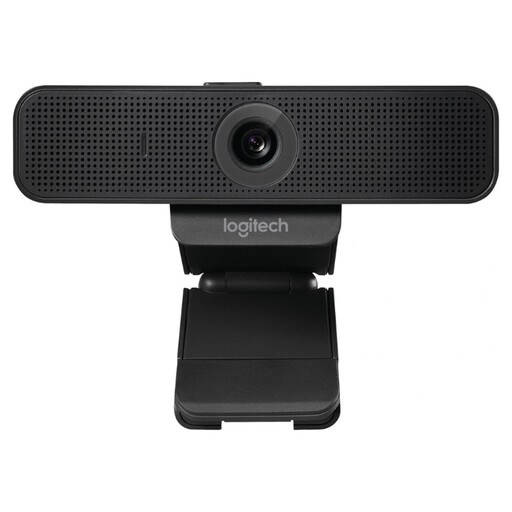 Image unavailable
Could suit you if you’ll be speaking on camera during the demonstration and want to attach the webcam to a monitor.
Full HD 1080p, autofocus, adjustable clip, built-in microphone and lens cover.
 Image unavailable
Could suit you if you’re looking for a webcam with autofocus and a built-in microphone for your presentation.
The title lists 8MP, autofocus, two built-in microphones, a universal clip and a privacy cover.
 Image unavailable
Could suit you if you want to show yourself during the demonstration and attach the camera to a screen.
The title lists 2K QHD, a noise-cancelling microphone and a clip-on mount for a desktop or laptop.
 Image unavailable
Could suit you if you also want to use a small collaboration or meeting room with a computer as well as giving your demonstration.
The description lists 4K video, a 120-degree field of view, built-in microphones and USB connectivity.
 Image unavailable
Could suit you if you want to capture a printed page with a document camera. Compare the supported paper sizes with your open dictionary.
The description lists an 8MP sensor, support for A3 and A4 sheets, USB and OCR software. The title states compatibility with Windows and macOS.
Place your own book where you plan to use it, show a page with small print and check the result in the video app and on a viewer’s screen. Compare the dimensions of the open book with the stated capture area beforehand; pixel count alone doesn’t prove that the text will be readable.
No, not for every demonstration. According to IPEVO, the VZ-R can display an image directly on a monitor or projector via HDMI, but it also needs USB power in this mode. For an online demonstration, check how the image will appear in your meeting or recording software.
Point the camera at the book, check the full frame and microphone audio, and check with anyone who might appear recognisably in shot. According to the Dutch Data Protection Authority, identifiable people’s details are personal data. The GDPR obligations that apply depend in part on who is recording and how the footage is shared.
Not necessarily. The Dutch government says that permission or an applicable exception may be needed to use and publish copyright-protected books. Making a private copy doesn’t give you the right to distribute it; whether a particular page or educational use falls under an exception depends on the circumstances.
For a standard online consumer purchase, ACM ConsuWijzer says you generally have a 14-day cancellation period after delivery, although there are exceptions. You’re also covered by the statutory guarantee if a product doesn’t perform as you could reasonably expect under normal use; a manufacturer’s guarantee doesn’t replace this right.