
Maker creating product ranges
You regularly photograph complete crocheted figures for a shop or portfolio and want consistent framing and the same background. Canon Netherlands recommends using a tripod to achieve consistent composition.


Start with the smallest area you want to photograph and check the focusing capabilities of the lens actually included in the kit. A compact camera with a close-up mode keeps your setup simple; a mirrorless camera lets you choose from interchangeable lenses, but a standard zoom isn’t automatically suitable for macro photography. Consistent lighting and a fixed camera setup help you take repeatable product photos.
You regularly photograph complete crocheted figures for a shop or portfolio and want consistent framing and the same background. Canon Netherlands recommends using a tripod to achieve consistent composition.
You also want to capture eyes, stitches or small decorations clearly. Compare the close-up capabilities of the lens you plan to use; Canon Netherlands and OM SYSTEM publish lens and focusing specifications for individual models.
You want different yarn colours to remain recognisable under your home lighting and look consistent between photo sessions. Nikon Netherlands recommends checking the white balance again when lighting conditions change.
A good fit if: you want to try photographing small figures and stitch details without changing lenses. According to OM SYSTEM, the TG-7 can focus as close as 1 cm under the specified conditions.
Bear in mind: the lens is fixed, so you can’t switch to a different lens later.
A good fit if: you mainly photograph complete figures and may want to use a different lens later. Check the minimum focusing distance of the supplied zoom at each focal length.
Bear in mind: a standard zoom isn’t automatically a macro lens; you may need another lens for very small details.
A good fit if: you want to show details with greater depth of field and are happy to use multiple shots or a dedicated camera function. Panasonic lists Post Focus and Focus Stacking for the LUMIX G100D.
Bear in mind: this approach takes longer; the feature doesn’t automatically turn the supplied zoom into a macro lens.
| What to consider | What should you check? | Who is this important for? |
|---|---|---|
| Wide shots | Check which lens is included and whether a tripod and screen will suit your regular setup. | If I want to photograph a series of complete figures with consistent framing, I focus on the lens and a repeatable setup; around 36% of consumers prioritise wide shots. |
| Small details | Compare the minimum focusing distance and magnification of the exact lens and focusing mode. Also check whether there’s room around the camera for lighting. | If I want stitches and small decorations to be clearly visible, I focus on the lens’s close-up capabilities; around 29% of consumers give detail the highest priority. |
| Colour reproduction | Check whether you can adjust the white balance and consider how you’ll keep the lighting consistent between sessions. | If yarn colours need to remain recognisable on different days, I want to be able to control the lighting and white balance; around 21% of consumers prioritise colour consistency. |
| Simple setup | Compare a fixed lens with an interchangeable one and check exactly what’s included in the box. | If I want to take photos without changing lenses and with as few separate parts as possible, a simple setup appeals to me; around 14% of consumers give simplicity the highest priority. |
Focusing distance and magnification are different lens specifications. With the Canon RF-S 18-45mm, the stated focusing distance also varies depending on the zoom setting and whether you’re using autofocus or manual focus.
Before choosing, compare the framing you want with the specifications of the exact lens included in the kit.
You may need another lens for very small details, which means an extra decision and potentially more equipment.
A body and a lens kit are different purchases, and kit contents vary. For example, the Z50II kit described by Nikon Netherlands doesn’t include a charger.
Read the details of the exact offer and check which parts you’ll need for a usable kit.
If a charger or lens is missing, you may need to source those items separately.
Changing daylight or artificial light can affect colour reproduction between photos. Nikon Netherlands recommends checking the white balance again when lighting conditions change.
Try to use even lighting and adjust the white balance to suit the lighting you’re using.
Setting up consistent lighting and checking colours takes time and preparation.
According to Canon Netherlands, the EOS R50 kit with RF-S 18-45mm is a specific mirrorless camera kit for product photography.
The Tough TG-7 is a compact camera with a fixed lens for taking close-ups without changing lenses.
The Dutch Z50II kit with NIKKOR Z DX 16-50mm is a mirrorless camera kit for general photography, with the option to expand your setup later.
The LUMIX G100D is worth considering if you want to assess its listed Post Focus and Focus Stacking features.
The ZV-E10 has an interchangeable lens and may be worth considering if you make videos as well as product photos.
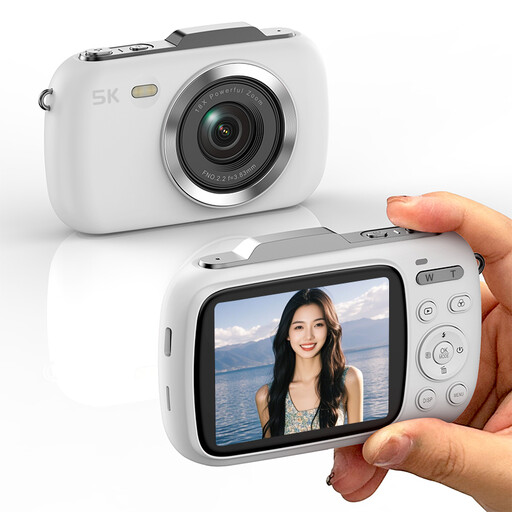
These camera picks from Joybuy are suitable for product photography, with models for different framing and setup needs.
 No image available
The listed optical zoom gives you different framing options for photos of complete figures.
The product name lists 80 MP and 18× optical zoom.
 No image available
The listed zoom can help you adjust the framing when photographing complete figures.
The product name lists 64 MP, 12× optical zoom and 4K.
 No image available
The interchangeable zoom lens offers different focal lengths for framing product photos.
The product information lists an APS-C camera and a vari-angle touchscreen.
 No image available
The kit lens offers different focal lengths for framing complete figures.
The product information lists a 24.2 MP sensor, touchscreen and electronic viewfinder.
 No image available
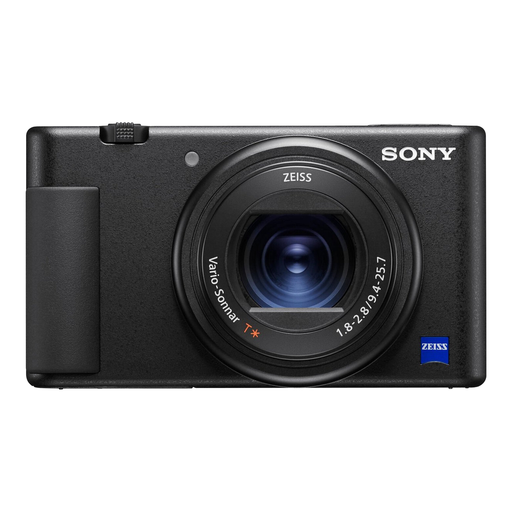
The built-in optical zoom lets you adjust the framing without a separate zoom lens.
The product information lists a 1-inch sensor, 2.7× optical zoom, RAW photos and a tilting touchscreen.
Not necessarily: a standard zoom may be enough for a complete figure, while small stitches may need greater magnification. Check the focusing distance and magnification of the exact lens; with the Canon RF-S 18-45mm, these figures vary depending on the zoom and focusing mode.
Place the camera and subject in the same positions each time, use a tripod for consistent framing and keep the lighting as constant as possible. Adjust the white balance again whenever the lighting changes.
First, check whether the spots appear to be caused by dirt on the sensor. Canon warns that camera sensors are delicate and that safe cleaning requires experience; follow the instructions for your camera or contact a service centre.
Consumer purchases are covered by statutory guarantees as well as any manufacturer’s warranty. According to the Dutch government, the Netherlands has no fixed statutory guarantee period, and the retailer is your point of contact if there’s a problem. For eligible distance purchases, you’ll often have a 14-day cooling-off period. Don’t assume you have the same consumer rights when buying for your business.