
Detail checker
You want to capture markings, solder joints or small components clearly and large enough to inspect.


For quick close-ups without a separate lens, a compact camera with a documented macro mode is a sensible choice. For smaller details and greater control over magnification, a mirrorless camera with a compatible macro lens is a better fit. In window light, check both sharpness at your actual working distance and reflections on solder joints: diffused light and a fixed camera setup can matter more than extra magnification alone.
You want to capture markings, solder joints or small components clearly and large enough to inspect.
You photograph both whole circuit boards and close-up details, and want to focus at close range without first fitting a separate lens.
You want to photograph several circuit boards or components at different heights under similar lighting and focusing conditions.
The percentages show which need consumers prioritise most when choosing a camera for this circuit-board task.
| What to consider | What to look for when buying | Who is this important for? |
|---|---|---|
| Capturing small details clearly | If possible, take a test shot of details of a similar size. Canon Netherlands lists a maximum magnification of 1.4× for the RF 100mm F2.8L Macro IS USM; Nikon Netherlands lists 1:1 for the NIKKOR Z MC 50mm f/2.8. | If I want to inspect small markings or solder joints, the detail needs to be large and sharp enough at the chosen distance. Around 36% of consumers prioritise making small components easy to read. |
| Usable light by a window | Check test images for reflections and try adjusting the light or the position of the circuit board. Basler AG describes diffused lighting as one way to handle highly reflective surfaces. | If reflections or changing window light obscure details, I want to be able to adjust the lighting setup. Around 29% of consumers prioritise usable lighting. |
| Sharpness at different heights | Check whether the specific camera supports in-camera focus stacking or whether you’ll need to process the images afterwards. OM SYSTEM describes combining images taken at different focus points; Nikon describes combining them with software. | If components at different heights need to look sharp in a single documentation photo, that matters more to me than taking one shot quickly. Around 21% of consumers give top priority to sharpness at different heights. |
| A complete, straightforward setup | Check exactly what’s included in the box. With a mirrorless camera, make sure the macro lens is included and compatible with the camera body. | If I want to get started without choosing a separate lens, I’m looking for a complete setup. With a mirrorless camera, I want to be sure the body and lens work together. Around 14% of consumers prioritise a simple, complete setup. |
A short focusing distance doesn’t tell you how large a component will appear in the frame, and it can leave little room to light shiny parts.
Test with a component of a similar size to see whether the framing and reflections work with your window-light setup.
Canon’s stated maximum magnification of 1.4× applies to the separate RF 100mm F2.8L Macro IS USM, not the EOS R50 body on its own.
Check which lens is included in the offer and whether it’s compatible with the camera. You may need to buy a suitable macro lens separately.
Focus stacking combines shots taken at different focus points to increase the depth of field in the composite image. The lighting still determines where reflections appear.
Assess sharpness and lighting separately. Bear in mind that taking a series of shots can take extra time and may require processing.
The Tough TG-7 is a compact camera with built-in macro features.
The WG-8 offers a compact-camera option with macro modes and built-in lighting.
An EOS R camera body can be paired with a separate RF macro lens.
The NIKKOR Z MC 50mm f/2.8 is a separate macro lens for Nikon Z cameras.
The FE 90mm F2.8 Macro G OSS is a separate macro lens for compatible Sony E-mount cameras.
The Joybuy options below are Polaroid models. For each one, check whether the circuit-board details you want to capture will appear large and sharp enough at your intended distance.
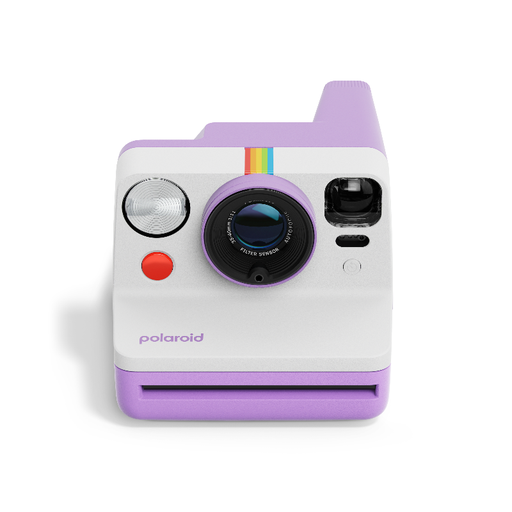 No image available
Take a test shot to check whether this model captures the circuit-board details you want, large and sharp enough.
Uses Polaroid i-Type film.
 No image available
Take a test shot to check whether this model captures the circuit-board details you want, large and sharp enough.
Compatible with Polaroid i-Type and 600 film.
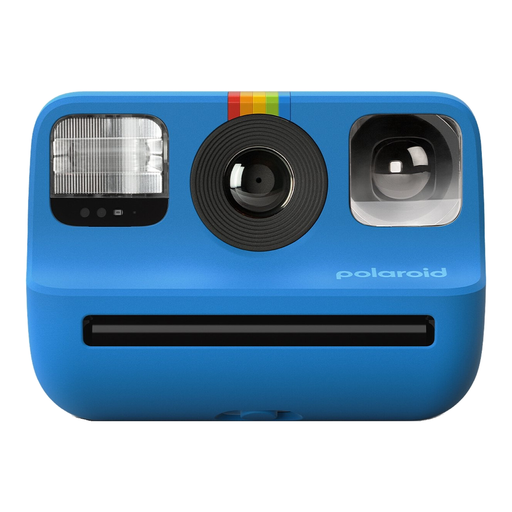 No image available
Take a test shot to check whether this model captures the circuit-board details you want, large and sharp enough.
Uses Polaroid Go film.
Keep the circuit board still, focus on the detail you want to capture and check a test image for reflections. If needed, adjust the position of the circuit board or the light; diffused light can help with shiny surfaces.
Not necessarily. First decide how much of the frame the whole circuit board should fill and whether individual components need to be legible. A stated 1:1 magnification describes the reproduction ratio for small subjects, not how suitable a lens is for every wide shot.
First check the focus point and depth of field in your test images. If components at different heights need to be sharp, you can combine shots taken at different focus points while the circuit board is stationary. Check whether your camera can do this in-camera or whether you’ll need software.
When buying a mirrorless camera, compare the complete combination of camera body and suitable macro lens. For consumer purchases, the Dutch government states that you’re entitled to a product that works properly under the statutory guarantee; if there’s a problem, the seller must provide a solution. Any additional manufacturer’s guarantee is separate from this.