
Sellers with lots of books
If you list a lot of books, a fixed setup helps you photograph covers and spines from a similar angle and with consistent colours every time. Canon Netherlands recommends using a tripod to keep your composition consistent.


Not necessarily: start with soft, even lighting and a fixed setup, then see whether your existing smartphone is up to the job—particularly if you mainly photograph complete books. A dedicated camera may be worthwhile if you need more control over exposure, colour or lenses, but for small imperfections, first check what the supplied lens can capture at close range. A dark background alone doesn’t mean you need a low-light camera; the book itself needs to be well lit.
If you list a lot of books, a fixed setup helps you photograph covers and spines from a similar angle and with consistent colours every time. Canon Netherlands recommends using a tripod to keep your composition consistent.
If you want to show small imperfections, inscriptions or printing details, check the close-up capabilities of the specific lens. Consumentenbond points out that not every lens fits every camera; Nikon states that the separately sold NIKKOR Z MC 50mm f/2.8 offers 1:1 magnification.
If you want to find out whether your current phone and better lighting will do the job, take some test shots before buying a camera and possibly an extra lens. Adobe suggests using a smartphone if you’re on a limited budget.
Choose this option: if you mainly photograph complete covers and spines, and your phone produces clear enough images.
Bear in mind: you’ll need to decide for yourself whether the sharpness, colour and detail are good enough for your listings.
Choose this option: if you want a separate device without having to change lenses, and the fixed lens suits your shooting distance.
Bear in mind: the lens can’t be changed, and video features may not be relevant for still photographs of books.
Choose this option: if you regularly photograph series of books or want to take close-ups, and can choose a suitable lens.
Bear in mind: check the lens mount and the specifications of the lens in the exact kit; a macro lens isn’t automatically included.
| What to consider | What to check before buying | Who is this important for? |
|---|---|---|
| Legibility and colour | Test the exposure and white balance with both light and dark books, using the lighting you’ll actually work with. | If I want text to remain legible and covers to look consistent under the same lighting, I prioritise exposure and colour reproduction. Around 36% of consumers prioritise legibility and colour. |
| Repeatable framing | Check that a tripod or holder will fit in your workspace and that the whole book will fit in the frame from that distance. | When photographing a series of books, I want to be able to repeat the framing quickly without repositioning the camera each time. Around 29% of consumers prioritise consistency. |
| Small details | Check whether the specific lens can capture the detail at a size and sharpness that meet your needs; check its magnification and mount. | If I want to show an inscription or imperfection on its own, the lens needs to focus at that distance. Around 21% of consumers prioritise close-up photography. |
| Cost and workflow | Try your phone first, and check exactly what’s included in a camera kit and how you’ll transfer your photos. | I want a straightforward workflow, without buying a camera body only to have to find a missing lens afterwards. Around 14% of consumers prioritise cost and simplicity. |
A lot of dark tones can affect automatic exposure. As a result, the camera may render the book differently from how you intended.
Test the book under soft, controlled lighting and check the exposure before choosing a camera based on its low-light performance.
The lens mount and the specifications of the exact lens both help determine whether you can photograph a whole book as well as small details. A separate macro lens isn’t necessarily included in a camera kit.
Check the full kit name, lens mount, angle of view and close-up capabilities before choosing a model.
Consumentenbond says its camera test, last updated on 9 October 2025, is out of date and that no newer models have been tested.
Don’t treat that test as a current, comprehensive ranking. Compare the specifications of the exact camera and lens with the way you plan to take photographs.
Canon offers both mirrorless cameras with interchangeable lenses and compact cameras with fixed lenses. The right choice depends on the lens and features you need for photographing books.
The Nikon Z50II with Z DX 16-50mm kit lens is a mirrorless option for overview shots. A macro lens is available separately and isn’t automatically included in the kit.
The Fujifilm X-M5 is a compact mirrorless camera with an X mount, so you can choose a suitable lens.
Below are cameras offered as options for taking individual photographs. For photographing books, check that the lens can capture both the whole book and the details you want to show in a suitable frame.
 No image available
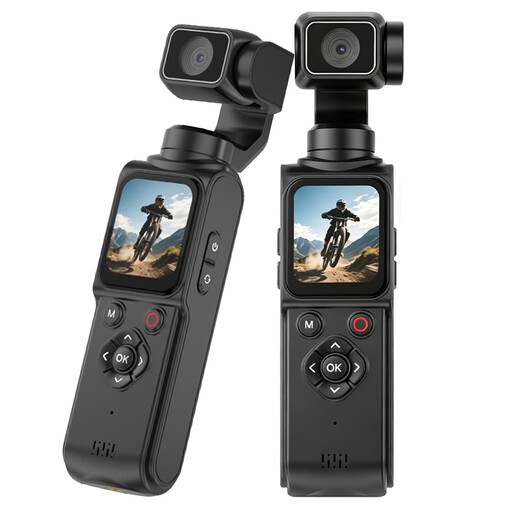
A dedicated camera option; check whether the supplied lens lets you photograph both whole books and the close-ups you need.
The product name mentions Wi-Fi, a 330° rotating lens and a 1.72-inch touchscreen. The description lists 64 MP photos and an included mini tripod.
 No image available
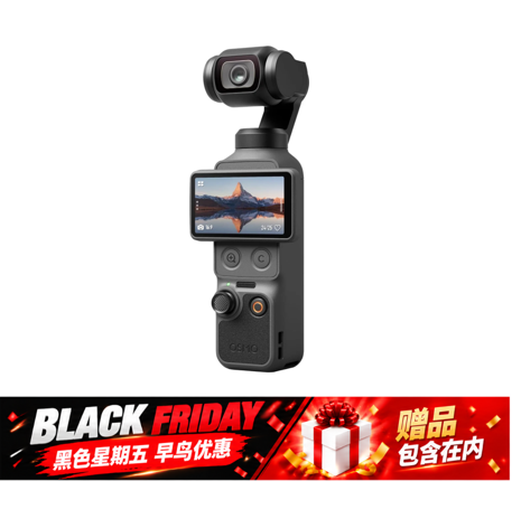
This pocket gimbal camera is offered as a camera for photography; check that its angle of view and close-up distance suit your book setup.
The product name mentions a 1-inch CMOS sensor, 4K/240fps, 3-axis stabilisation, 2× lossless zoom, 107 GB of built-in storage and a 2-inch rotating screen.
 No image available
If you’re considering this camera for photographing books, test the exact lens to see whether its framing and focus suit covers and small details.
The product name mentions 5K. The product description lists 80 MP photos and 18× optical zoom.
 No image available
A compact camera option; for still photographs of books, check whether the lens can handle the distance and framing you need.
The product name mentions a 1-inch CMOS sensor, 4K/120fps video, 3-axis stabilisation and a 2-inch rotating touchscreen.
 No image available
The kit includes a 16–50mm zoom lens, according to the product name. Check whether it can capture the whole book and the details you want from your workspace.
The product information lists a 24.2 MP APS-C sensor, an E-mount lens and Wi-Fi file transfer.
Not for that reason alone. Light the book evenly and check the exposure with a test shot; lots of dark tones can affect automatic metering.
Keep your lighting setup as consistent as possible and adjust the white balance again if the light changes. Check your test shots to make sure the paper and cover retain their intended colours.
No, not necessarily. First take a test shot with the exact lens you plan to use. If the detail isn’t large and sharp enough in the frame, a suitable close-up or macro lens could be the next step.
For an applicable online consumer purchase, you generally have a statutory cooling-off period of up to 14 days after delivery, although exceptions may apply. The seller must also remedy a product that, under normal use, doesn’t meet what you could reasonably expect, in accordance with the statutory guarantee rules. These consumer rules don’t necessarily apply to business purchases.