
Card sellers dealing with tricky colours or glare
If colours need to look true to life and reflections must not obscure any part of the print, your lighting setup and test shots are important considerations.


Start by taking a test shot of the card you find most challenging: even lighting, a camera positioned directly above the card and a clear close-up can matter more than a new camera body. Consider a mirrorless camera with a suitable lens only if tiny print details or consistent results are beyond what your current equipment can manage. A compact camera saves you from changing lenses, but gives you less flexibility to choose a lens.
If colours need to look true to life and reflections must not obscure any part of the print, your lighting setup and test shots are important considerations.
If you want to show small imperfections, edges or print details, you need to assess the complete camera and lens combination. The stated magnification of a macro lens applies to that lens, not automatically to every camera kit.
When photographing a series of cards, a fixed overhead setup can help you position the camera in the same way each time. The NIDF describes the importance of pointing the camera straight down and keeping the setup level.
Choose this if: test shots in even lighting clearly show the whole card, its colours and any relevant damage.
Bear in mind: the result depends on your current equipment, the lighting and the distance from the subject.
Choose this if: you want a dedicated camera without investing in a system with interchangeable lenses.
Bear in mind: you can’t fit a different lens later. Take a test shot to check that details are sharp enough across the whole card.
Choose this if: you photograph cards often and want control over framing and focus, with the option to choose a different lens later.
Bear in mind: the camera body isn’t the complete setup, so check which lens is included with the kit you choose.
Choose this if: you need to show tiny print details, paper edges or damage up close, and your existing lens isn’t up to the job.
Bear in mind: the macro lens is a separate purchase, and its maximum magnification doesn’t automatically make it suitable for overview shots of the whole card.
| What to consider | What to look for when buying | Who is this important for? |
|---|---|---|
| Colour and reflections | Take test shots in even lighting without direct flash. Then check whether you can adjust the exposure and white balance to suit your setup. | If I photograph glossy cards, I want to assess their colours without reflections hiding parts of the print. Around 36% of consumers prioritise colour and gloss. |
| Small details and damage | Take a close-up as well as an overview shot, then compare sharpness at the actual shooting distance. Check the magnification of the exact lens. | If small imperfections or fine print details need to be visible, I want to know what the complete camera and lens combination can capture at close range. Around 29% of consumers give this the highest priority. |
| Straight, consistent shots | Check that you can position and operate the camera steadily, directly above the card. A fixed setup needs space. | If I photograph lots of cards one after another, I want them to appear straight and consistent without having to realign the setup each time. Around 21% of consumers prioritise a repeatable process. |
| Total cost | Test your existing equipment first. If you’re considering a mirrorless camera, compare the exact kit contents and factor in the cost of a separate lens if needed. | If I’m only creating a few listings, I want to avoid buying more equipment than my photos need. Around 14% of consumers prioritise the total cost. |
Direct flash can distort colours, while reflections can obscure parts of a glossy card. A new camera body won’t automatically fix an unsuitable lighting setup.
First, test a card in even lighting without direct flash and compare the image with the actual print.
The magnification figures quoted for Sony, Nikon and Canon macro lenses apply to those specific lenses, not automatically to the camera body or any kit lens.
Check the full model name and the lens included. Take a test shot of the smallest detail you want to show.
Macro shots may require a separate, suitable lens.
A shot of the whole card may not show enough detail to assess corners, wear or fine print details.
Take a close-up too, and check the files after export at the size you plan to use in your listing.
Canon offers both an expandable RF system and a compact camera with a fixed zoom lens. Your choice of lens also affects the details you can capture.
The α6400 is an APS-C mirrorless camera with an E-mount. The E 30mm F3.5 Macro lens is a separate option for close-ups.
The Z50II is a mirrorless camera with a Z mount. Whether you choose a lens for the whole card or a separate macro lens depends on the framing you need.
The X-S20 is a mirrorless camera option for anyone who wants to edit their image files after shooting.
These Joybuy product options are relevant for photography. If you’re photographing art cards, take a test shot to check that your chosen camera and complete setup suit the card size, lighting and level of detail you want to capture.
 No image available
Take a test shot to see whether this camera and your chosen setup show your card details as you’d like.
The product listing specifies a 20 mm f/2.0 lens and 4K video.
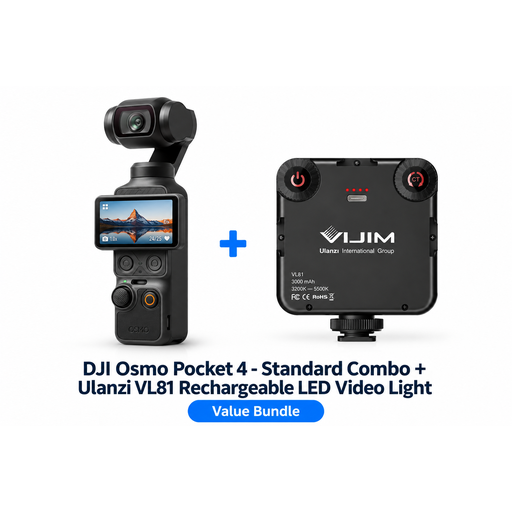 No image available
According to the product listing, the bundle includes a Ulanzi VL81 light. Take a test shot to check whether the lighting works for your cards.
The light’s stated colour temperature is 3200–5500 K.
 No image available
Take a test shot to see whether this camera works for both an overview of the card and the details you want to show.
The product title mentions a 1-inch CMOS sensor and 2× lossless zoom.
 No image available
Take a test shot of a card to see whether the image shows the colours and small details you want.
The product title mentions a 1-inch CMOS sensor and a 2-inch rotating touchscreen.
 No image available
Take a test shot to check that the card fits in the frame and that the details you want to show are clear.
The product title mentions 44MP and 16× zoom.
Lay the card flat and point the camera straight down. Check that the opposite edges of the card remain parallel. A stable overhead setup can help if you’re photographing lots of cards one after another.
No. First take a close-up with your existing camera or kit lens and check the exported listing image. Only then compare a separate macro lens; the stated magnification applies to that specific lens.
For eligible online consumer purchases, ACM ConsuWijzer states that you generally have a statutory cooling-off period of up to 14 days after delivery, including for second-hand products. You’re also covered by the legal guarantee if a product doesn’t meet what you could reasonably expect; this depends on the purchase and normal use. Check who the seller is and which terms and conditions apply to your purchase.
This isn’t automatically permitted for every card. The Dutch Government explains that other people’s copyright-protected works are protected; Article 23 of the Copyright Act sets out a conditional exception for certain types of work at a public sale, unless otherwise agreed. Whether this applies to a particular card and listing depends on the work, any agreements and how it is used. Don’t assume there’s a general exemption.