
Home baker with a dark photographic style
You want the whole fruit tart to stand out while keeping the background dark. Canon Europe and Nikon highlight lighting direction and light control as important considerations in food photography.


You don’t automatically need a new camera: first try directional side lighting and a stable set-up, then see whether your current camera can handle the framing and focus you want. Choose a mirrorless camera if you’d like the option to fit a different lens later, or a compact camera if you prefer to use a single fixed lens. Above all, check what’s included in the kit, the focusing distance and whether there’s enough room for your lighting set-up.
You want the whole fruit tart to stand out while keeping the background dark. Canon Europe and Nikon highlight lighting direction and light control as important considerations in food photography.
You want to bring berries, icing or pastry close up, so you’ll need to consider the lens, focusing distance and room for your lighting. Canon and Nikon describe dedicated macro lenses for their systems.
You want to take consistent photos of whole tarts, as well as vary the crop. A stable set-up and the choice between a fixed lens and interchangeable lenses may come into play; Consumentenbond explains the difference between compact cameras and cameras with interchangeable lenses.
Choose this if: your current camera already frames the whole tart well and you’d first like to try keeping the fruit visible with side lighting.
Bear in mind: changing your lighting set-up won’t automatically change your camera’s focusing distance or framing. Canon Europe and Nikon explain the role of lighting direction in food photography.
Choose this if: you want to switch between a wide view of the tart and a more spacious composition, with the option to choose a different lens later.
Bear in mind: a standard zoom isn’t automatically a 1:1 macro lens, so check the magnification of the lens included in the kit. The Canon EOS R50, Nikon Z50II and FUJIFILM X-S20 kits described here each include a standard zoom.
Choose this if: you want to photograph individual berries, icing or the texture of the tart in close-up.
Bear in mind: the lens must fit the mount, and the shooting distance needs to leave room for your lighting. Canon specifies a maximum magnification of 1:2 for the separate RF 35mm F1.8 MACRO IS STM; Nikon specifies 1:1 for the separate NIKKOR Z MC 50mm f/2.8. These lenses aren’t included in the standard kits mentioned.
Choose this if: you want to use a single camera and can get the crop you want without changing lenses.
Bear in mind: you can’t fit a different lens later. Check the focusing distance at the zoom setting you want to use; specifications alone don’t show how the camera will perform in this scene. Consumentenbond describes compact cameras as cameras with a fixed lens.
| What to consider | What should you check? | Who should give this more weight? |
|---|---|---|
| Keeping fruit visible against a dark background | See whether you can use your set-up by a window or with adjustable artificial lighting; don’t choose a camera body based solely on a low-light claim. | I want the fruit to remain visible without losing the dark mood. Around 36% of consumers prioritise this balance of light. |
| Small fruit details | Check the magnification and focusing distance of the exact lens, and whether there’s still room for side lighting. | If I want berries or icing to fill the frame, the lens’s magnification really matters. Around 29% of consumers prioritise these details. |
| Consistent tart composition | Compare the range of the included zoom, screen controls from your shooting angle and how easily you can position the camera securely. | I want to recreate the same tart composition and sometimes adjust the crop. Around 21% of consumers prioritise this framing. |
| Complete kit and set-up | Read which lens and accessories are included and compare them with the set-up you need. | If I want a simple set-up, I want to know what’s in the box and what else I’ll need. Around 14% of consumers prioritise a complete set-up. |
Lighting direction and control also matter when photographing a fruit tart. A new camera body won’t automatically change the lighting in the scene.
First try side lighting on the fruit, then see whether your current camera still falls short on framing or focus.
The stated magnifications of 1:2 and 1:1 apply to specific, separate lenses, not to the standard zooms in the kits discussed.
Compare the magnification and focusing distance of the exact lens supplied with the camera against the details you want to capture.
Kits may include different lenses and accessories. For example, Nikon states that the Z50II kit reviewed doesn’t include a charger.
Before buying, check the full kit name, the lens and the accessories included.
The EOS R50 kit is a mirrorless option with an included standard zoom; a separate macro lens is an additional purchase.
The Z50II kit combines a mirrorless camera with a standard zoom; you could consider a separate macro lens later.
The X-S20 kit is a mirrorless option with an interchangeable lens and a vari-angle screen.
The RX100 VII is a compact camera with a fixed zoom lens, for anyone who doesn’t want to change lenses.
Camera options for photography that you can assess by considering framing, shooting distance and the details you want to show in your fruit tart.
 No image available
A digital camera with a stated zoom range for anyone who wants to adjust the framing; check that the focusing distance suits the tart details you want to capture.
80 MP; 18× zoom.
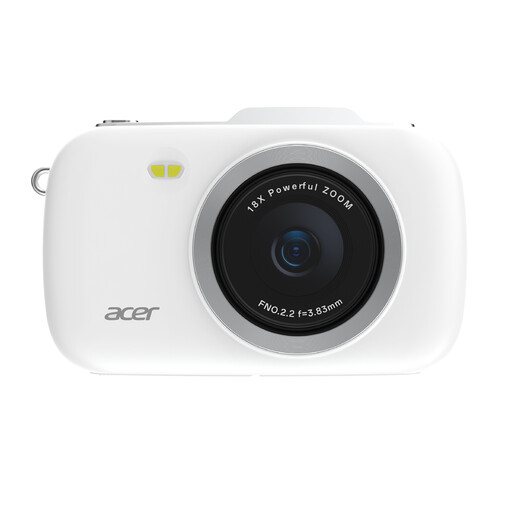 No image available
A digital camera with a stated zoom range for anyone who wants to adjust the crop; check the focusing distance for close-ups of fruit.
80 MP; 18× zoom.
 No image available
A compact camera option; check whether the shooting distance and lens capabilities suit the tart composition you want.
1-inch CMOS sensor; 4K/120fps video; 3-axis stabilisation; 2-inch rotating touchscreen.
 No image available
A pocket camera for photography and video; check that the focusing distance suits the fruit details you want to capture.
44 MP; 16× zoom.
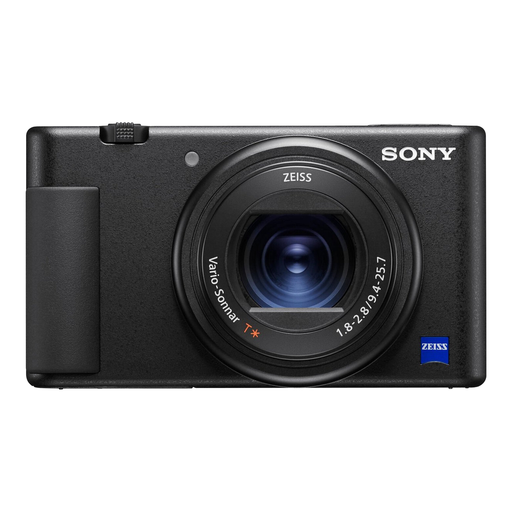 No image available
A compact camera option for anyone who wants to adjust the crop with a zoom lens; check the shooting distance you’ll need for close-ups.
24–70 mm; 2.7× optical zoom; tilting screen; 20 MP; RAW.
Not necessarily. If your current camera already frames the tart well, first try directional side lighting and a stable set-up; Canon Europe explains how window light and curtains can help create a dark mood. This doesn’t guarantee a particular result.
Not necessarily. First decide how large you want the tart and fruit details to appear in the frame. A separate macro lens may be useful for small details: Canon specifies a maximum magnification of 1:2 for the RF 35mm F1.8 MACRO IS STM, while Nikon specifies 1:1 for the NIKKOR Z MC 50mm f/2.8. Both are separate lenses, not standard zooms included in the kits mentioned.
For a still tart, a tripod can help, especially in low light or when shooting from above; Canon Europe gives these as examples. Also check that you’ve focused on the part of the tart you want to show clearly.
Check which lens and accessories are actually included. The Nikon Z50II kit reviewed includes a 16–50mm lens but no charger; the separate macro lenses described aren’t included in the standard kits mentioned.
For eligible distance purchases from a business, you usually have a 14-day cooling-off period, with some exceptions; the Dutch government also distinguishes between buying from a business and buying from a private seller. You’re also entitled to a product that meets reasonable expectations. According to the Dutch government, there’s no fixed statutory guarantee period in the Netherlands; if a product is faulty, contact the seller.