Who is this guide for?

Photographers with limited shooting space

You want to photograph the whole bowl of soup without standing far away from your small table. Consider the angle of view and focusing distance together: being able to focus up close doesn’t tell you whether the whole bowl will fit in the frame.

Creators who want consistent food photos

You photograph food regularly and want control over framing and lighting, with the option to choose a different lens later.

Photographers who want to keep their kit simple

You want to pick up your camera quickly and put it away again just as easily. You’re weighing the convenience of one fixed lens against the flexibility of a mirrorless camera.

What should you look for when choosing?

Compact camera with a fixed lens

Choose this option if: you want to use one camera and don’t want to change lenses.

The trade-off: check the framing on your table; a fixed lens limits your options for making changes later.

Mirrorless camera with a standard zoom lens

Choose this option if: you want to vary your framing and might want to use a different lens later.

The trade-off: check the complete kit. A standard zoom isn’t automatically a macro lens, and an extra lens takes up space and costs money.

What to consider What should you check? Who is this important for?
Framing the whole bowl up close Measure the space available and compare the angle of view and focusing distance of the exact lens. Try out the angle you want to shoot from, too. If I want to fit the whole bowl in the frame from a small table, the space available and the framing are my first considerations. Around 36% of consumers prioritise framing at close range.
Lighting and a consistent presentation Check that you can use the screen and controls from the position you plan to shoot from. Test your setup in the light you usually photograph in. If I want my food to look consistent in my usual lighting, I consider the position of the table, the light from the window and the controls. Around 29% of consumers give lighting and presentation top priority.
Capturing small details Compare the magnification and focusing distance of the supplied lens with those of any close-up lens you might buy. Check which lens is included in the box. If I mainly want to photograph garnishes or other small details, I check what the lens can do rather than looking at the camera body alone. Around 21% of consumers prioritise close-up details.
A compact, simple setup Check everything included in the box and consider whether you want one fixed lens or have room for extra lenses. If I want to pick up my camera quickly and store it away neatly, a simple setup matters more to me than being able to change lenses later. Around 14% of consumers give compact convenience top priority.

Common buying mistakes

  • Looking only at the minimum focusing distance

    Being able to focus up close doesn’t prove that the whole bowl will fit within the angle of view from where you’re standing.

    Check the angle of view and focusing distance against the size of your table and the angle you want to shoot from.

  • Assuming a camera body comes with a complete close-up setup

    The capabilities of a separate close-up lens don’t automatically apply to the standard zoom supplied with a kit.

    Check exactly what’s included in the kit and compare the lens specifications before factoring in extra close-up capabilities.

    A different lens may need to be bought separately and will take up extra storage space.

  • Expecting a more expensive camera to solve lighting problems

    The direction of the window, the time of day and the weather can all change how your food is lit, whatever camera you use.

    First, try the available table positions and lighting. Then decide which camera controls or lens you still need.

Brands to compare

Canon

The Canon EOS R50 with RF-S 18–45mm is an expandable mirrorless camera kit, while the PowerShot G7 X Mark III is a compact camera with a fixed lens.

  • Canon lists a movable touchscreen and the included RF-S 18–45mm lens for the EOS R50 kit.
  • The PowerShot G7 X Mark III has a fixed lens, so you can’t change it.

Nikon

The Z50II with NIKKOR Z DX 16–50mm f/3.5–6.3 VR is a mirrorless camera kit worth comparing if you want to vary your framing and have the option of choosing a different lens later.

  • Nikon lists a minimum focusing distance of 0.2 m for the kit lens when bought separately.
  • The focusing distance alone doesn’t determine what framing is possible on your table, and it doesn’t automatically make the lens suitable for every type of macro shot.

Sony

The Sony ZV-1F is a compact camera with a fixed lens, suited to anyone looking for a simple camera for a tight setup.

  • Sony says the ZV-1F can focus from around 5 cm, measured from the front of the lens.
  • Its fixed 20 mm-equivalent angle of view and lack of optical zoom limit your ability to change the framing using the lens.

Cameras at Joybuy

According to their product information, these cameras are suited to compact setups, framing or instant prints. Check that each model’s features and the framing you want work for photographing bowls of soup on your table.
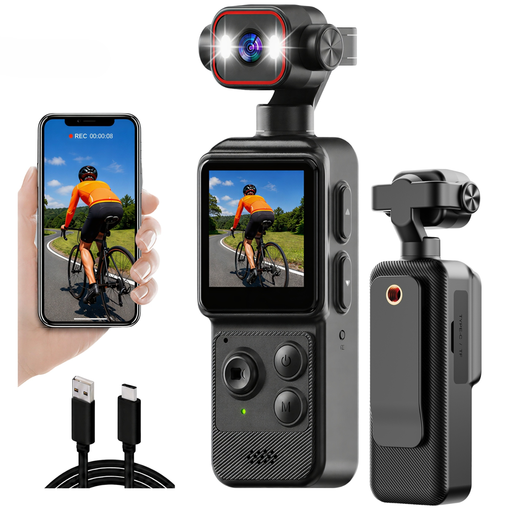
Mini Action Camera 4K with clip, 1.54-inch display and 140° angle of view

Mini Action Camera 4K with Clip

The product title mentions an integrated clip and a 140° angle of view, features suited to a tight setup. Check that the angle of view works for the framing you want.

The title also mentions a 1.54-inch display, app control, LED light and a 1200 mAh battery.

Joybuy

NAXSIR 4K digital camera, 64 MP, 18x digital zoom and autofocus

NAXSIR Digital Camera 4K

The product title mentions autofocus and 18x digital zoom. Check what digital zoom means for the framing you want on your table.

The title lists 64 MP photo resolution and an included 32 GB memory card.

Joybuy
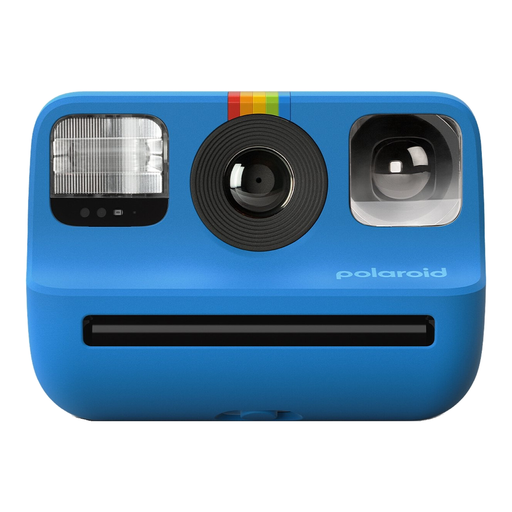
Polaroid Go Gen 2 instant camera in blue

Polaroid Go Gen 2 - Blue

This instant camera is especially worth considering if you want to keep a print as well as take a photo. That’s a different way to use it from simply taking a digital photo of your bowl of soup.

Polaroid Go film is required. The stated print size is 66.6 × 53.9 mm.

Joybuy

KOMERY G7 5K digital camera, 80 MP, with autofocus

KOMERY G7 5K Digital Camera

The product information mentions autofocus and zoom. Check that the framing and focusing you want are possible from where you plan to use the camera on the table.

The title lists 80 MP and 5K video. The product description mentions 18x optical zoom and autofocus.

Joybuy
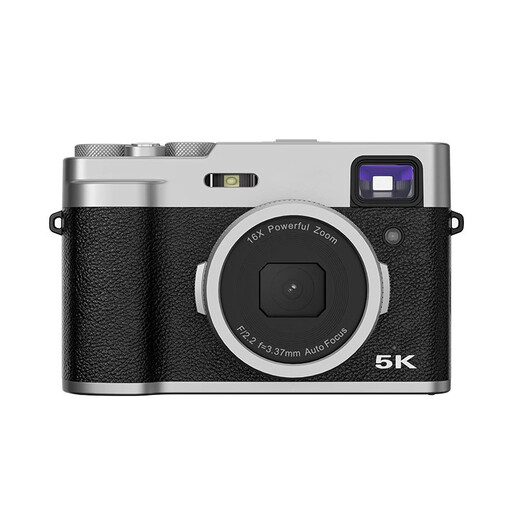
Songdian retro digital camera, 48 MP, 5K, with 2.8-inch LCD screen

Songdian Digital Camera Retro 48MP - Black

The product information mentions autofocus for photography. Check that your preferred angle and focusing distance work with the space available on the table.

The title lists 48 MP and 5K video. The description mentions an optical viewfinder and a 2.8-inch LCD screen.

Joybuy

Frequently asked questions

Do you need a macro lens to photograph a whole bowl of soup?

Not necessarily. First, compare the framing you want with the focusing distance of the lens you’re buying. A specialist macro lens is a separate option, mainly for photographing very small details.

How do you get started with window light?

Use the space on your table to test the framing and lighting together. Where possible, try side lighting, and bear in mind that the direction of the window, the time of day and the weather can all affect how your food is lit.

What if a camera I bought online isn’t right for my setup?

For online purchases made as a consumer in the Netherlands, you generally have a statutory 14-day cooling-off period after delivery. Check the applicable exceptions and conditions for trying out and returning the camera. Your statutory warranty rights are separate from any commercial manufacturer’s warranty.

Can I post photos of my bowl of soup online without any restrictions?

If other people are recognisable in a photo, the Dutch Data Protection Authority considers their images to be personal data. The GDPR may apply to wider publication or commercial use, in which case you need a legal basis. The regulator describes an exception for private use that stays private or is shared only with a very limited circle.
