
Maker of small folded details
You want to show fold lines, layers or paper texture in sharp detail. That’s why the close-up capabilities of the exact lens or camera mode matter.


For finished paper artworks and a consistent portfolio set-up, a mirrorless camera with a standard zoom is a good fit if you may want to use a different lens later. For very small folded details without changing lenses, a compact camera with a close-up mode is an alternative. Check the focusing capabilities of the exact lens or mode, and plan your lighting and framing too: the camera body alone won’t determine how colour and form look in the photo.
You want to show fold lines, layers or paper texture in sharp detail. That’s why the close-up capabilities of the exact lens or camera mode matter.
You photograph paper in different shades and want whites and colours to look as consistent as possible in changing light. Canon Netherlands also explains the importance of a carefully planned product set-up, while Sony explains how white balance works.
You want to photograph several pieces from similar angles and are considering the fixed set-up and equipment you’ll need. Canon Netherlands describes a tripod as a useful aid for creating consistent compositions.
A good fit when: you photograph finished paper artworks and may want to use a different lens later. Canon Netherlands and Nikon Netherlands describe specific kits with interchangeable standard zoom lenses.
Bear in mind: a kit zoom doesn’t automatically offer the magnification of a macro lens, so check the close-up capabilities of the exact lens supplied.
A good fit when: you want to capture small folded details without changing lenses. OM SYSTEM says the TG-7’s microscope mode can focus from 1 cm away.
Bear in mind: that focusing distance applies to this mode, not to every shot. Check that the crop and output size will work for your portfolio.
| What to consider | What should you check? | Who is this important for? |
|---|---|---|
| Small folded details | Compare the exact lens or mode: Canon specifies 0.25× magnification and focusing down to 15 cm in MF mode for the RF-S 18-45mm; Nikon specifies a minimum focusing distance of 0.2 m for the Z DX 16-50mm; OM SYSTEM specifies focusing from 1 cm in microscope mode for the TG-7. These figures relate to different lenses and shooting conditions, so check whether your detail will appear large enough in the frame. | If I want small fold lines or paper layers to look large and sharp, I focus on close-up capabilities. Around 33% of consumers put photographing small details first. |
| Paper colours | Check whether you can adjust the white balance and work with consistent lighting. Sony explains that you can choose a different white balance setting if the automatic setting doesn’t reproduce colour as expected. | When I want paper colours to look consistent across photos, I pay attention to white balance and lighting. Around 27% of consumers put colour reproduction first. |
| Consistent framing | Check whether a tripod allows you to use the angle you want, and take test shots with the same background and direction of light. Canon Netherlands describes a tripod as a useful aid for creating consistent compositions. | For a series featuring several pieces, I want to be able to repeat the framing and set-up. Around 20% of consumers prioritise a consistent workflow. |
| Complete equipment | Check what’s included in the exact kit, including the lens and accessories. Canon Netherlands lists an RF-S 18-45mm lens with the EOS R50 kit mentioned; Nikon Netherlands lists a NIKKOR Z DX 16-50mm lens with the Z50II kit and says that no charger is included with that kit. According to the manufacturer’s page, the OM SYSTEM TG-7 micro adventure kit includes an LG-1 light guide. | If I want to know in advance what extra equipment my workflow will need, I check what’s included in each version. Around 20% of consumers prioritise a complete, practical set-up. |
The focusing distance and magnification apply to a specific lens and sometimes to a particular focusing mode. The distance alone won’t tell you how large a folded detail will appear in the finished photo.
Check the full kit and, if possible, try photographing the smallest detail you want to capture at your preferred image size.
Consistent framing also depends on your set-up; lighting and white balance affect how paper colours and folds look in the photo.
Plan where you’ll take the photos and shoot some test images before looking to extra camera features for a solution. A tripod, simple background or lamp could all be part of your set-up.
Canon Netherlands describes the EOS R50 with the RF-S 18-45mm kit zoom as a mirrorless camera option for finished pieces and close-ups within the capabilities of that lens.
Nikon Netherlands describes the Z50II with the NIKKOR Z DX 16-50mm as a mirrorless camera kit with an interchangeable zoom lens, suitable for a range of shots including wider compositions.
OM SYSTEM describes the TG-7 as a compact close-up option that doesn’t require you to change lenses; the micro adventure kit mentioned pairs the camera with an LG-1 light guide.
This selection includes instant cameras for physical prints and digital cameras for photographing paper artworks. For each model, check that the features, output size and included accessories are right for your portfolio.
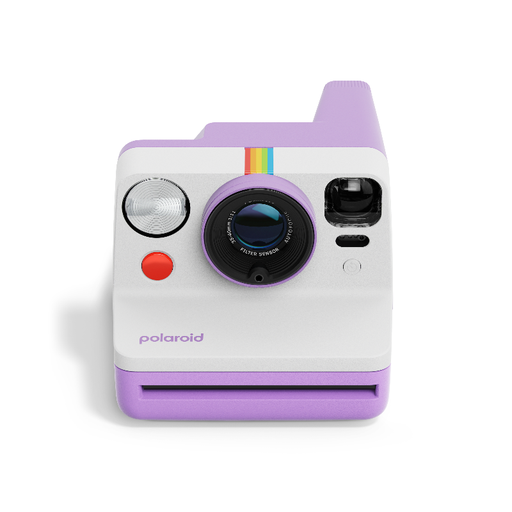 No image available
Could suit you if you’d also like to include physical instant photos of your paper art in your portfolio.
The product description lists a tripod mount and self-timer.
 No image available
Could suit you if you’d like to add a physical instant photo of your paper art to your portfolio.
The product information lists a tripod mount; the bundle includes Color i-Type Film.
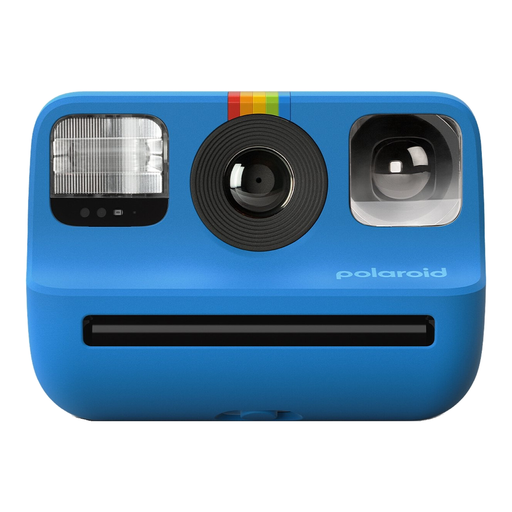 No image available
Could suit a portfolio in which you want to keep physical Polaroid Go prints of your paper art.
The product information lists a self-timer and a double exposure function.
 No image available
Could be an option if you’re considering a digital camera for photos of paper artworks; check that the features suit the portfolio size you have in mind.
The product title lists 64 MP, 12× optical zoom and 4K video.
 No image available
Could be suitable if you’re considering a camera for still photos of paper artworks; check the framing with your own pieces.
The product information lists fast focusing for still images and a rotating touchscreen.
Not necessarily. First, compare how large the smallest detail appears in the frame using the close-up capabilities of the exact kit lens or camera mode. Canon gives a magnification specification for the RF-S 18-45mm in MF mode; OM SYSTEM lists a microscope mode for the TG-7. Focusing distance alone isn’t a direct way to compare how much of the frame a subject fills.
Use a simple background and keep the framing consistent with a tripod. Try moving a lamp to see how the direction of light affects the folds; with three-dimensional work, the focus point and chosen depth of field also matter.
Check the lighting and white balance. Sony explains that automatic white balance is a starting point, and that you can manually choose a different setting if the colours don’t look right.
According to the Dutch government, the retailer must offer a solution under the statutory guarantee; a manufacturer’s warranty is additional to this. The Netherlands doesn’t have a fixed statutory guarantee period that applies to every product.
According to the Dutch government, you generally need permission from the creator to publish someone else’s copyrighted work. If identifiable people appear in portfolio photos, privacy rules may also apply; the Dutch Data Protection Authority distinguishes between private use within a closed group and wider or commercial publication. These considerations relate to the works and people shown, not to any general permission to publish that comes with a camera.