
For capturing small folds and details
You want to capture edges, layers and fine paper texture separately. For close-ups, check the magnification and working distance of your chosen lens and camera combination.


A mirrorless camera is a good choice if you want to fill the frame with small folds and choose a suitable close-up or macro lens. A compact camera is more practical if you’d rather not use a separate lens, but check that it can focus closely enough at the zoom setting you need. For accurate colour and visible texture, a consistent setup, carefully considered lighting direction and a colour reference are important too.
You want to capture edges, layers and fine paper texture separately. For close-ups, check the magnification and working distance of your chosen lens and camera combination.
You want to show paper colours and the overall shape consistently, for example in a portfolio. National Museums Scotland describes a grey card or colour chart as a useful tool for managing colour.
You want to take photos easily without regularly changing lenses. With a compact camera that has a fixed lens, it’s important to check the focusing distance at your chosen zoom setting, as the Dutch Consumers’ Association recommends when comparing cameras.
A good choice if: you want to fill the frame with small details or choose a separate lens for close-ups.
Consider: checking the lens mount and what’s included in the kit; a macro lens may need to be bought separately.
A good choice if: you want a single camera to set up and its fixed lens can achieve the composition and focusing distance you need.
Consider: the focusing distance may vary at different zoom settings. For the Canon PowerShot G7 X Mark III, Canon lists 5 cm at the wide-angle setting and 40 cm at the telephoto setting, measured from the front of the lens.
| What to consider | What should you check? | Who is this important for? |
|---|---|---|
| Small folds and details | Check the maximum magnification, focusing distance and lens mount for the combination. When planning your lighting, allow for the space in front of the lens. | If I want to fill the frame with a small detail, I make sure the lens can capture it at my working distance. Around 33% of consumers make close-up details their top priority. |
| Paper colour and overall shape | Check whether you can adjust the exposure and white balance, and use a grey card or colour chart. Also check that the lens can fit the entire piece into the frame from the distance available. | If you want to capture paper colour and the overall shape consistently, a repeatable setup and a reliable colour reference can help. Around 27% of consumers give this priority. |
| Depth of folds and shadows | Allow space for a directional light source and a white card or reflector. Check that both the texture and details in dark areas remain visible. | If the folds need to stand out clearly, I want to retain shadows without losing detail. Around 20% of consumers make this balance their top priority. |
| A simple setup | Compare the complete camera and lens combination. With a compact camera, check the focusing distance at your chosen zoom setting; with a mirrorless camera, check which lens is actually included in the kit. | If you want to keep the number of separate components down, consider convenience and the total cost of the complete setup. Around 20% of consumers make simplicity and the total purchase their top priority. |
A higher megapixel count doesn’t, on its own, tell you whether a small fold will be sharply captured to fill the frame at your chosen working distance. The Dutch Consumers’ Association lists the lens and sensor as factors to consider when assessing a camera.
Decide on the crop you want first, then check the specifications for the exact lens and camera combination.
For the Canon PowerShot G7 X Mark III, Canon lists 5 cm at the wide-angle setting and 40 cm at the telephoto setting, measured from the front of the lens. So the minimum distance at wide angle doesn’t tell you how close you can focus when using a tighter crop.
Compare the focusing distance at the zoom setting you’ll use to get the composition you want.
Shadows can bring out texture, but areas that are too dark can hide details. National Museums Scotland recommends placing a reflector or white card opposite the light source if shadows are too dark; too much fill light can reduce texture.
Start with one directional light source and add just enough reflected light to keep details in darker areas visible.
An option if you want to compare an interchangeable RF lens with a compact camera that has a fixed lens.
The E-mount α6400 is a mirrorless camera option if you want to choose a separate APS-C macro lens.
The Z50II is an option in Nikon’s Z system; the separate NIKKOR Z MC 50mm f/2.8 lens is designed for macro photography.
These Joybuy camera options may help you frame your paper art. For close-ups, also check the focusing distance and whether your chosen camera can achieve the crop you want.
 No image available
The product title lists 2× lossless zoom for more framing options; check separately whether the camera can focus at the distance you need.
The title mentions a 1″ CMOS sensor, 4K/240 fps video, 3-axis stabilisation and 107 GB of built-in storage.
 No image available
The product title lists 18× zoom for more framing options; check whether the focusing distance suits small details in paper.
The title mentions 80 MP UHD and a portable camera.
 No image available
The product title lists 12× optical zoom; check whether the camera can focus at the distance you need for close-ups of folds.
The title mentions 4K video and Wi-Fi. The product description lists a 64 MP sensor.
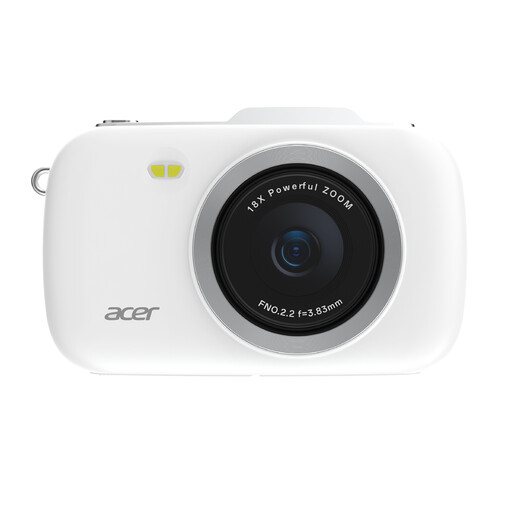 No image available
The product title lists 18× zoom for different crops; separately check whether the focusing distance suits the details you want to photograph.
The title mentions 80 MP UHD and 4K video.
 No image available
The product title describes a small camera; check that the camera and lens suit the distance and crop you need for photographing paper art.
The title mentions a 1″ CMOS sensor, 4K/120 fps video, 3-axis stabilisation and an included microphone.
Not for every overall shot. If you want to fill the frame with a very small detail, compare the maximum magnification and working distance of the exact lens. A camera body on its own won’t tell you whether the combination is suitable. Sony specifies a magnification of 1.0× for the SEL30M35, while Nikon lists 1:1 for the NIKKOR Z MC 50mm f/2.8.
First, change the direction of the light to make the folds easier to see. National Museums Scotland recommends placing a reflector or white card opposite the light source if shadows are too dark; too much fill light can reduce visible texture.
Check exactly what’s included in the kit and whether the lens suits the crop and working distance you need. If you need a macro lens, check whether it’s included or needs to be chosen separately.
Online purchases generally come with a statutory cooling-off period. According to ACM ConsuWijzer, this lasts until 14 days after delivery, although exceptions may vary by purchase. The Dutch government also states that you’re entitled to a product that works properly and should contact the seller if it’s faulty. The Netherlands does not have a fixed statutory warranty period that applies to all products.