
Market photographer in changing light
You photograph flowers in both sun and shade, and want to be able to adjust exposure and colour deliberately. Nikon explains how white balance can help correct unwanted colour casts.


First decide whether you mainly want to capture market scenes and bouquets, or close-up flower details. A versatile zoom lens is handy for the former, while the latter depends largely on your lens’s focusing and magnification capabilities. Then compare how you can adjust exposure and white balance in changing daylight, and weigh up a fixed-lens compact camera against the wider choice of lenses and equipment offered by a mirrorless camera.
You photograph flowers in both sun and shade, and want to be able to adjust exposure and colour deliberately. Nikon explains how white balance can help correct unwanted colour casts.
You want petals or stamens to appear larger in the frame, so you’re looking at the lens or close-up mode, not just the camera body. Canon and OM SYSTEM each describe lens or close-up capabilities for the products mentioned.
You want to carry your camera around the stalls without the hassle of extra weight or changing lenses. The Consumers’ Association lists size and ease of use among the things to consider when choosing a camera.
Decide what matters most to you: adapting to changing light, capturing flower details, carrying your camera easily or assessing what comes in the complete kit.
| What to consider | What should you check? | Who is this important for? |
|---|---|---|
| Exposure and colour | Check whether you can adjust exposure compensation and white balance on the model you’ve chosen, and whether RAW capture suits your editing needs. | When I move from sun to shade, I want to be able to adjust exposure and colour deliberately. Around 33% of consumers prioritise control over light and colour. |
| Flower details | Compare the maximum magnification and focusing distance of the exact lens, or the close-up mode on a compact camera. | If I want small parts of a flower to fill the frame, I look at the lens or close-up mode. Around 27% of consumers prioritise flower details. |
| Ease of carrying | Compare the weight of the complete kit and consider whether you want a fixed lens or the option to change lenses. | As I walk around the stalls, I want my equipment to be easy to carry and don’t want to keep changing lenses. Around 20% of consumers prioritise portability. |
| What’s included in the kit | Check which lens, battery, storage and any charger are included with the exact version. | I want to know in advance which items I’ll need to take the photos I want. Around 20% of consumers prioritise what’s included in the complete kit. |
Focusing distance and maximum magnification are not the same thing. The Canon kit zoom mentioned here and the separate Canon macro lens have different magnification specifications.
Decide how small the subject you want to photograph is, then compare the maximum magnification of the exact lens or the capabilities of the close-up mode.
Stabilisation compensates for camera shake, but a moving flower or passer-by can still come out blurry.
If your subject is moving, take a test shot and check the shutter speed and result, rather than comparing stabilisation specifications alone.
A body-only offer doesn’t automatically include the same lens or accessories as a kit. For example, the Nikon Z50II kit mentioned here does not include a charger.
Check what’s included with the exact version and compare it with the lens and accessories you need for your photos.
The EOS R50 with the RF-S 18–45mm kit zoom is an option for market scenes. The separate RF 35mm F1.8 MACRO IS STM is worth comparing for flower details.
The Z50II with the NIKKOR Z DX 16–50mm kit zoom is an option for photographing market scenes and bouquets with a single zoom lens.
The X-S20 is a mirrorless camera option for anyone who wants to combine exposure controls, RAW and in-body stabilisation with a lens of their choice.
The α6700 is an APS-C mirrorless camera with an E-mount, for anyone who wants to choose their lens separately.
The Tough TG-7 offers a fixed-lens option with a close-up mode. The OM-5 Mark II is a mirrorless camera option for which you choose a compatible lens.
This selection includes mirrorless cameras with standard zoom lenses and pocket cameras for market photography. Compare the lens and controls with the framing you want; the pocket models are not standard zoom kits.
 No image available
The standard zoom is a good fit if you want to switch between different compositions as you explore the market.
The product name specifies a 16–50mm zoom lens. Check the included accessories: the product information states that an adapter/charger and SD card are not included.
 No image available
The zoom lens is a good choice if you want to frame market scenes and bouquets with the same lens.
The product name specifies a 16–50mm f/3.5–5.6 OSS II lens. Check which accessories are included with the version on offer.
 No image available
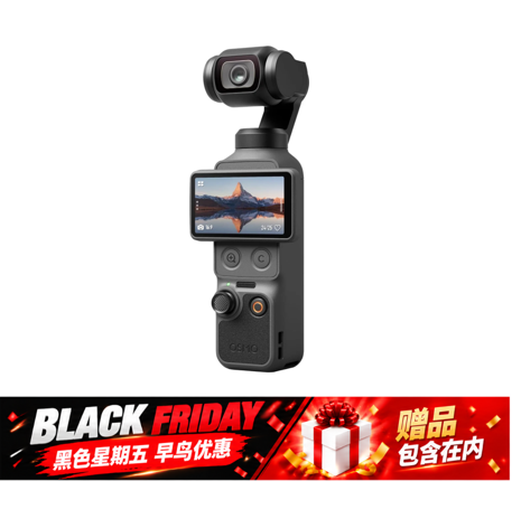
This pocket model is worth considering if you’re looking for a small camera to take to the market. Check whether its pocket-sized format suits the framing you want.
The product name specifies a 1-inch CMOS sensor and 3-axis stabilisation. This is a pocket gimbal camera, not a standard zoom kit.
 No image available
This pocket model is a good fit if you want to take a compact camera to the market. Compare its pocket-sized format with the flexibility of a zoom lens.
The product information specifies 4K/240fps only in slow-motion mode. Check whether that limitation suits what you want to capture with the camera.
No, it depends on how large you want the flower details to appear in the frame. For small details, compare the maximum magnification of the exact lens: Canon specifies 0.25× for the RF-S kit zoom mentioned here and up to 1:2 for the separate RF 35mm F1.8 MACRO IS STM.
Check the exposure and white balance again as you take photos. Exposure compensation can help you adjust the exposure, while RAW is useful if you want to edit the colour afterwards. Fujifilm specifies these features for the X-S20, but it’s still worth taking a test shot.
Before you set off, check which lens, battery, storage and any charger are included with your version. Test the white balance and focusing controls too. Follow the instructions for your exact camera and lens combination to protect it from rain.
It depends in part on how you use the photos. The Dutch Data Protection Authority distinguishes between images kept private or shared with a very limited group and wider publication or commercial use. If people are identifiable, wider publication or commercial use may be subject to GDPR requirements. Don’t assume you have permission just because the market is open to the public.
According to the Dutch government, many distance purchases from a trader come with a 14-day cooling-off period, although there are exceptions. Check the seller’s information; an online purchase from a private individual isn’t automatically covered by the same rules.