
Detail-focused filming at a small desk
You want the carving tool, cutting line and stamp to remain visible from above. Check that the focusing distance and framing suit the space between the lens and your work surface.


Start by considering the distance between the lens and the stamp, the space available for a stable overhead setup, and the light on your work surface. A 4K label alone won’t tell you whether the cutting line will appear sharp and large enough in the frame. A compact camera with a short stated minimum focusing distance can be practical, while a mirrorless camera with interchangeable lenses gives you more choice over framing and working distance. With a pocket gimbal camera, check that you can film from the stated distance. Frame your work surface carefully, and check whether anyone you share the room with is identifiable in the footage or audio before sharing it.
You want the carving tool, cutting line and stamp to remain visible from above. Check that the focusing distance and framing suit the space between the lens and your work surface.
You want to film your work surface without capturing anyone you share the room with in an identifiable way or recording conversations by accident. Framing and checking the picture and sound are therefore part of your setup.
You want to record a full working session, so as well as image quality, you’ll need to consider a stable mount, power, storage and sound. Remember to allow space on your desk for the camera and support, too.
Best if: you have limited storage space and the fixed lens can focus from your planned mounting height. Sony specifies approximately 5 cm from the front of the lens for the ZV-1F.
Bear in mind: the lens isn’t interchangeable, so check that the fixed wide-angle lens will show your stamp large enough in the frame.
Best if: you want to adjust the framing or working distance by choosing a different lens. The Nikon Z 30 kit includes a NIKKOR Z DX 16-50mm f/3.5-6.3 VR lens; Nikon specifies a minimum focusing distance of 0.2 m for this lens.
Bear in mind: that focusing distance applies to the kit lens mentioned, not automatically to other lenses. You’ll also need to allow space for the camera and support.
Best if: compact storage and handheld filming are important, and you can work from the stated distance. DJI specifies a focus range of 0.2 m to infinity for the Osmo Pocket 3.
Bear in mind: 0.2 m may be too far away for a close-up with the camera mounted low. Gimbal stabilisation doesn’t guarantee that the camera will fit above your work surface.
| What to consider | What should you check? | Who is this important for? |
|---|---|---|
| A sharp cutting line from above | Compare the stated focusing distance of the exact camera or supplied lens with the planned distance from the work surface. Then check whether the stamp, your hands and your tools will all fit in the frame. | I want to see the carving tool, cutting line and stamp clearly, while still leaving room for my hands. Around 40% of consumers prioritise focusing and detail above all else. |
| Keeping people you share the room with out of shot and off mic | Check whether the lens, mounting arrangement and audio settings available let you keep the frame on your work surface. Review the picture and sound before publishing anything. | I film in a shared bedroom and don’t want to capture anyone I share it with in an identifiable way or record conversations by accident. Around 25% of consumers particularly value privacy in a shared room. |
| Picture and sound in room lighting | Assess sample footage in the lighting you’ll actually be working in. Check for a microphone input only if you want to record spoken instructions. | I want to see my work surface clearly and make spoken instructions easy to hear, without filling my small room with unnecessary equipment. Around 17% of consumers particularly value good lighting or spoken instructions. |
| Long recordings without taking over your desk | Before planning a long session, check the tripod mount, card type, power options and recording time for the exact model. | I want to record a longer carving session while keeping space around my desk. Around 18% of consumers particularly value long recording times and a compact workspace setup. |
A resolution label won’t tell you whether the camera can focus at the distance you have available or show the stamp large enough in the frame.
Plan your setup and compare the distance between the lens and work surface with the specifications for the exact model. Check the framing, too.
A built-in kickstand won’t automatically give you a straight-down view, and it mustn’t get in the way of your hands.
Check the mounting options and test the camera angle at your desk. You may also need a separate mount.
According to the Dutch Data Protection Authority, the exception for personal or household use only applies when footage remains private or is shared with a very limited group.
Frame your work surface carefully and check the picture and sound before publishing. If necessary, consider which GDPR legal basis applies.
The models mentioned offer different setup options. The stated focusing distance or built-in support alone won’t tell you whether a camera will frame your work surface well.
The ZV-1F is a compact camera with a fixed wide-angle lens for anyone considering a small overhead setup.
The Z 30 with the 16-50 VR kit is an interchangeable-lens option for anyone who wants to adjust the framing or working distance.
The Osmo Pocket 3 is a small gimbal camera for anyone who also wants to film handheld away from their usual workspace.
The PowerShot V10 is a compact vlogging camera with a built-in kickstand, tilting screen and microSD storage.
Joybuy camera picks for video demonstrations and compact setups.
 No image available
The product listing describes this pocket camera as suitable for video demonstrations and a compact recording setup.
The description mentions a 20 mm f/2.0 wide-angle lens and 4K video. According to the description, 4K/240fps is only available in slow-motion mode.
 No image available
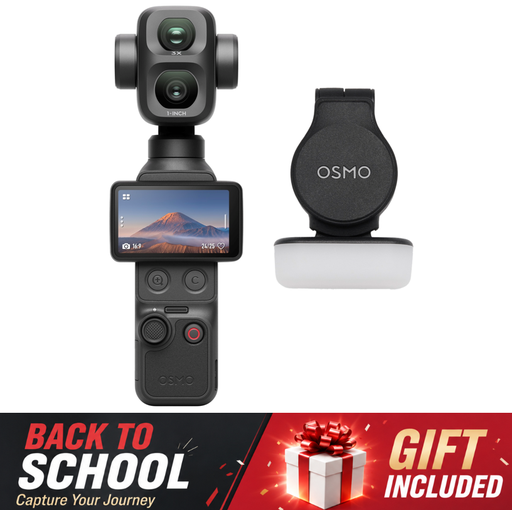
This pocket gimbal camera is an option to compare for a compact video setup. Check separately whether your chosen overhead mounting arrangement will fit.
The product title mentions 4K video, 3-axis stabilisation, 107 GB of built-in storage and a rotating screen.
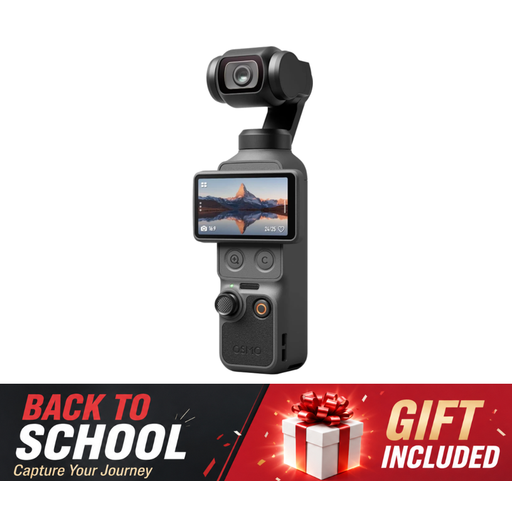
 No image available
The title mentions a handle with a 1/4″ thread. Check that it’s compatible with the mount you plan to use for overhead filming.
The product title lists a 1″ CMOS sensor, 4K/240fps, 3-axis stabilisation, 2× lossless zoom, 14-stop dynamic range and 107 GB of built-in storage.
 No image available
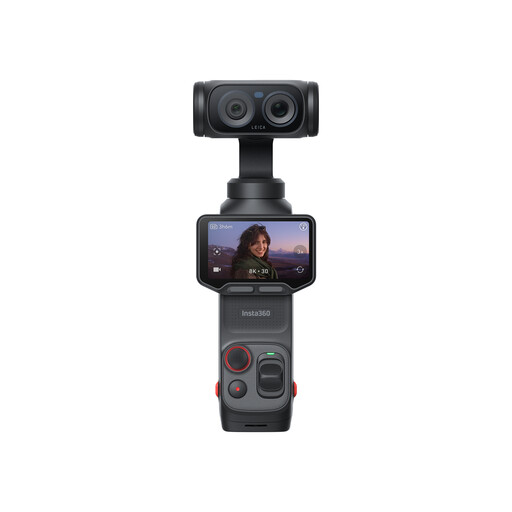
The product listing mentions a detachable screen for remote operation. Check that the camera and mount suit your planned overhead setup.
The description mentions 8K HDR video recording, 3-axis stabilisation and a 4K PureVideo mode at 60 fps.
 No image available
The product information describes this camera as suitable for vlogging. Check that the features listed match how you plan to film and mount it above your work surface.
The title lists 5K, 80 MP and 18× zoom. Check the product information to see which video mode these figures apply to.
A suitable, stable mount is important for positioning the camera above your work surface. The Consumers’ Association recommends a tripod for filming mainly at home. Check that the support fits above the whole work surface: image stabilisation doesn’t confirm that the camera can be mechanically positioned at the angle you want.
Where possible, keep anyone you share the room with who could be identified out of shot and off mic. According to the Dutch Data Protection Authority, the exception for personal or household use only applies when footage remains private or is shared with a very limited group. This exception doesn’t apply if you publish footage of identifiable people more widely, and you’ll need a GDPR legal basis; in many cases, this means getting their consent. Whether a recording contains personal data that can identify someone depends on the footage.
According to the Dutch Government, if a product has a problem, the seller must provide a solution, not the manufacturer. Read the separate terms of any additional manufacturer’s warranty before paying for it.
It varies by model and version. Canon lists microSD, microSDHC and microSDXC cards for the PowerShot V10. For the camera you choose, also check card compatibility, power options and the recording time you’ll need.