
Knitting teacher showing handwork
Your main aim is to show how the needle and yarn move. A stable overhead view and a sharply focused work surface are key considerations. IPEVO and Logitech describe products designed to capture a work surface.


Start by choosing your filming angle. For a lesson about stitches and hand movements, a stable camera positioned above your work surface is an obvious choice. A webcam or standalone camera may suit you better if you also want to talk to camera. Then make a test recording to check focus, lighting and audio clarity, and to see whether your roommate stays out of shot and out of the recording.
Your main aim is to show how the needle and yarn move. A stable overhead view and a sharply focused work surface are key considerations. IPEVO and Logitech describe products designed to capture a work surface.
You want to switch between speaking on camera and demonstrating at the table. So consider the framing, controls and audio clarity. Logitech describes a mode on the MX Brio for showing desk work.
You want to film without capturing your roommate in an identifiable way or showing too much of the bedroom. The Dutch Data Protection Authority explains that the exemption for personal or household use does not apply when footage is shared more widely.
First decide whether you mainly want to show your knitting, speak on camera as well, or use a standalone camera setup. The right choice depends on the angle, the space and the equipment you already use.
Best if: your lesson mainly shows stitches and hand movements from above, and you have a suitable computer.
Keep in mind: IPEVO says the V4K needs computer software. Also check how your voice will be recorded.
Best if: you want to speak and show your work on the table at the same time. Logitech describes a downward-facing Show Mode for the MX Brio.
Keep in mind: Show Mode doesn’t prove that stitches will be in focus in your setup. Noise reduction also doesn’t guarantee that your roommate will be inaudible.
Best if: you want to film without a computer permanently connected and also want to point the camera at yourself.
Keep in mind: Canon lists a built-in stand and tripod mount among the PowerShot V10’s features. Check separately whether they’ll give you a stable overhead view.
| Buying concern | What should you look for? | Who pays particular attention to this? |
|---|---|---|
| Clear view of stitches and hands | Frame a test shot at the actual mounting distance. Check the focus while your hands are moving and make sure the whole work area you need is in view. | I want to follow the needle and yarn clearly, even when my hands are moving; around 29% of consumers put a clear view of stitches and hands at the top of their buying concerns. |
| Privacy and a limited recording area | Check the picture and sound before sharing. Point the camera at your knitting and discuss recordings with your roommate. | I want to record my lesson without unnecessarily capturing our shared bedroom; around 24% of consumers give privacy and a tightly framed shot top priority. |
| Clear spoken instructions | Record a short explanation from the planned speaking distance and listen back with normal room noise. Check whether a separate microphone can be connected to your setup. | When I’m explaining something with the camera pointed at my hands, I want my words to remain clear; around 18% of consumers put clear spoken instructions first. |
| Simple, stable setup | Check that the mount works in your chosen position, what computer or memory card you’ll need, and whether you might knock the camera while knitting. | I want to be able to set up my camera the same way every time in our shared room; around 17% of consumers focus mainly on a simple, stable setup. |
| Picture quality under room lighting | Make a test recording in the lighting you’ll use for your lesson. Check details, shadows cast by your hands and colour reproduction. | When I can’t change the lighting much, I still want to see my knitting clearly; around 12% of consumers give the room’s existing lighting top priority. |
Canon describes the PowerShot V10 as having a built-in stand with specific tilt angles, as well as a tripod mount. This doesn’t confirm that you can position the camera securely and steadily above your knitting.
First work out the camera angle you need, then check how to position the camera there safely and securely.
You may need a separate, suitable mount for an overhead view.
IPEVO says the V4K needs computer software to work.
Check the complete recording process, from connecting the camera to saving the video file.
Logitech lists noise reduction for the MX Brio, but that doesn’t prove that your roommate’s voice will be removed from the recording. Identifiable footage shared more widely may also be covered by privacy rules.
Listen back to your recording and check the picture before sharing a lesson.
The V4K is a USB document camera for recording your work surface.
The MX Brio is a webcam option for teaching from a computer, with a mode that can show your desk.
The PowerShot V10 is a compact vlogging camera for anyone who also wants to film themselves.
The ZV-1F is a compact camera whose specified minimum focusing distance may be useful for close-ups.
The Tiny 2 is a webcam option to consider if you’re looking at camera movement and automatic tracking.
This selection includes compact cameras for standalone filming and webcams for computer-based recording. Make a test recording to check that the camera angle and focus work for your knitting.
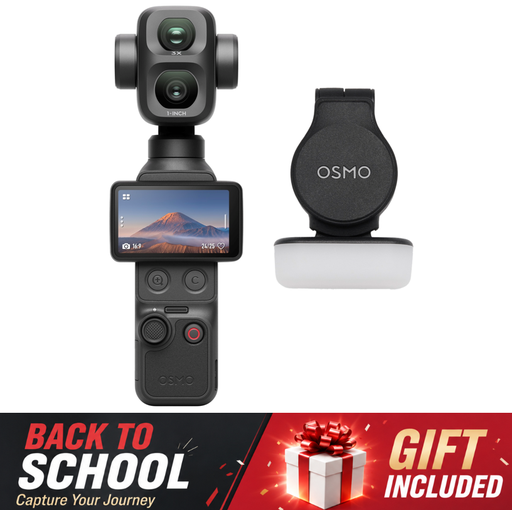 No image available
A compact camera option for recording a knitting lesson as video. Make a test recording to check that your work surface is in focus and framed well.
The product description lists a 1-inch CMOS sensor, 4K video and a 20 mm wide-angle lens. According to the description, 4K/240fps is only available in slow-motion mode.
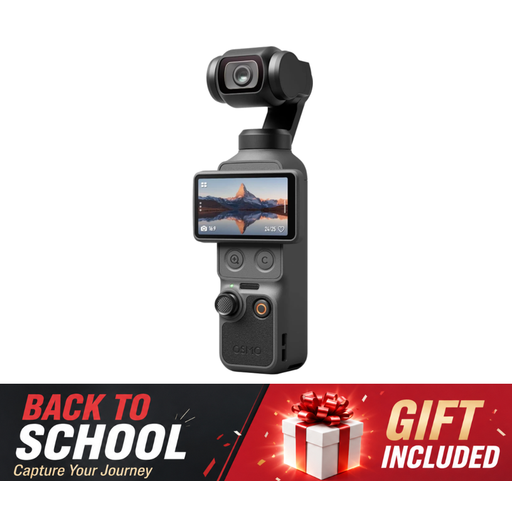 No image available
A standalone camera for lessons recorded as video. Make a test recording to assess how your hands and work surface are framed.
The product title lists a 1-inch CMOS sensor, 4K/240fps, 3-axis stabilisation, 2× lossless zoom, 107GB built-in storage and a 2-inch rotating screen.
 No image available
A webcam option for recording lessons on a desktop computer. Check that the supplied clip fits your chosen position.
The product information lists autofocus, dual built-in microphones and a privacy cover. The description says it can be mounted on monitors, laptops and desktop computers.
 No image available
A webcam option for a computer setup. Make a test recording to check that your knitting is clearly visible from the chosen angle.
The product title lists 2K QHD and a microphone with noise reduction. The product description mentions a universal clip and tripod mount.
 No image available
A vlogging camera for recording a knitting lesson as video. Test the angle and focus you need in the place where you plan to film.
The product title lists 4K/120fps. The product information mentions fast focusing, 3-axis stabilisation, a 2-inch rotating touchscreen and stereo sound.
First check which privacy rules apply to recording and publishing the footage. The Dutch Data Protection Authority says the exemption for personal or household use does not apply when footage is shared more widely or for business purposes. In that case, you need a lawful basis under the GDPR to show identifiable people, usually their consent. Ideally, keep your roommate out of shot and check the picture and sound before publishing.
IPEVO says the V4K can’t be used without computer software. For another model, check the manual and make sure the software you choose can save a recording.
First make a short test recording in the planned position, with your hands moving and your spoken instructions. Check the focus, framing, sound and mount, and find out what computer connection or storage the model needs. Canon says the PowerShot V10 uses microSD cards.
Contact the seller. The Dutch Government says a product must be of satisfactory quality. If there’s a fault you’re not responsible for, you may be entitled to a free repair or replacement and, ultimately, a refund. According to the Dutch Government, the Netherlands has no fixed statutory guarantee period.