
Collectors showing coin details
If you want to film inscriptions and relief close up, a fixed camera set-up with a suitable separate lens could suit your plans. Nikon describes the Z DX MC 35mm f/1.7 as a macro lens for the Z mount.


If your priority is showing inscriptions and relief, choose a camera and lens combination that can focus closely enough at your working distance. A high video resolution alone does not guarantee useful close-ups. For a spoken presentation with changing compositions, a camera supplied with a zoom lens or one with a fixed lens may be more practical, while stabilisation matters for moving footage. Always check the lens, what’s included in the box, lighting and how large you want the coin to appear in the frame.
If you want to film inscriptions and relief close up, a fixed camera set-up with a suitable separate lens could suit your plans. Nikon describes the Z DX MC 35mm f/1.7 as a macro lens for the Z mount.
For a spoken tour that includes you, the table and larger parts of your collection, framing, controls and sound are all important considerations. Canon describes both a mirrorless camera kit with a zoom lens and the PowerShot V1 with a fixed lens.
If you want to film display cases or exhibits as you move around, consider both stabilisation and the distance at which small coins come into sharp focus. DJI gives the Osmo Pocket 3 a minimum focus distance of 20 cm.
First decide whether coin details, control over your studio set-up, easy presenting or moving footage matters most to you.
Choose this if you: want to focus on small coin details and can use a fixed studio set-up.
Bear in mind: the camera body and lens may need to be bought separately. A fixed focal length also calls for a suitable position when filming wider shots.
Choose this if you: want to combine wider shots with presenting, and may want to choose a different lens later.
Bear in mind: a supplied zoom lens is not automatically suitable for strong magnification of coins.
Choose this if you: want to film yourself, the table and larger parts of your collection without changing lenses.
Bear in mind: you cannot replace the lens with a macro lens, so check whether it can achieve the close-ups you want.
Choose this if you: will be moving around during a tour and want to capture smooth wide shots.
Bear in mind: the minimum focus distance alone does not tell you how large a small coin will appear in the frame.
| Consideration | What should you check? | Who is this important for? |
|---|---|---|
| Coin details | Compare the maximum magnification and closest focusing distance of the exact lens, then test how much of the frame the coin fills at your working distance. | If I want to show inscriptions and relief, the coin needs to appear sharp and large enough in the frame from my working distance. Around 36% of consumers put this first. |
| Lighting and set-up | Set the camera up securely and leave room to move an adjustable lamp or diffuser; assess reflections on each coin. | If I’m taking close-ups, I want to be able to move the light source and control the framing. Around 29% of consumers put control over their studio set-up first. |
| Presenting and recording commentary | Check the screen position, microphone options and the exact contents of the box, including the lens. | If I’m recording a tour with spoken commentary, I want to be able to prepare the picture and sound easily. Around 21% of consumers prioritise easy presenting and recording commentary. |
| Moving footage | Compare stabilisation and focusing performance while moving; separately test whether the coin appears large enough in the frame. DJI gives the Osmo Pocket 3 a minimum focus distance of 20 cm. | If I’m filming display cases, I want smooth footage without losing sight of the coin details I want to show. Around 14% of consumers put moving footage first. |
A camera may be able to record video, but the lens you choose might not show a small coin large enough for your shot.
Compare the magnification and focusing distance of the exact lens, and decide in advance how large you want the coin to appear in the frame.
If you buy a camera body on its own, you may need to purchase a suitable lens separately.
The Nikon Z 30 and the macro lens mentioned are sold separately, whereas the Canon EOS R50 V kit lists a lens.
Check the exact version and what’s included in the box, not just the model name.
A camera’s minimum focus distance does not tell you how much of the frame a small coin will fill at that distance.
Test the size you want the coin to appear in the frame before prioritising stabilisation over close-up capability.
The Nikon Z 30 paired with a separately selected Z DX macro lens is worth considering if coin details are your priority.
The Canon models described include both a mirrorless camera with a zoom kit lens and a compact camera with a fixed lens.
The Sony ZV-E10 II kit is a mirrorless camera option for anyone looking to start with a zoom lens and perhaps consider a different lens later.
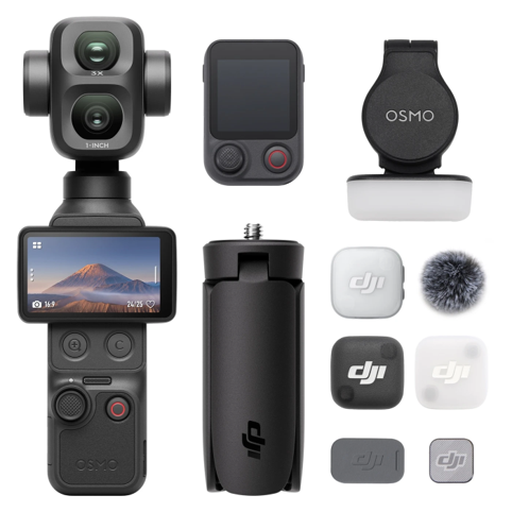
The Osmo Pocket 3 is a compact gimbal camera to consider for sections of a tour filmed on the move.
These products are suited to video tours, wider studio scenes or footage filmed on the move. Check whether each model can capture a coin close-up at your working distance.
 No image available
The wide-angle lens mentioned is designed for wider studio scenes; this does not mean a coin will appear large enough in a close-up.
The product description lists a 1-inch sensor and a 20mm f/2.0 lens.
4K/240fps is mentioned for slow motion only.
 No image available
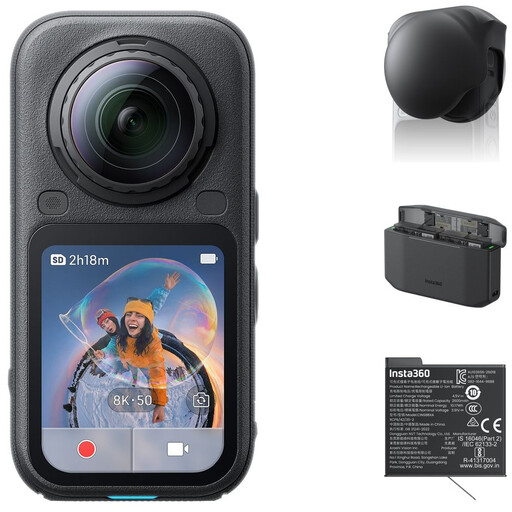
360° recording may suit a tour that calls for a wide field of view; assess separately whether the coin itself will appear large enough.
The description lists dual 1/1.1-inch sensors, 8K 50fps 360° video and 10-bit colour.
InstaFrame 2.0 with 4K output is also mentioned.
 No image available
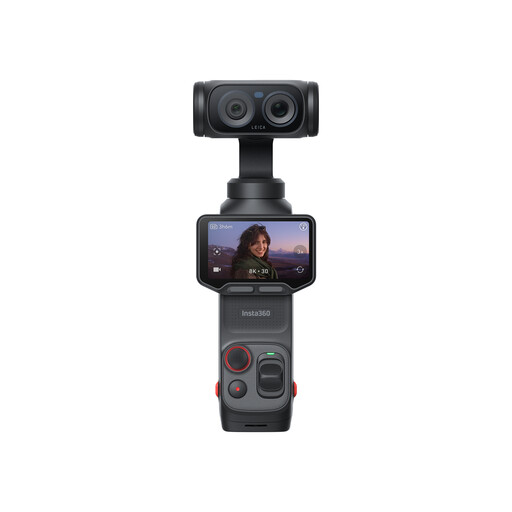
The telephoto lens and zoom mentioned offer options for adjusting the framing; check whether the coin appears sharp and large enough from your filming distance.
The description lists a 1-inch main sensor, a telephoto lens with a 1/1.3-inch sensor and zoom up to 6×.
8K HDR video is also mentioned.
 No image available
3-axis stabilisation is suited to tours filmed on the move; test coin close-ups separately to see whether they appear the right size.
The description lists a 1-inch CMOS sensor, 4K/120fps, fast focusing and a 2-inch rotating touchscreen.
DJI lists a minimum focus distance of 20 cm; this distance alone does not show how large a coin will appear in the frame.
 No image available
The zoom lens offers different framing options for wider shots; check the close-up capabilities of the exact lens for small coins.
The description lists an APS-C sensor, 4K video, digital Active Mode stabilisation and Product Showcase mode.
According to the box contents, an SD card and adapter/charger are not included.
No. Also check whether the exact lens can show the coin large and sharp enough from your working distance. Maximum magnification and closest focusing distance are relevant specifications. For the separate Z DX MC 35mm f/1.7, Nikon lists a maximum reproduction ratio of 0.67× and a closest focusing distance of 0.16 m, measured from the sensor.
Set the camera and coin up securely, then move an adjustable light source around while assessing the image. Diffused light is one option to try; test which direction brings out the details on each coin without unwanted reflections.
In the Netherlands, consumers buying at a distance generally have a 14-day cooling-off period, subject to legal exceptions, as explained by the Dutch Government. If there is a fault, the retailer is your point of contact for the statutory guarantee; the end of a manufacturer’s warranty does not automatically bring those statutory rights to an end.
According to the Dutch Data Protection Authority, a video in which people are recognisable contains personal data. You cannot necessarily make and publish it without restrictions; check the applicable privacy rules before sharing the video.