
Detail-focused stamp collector
You want to show perforations, overprints or other small features, and above all need a practical close-up from the working height available.


Start with a test shot from the height you’ll actually be filming at. The stamp should be in focus and large enough, while still leaving room for your hands. A compact camera, a mirrorless camera with a suitable close-up lens, a webcam or a gimbal camera could suit different ways of working; whichever you choose, you’ll still need a stable mount and to check the framing.
You want to show perforations, overprints or other small features, and above all need a practical close-up from the working height available.
You want to keep the stamp, album and both hands in shot at the same time, with a stable overhead setup and clear commentary.
You want to show your table on a computer or move around your collection too. The choice between a webcam and a gimbal camera depends on how you work.
A good fit if: you want to film without separate lenses and the stamp looks large enough in shot from your planned mounting height. Sony specifies a focusing distance of approximately 5 cm from the front of the lens for the ZV-1F.
Keep in mind: a short focusing distance doesn’t prove that the stamp will fill the frame; the ZV-1F doesn’t have optical zoom.
A good fit if: showing a small printed detail is your priority and you want to choose the lens and working distance yourself. Canon specifies 0.5× magnification for the RF 35mm F1.8 Macro IS STM.
Keep in mind: the camera body and macro lens are separate choices; the EOS R50 V doesn’t have in-body image stabilisation.
A good fit if: you mainly explain things live at the same table or record directly to your computer. Logitech describes a Show Mode on the MX Brio for showing desk work.
Keep in mind: check the mounting, framing and whether your computer has the required USB-C connection with USB 3.0.
A good fit if: you want to make moving shots around albums or collectables as well as fixed explanatory videos. DJI specifies a three-axis gimbal for the Osmo Pocket 3.
Keep in mind: the specified focusing distance starts at 0.2 m; the gimbal won’t keep the camera in a fixed position above the table by itself.
| What to consider | What should you look for? | Who is this important for? |
|---|---|---|
| Showing small details | Test focus and image size at your planned working height; assess both in the same test shot. | If I want to explain perforations or small overprints, the detail needs to stay sharp and large enough. Around 36% of consumers give detail reproduction top priority. |
| Framing the work surface | Take a test shot with the album, stamp and both hands in view; also check that the mount fits outside the working area. | If I want to show the stamp and what I’m doing at the same time, I need to consider the available height and framing. Around 29% of consumers give the full work surface top priority. |
| Commentary and workflow | Check which computer or memory card connection you need, and listen to a test recording from where you’ll be speaking. | If clear commentary and straightforward recording matter more to me, I check the connection, storage and sound in my own setup. Around 21% of consumers give the recording workflow top priority. |
| Static and moving shots | Decide whether you’ll be making moving shots, then test both the movement and the fixed tabletop angle. | If I want to switch between a fixed lesson and moving shots, the camera needs to work well for both. Around 14% of consumers give this combination top priority. |
The minimum focusing distance of a fixed-lens camera or gimbal camera doesn’t, by itself, tell you how large the stamp will look at a practical working distance from the table.
Test focus and image size together, from a height that leaves your hands free to move.
The Canon EOS R50 V has interchangeable lenses; the stated 0.5× magnification applies to the separate RF 35mm F1.8 Macro IS STM lens.
Before buying, compare the exact kit contents and choose a lens that suits your preferred working distance.
The Osmo Pocket 3’s gimbal helps with movement, but it doesn’t determine where the camera stays above the work surface.
Check the mount and take a test shot without holding the camera.
According to DJI, the Osmo Pocket 3 has no built-in storage and uses a microSD card. Your statutory guarantee is separate from any manufacturer’s warranty.
Check which storage and accessories come with your chosen configuration, and keep your proof of purchase.
The ZV-1F is a compact camera with a fixed wide-angle lens, suited to anyone who doesn’t want to change lenses.
The EOS R50 V has an RF mount for creators who want to control close-ups and wider tabletop shots with a lens chosen separately.
The LUMIX G100D uses the Micro Four Thirds system, making it an option for anyone who wants to use interchangeable lenses.
The Osmo Pocket 3 is worth considering if you want to switch between fixed tabletop explanations and moving shots.
The MX Brio is a webcam for live explanations using a computer and showing work on your desk.
These Joybuy products are aimed at computer-based explanations using a webcam or moving shots with a gimbal camera. Before using one above a small table, always check the mount and framing.
 No image available
A webcam option for explaining things on a computer; check that the mount and framing suit your table.
 No image available
A gimbal camera for anyone who wants to make moving shots as well as fixed explanatory videos; test the framing from your planned distance from the table.
The product name lists 4K/240fps, three-axis stabilisation, 2× zoom and 107GB of built-in storage.
 No image available
A gimbal camera for moving shots alongside a fixed tabletop guide; check that the mount can also provide a stable fixed angle.
The product name lists 4K/240fps, three-axis stabilisation, 2× zoom, 107GB of built-in storage and a handle with a 1/4″ thread.
 No image available
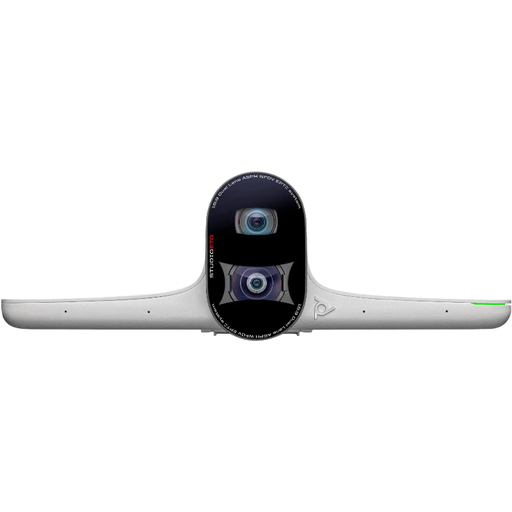
A camera option for explaining things on a computer; check that the intended position and framing work for your tabletop recording.
 No image available
A webcam option for computer-based explanations; check the framing and mount at the height you’ll be filming from.
The product name lists 8 MP, autofocus, two built-in microphones and a privacy cover.
Not necessarily. First, take a test shot to check whether the stamp looks sharp and large enough from your working height. Sony gives a focusing distance of approximately 5 cm from the front of the lens for the ZV-1F; a Canon body with the separate RF 35mm macro lens offers a different magnification and framing.
Choosing a camera doesn’t solve the mounting problem by itself. Test a stable mount at the intended height, leaving room for the album and your hands, and check the framing before you record. Logitech specifies a USB-C connection with USB 3.0 for the MX Brio.
Check the storage and power requirements of your chosen setup, and make a test recording with spoken commentary. DJI says the Osmo Pocket 3 has no built-in storage and uses a microSD card; with a computer-connected webcam, the connection and software are also part of your workflow.
According to ACM ConsuWijzer, online consumer purchases generally come with a cooling-off period of up to 14 days after delivery, subject to legal exceptions. Your statutory guarantee is separate from any manufacturer’s warranty. If there’s a problem, check what remedy the seller must offer under the applicable rules.
First, check the rights to any protected imagery. The Dutch government states that copyright-protected works must not be made public without the appropriate permission. If other people are recognisable in your footage, the GDPR may also apply; according to the Dutch Data Protection Authority, the exception for personal or household use doesn’t apply when sharing with a wider audience. Whether a particular stamp image is protected or an exception applies depends on the material.