Who is this camera guide for?

Walker who takes quick close-ups

You want to photograph a fern leaf and its surroundings on the go, without changing lenses. OM SYSTEM Netherlands describes a microscope mode on the TG-7; Consumentenbond explains that compact cameras have a fixed lens.

Photographer of leaf textures

You want to capture fine veins in detail and are considering magnification, working distance and depth of field with a suitable macro lens. OM SYSTEM Netherlands and Sony Netherlands explain lens features that matter for close-ups.

Woodland photographer in low light

You take photos under the canopy and want to balance shutter speed, aperture and stabilisation. OM SYSTEM Netherlands and Canon Netherlands provide examples of camera and lens specifications you can compare.

What should you look for in a camera for fern photos?

Compact camera with a fixed lens

Choose this if: you want to take quick close-ups while walking, without changing lenses.

Trade-off: a fixed lens limits your framing options. Check that its close-focus capability suits how large you want the leaf to appear.

Mirrorless camera with a macro lens

Choose this if: you often photograph fine veins and want to choose your magnification, working distance and angle of view.

Trade-off: you may need to buy a suitable macro lens separately. Consider the weight and weather sealing of the complete setup.

What to consider What should you check? Who is this important for?
Fine leaf textures Compare the maximum magnification of the exact lens. Also check the working distance, which is different from the minimum focusing distance. If I want to capture tiny veins in detail, I compare magnification and the space available to get light onto the leaf. Around 36% of consumers say detail is their main buying concern.
Low light Check the maximum aperture and whether image stabilisation is available in your chosen camera-and-lens combination. Image stabilisation won’t freeze a moving leaf. Under the canopy, I want to weigh up shutter speed, aperture and stabilisation. For around 29% of consumers, taking photos in low light is their main concern.
Convenience on the go Compare the weight of the complete setup, not just the camera body. If you’re choosing a fixed-lens camera, check that it can take both close-ups and the wider shots you want. For a walk, I want a camera that’s easy to carry and quick to use. Portability is the main buying concern for around 21% of consumers.
Rain and moisture Check the specifications and usage conditions for both the camera and the lens. Don’t assume that protection for the camera body also applies to a separate lens. If I’m heading out in changeable weather, I want to know how the whole setup is rated. Around 14% of consumers prioritise protection against moisture.

Common buying mistakes

  • Comparing camera bodies alone

    A stated macro magnification applies to a specific lens; it doesn’t automatically apply to the camera body or any kit lens.

    Check the complete setup and the maximum magnification of the lens actually included. With a mirrorless camera, you may need to buy a suitable macro lens separately.

  • Reading ‘equivalent to 1:1’ as an actual 1:1 magnification

    Nikon specifies a maximum reproduction ratio of 0.67× for the DX MC 35mm f/1.7. The reference to 1:1 is a comparison with 35mm/FX format.

    Compare the actual reproduction ratio on the same basis, and consider sensor size separately when judging how much of the frame your subject will fill.

  • Assuming the camera body’s weather sealing applies to the whole setup

    According to OM SYSTEM, the OM-5 Mark II body has an IP53 rating, while the separate M.Zuiko 60mm F2.8 Macro is rated IPX1.

    Check the specifications and usage conditions for both the body and the lens before using the setup in the rain.

Camera brands and relevant macro lenses

OM SYSTEM

The TG-7 is a fixed-lens compact camera with a microscope mode. For more lens options, there’s the OM-5 Mark II, with a lens you can choose separately.

  • OM SYSTEM specifies a maximum magnification of 1:1 for the M.Zuiko 60mm F2.8 Macro.
  • According to OM SYSTEM, IP53 applies to the OM-5 Mark II body and IPX1 to the separate 60mm macro lens. Check both parts of the setup.

Canon

The EOS R50 is an APS-C mirrorless camera. A suitable RF macro lens is worth considering if you want greater magnification for close-ups than the included lens offers.

  • Canon specifies a maximum magnification of 1:2 for the RF 35mm F1.8 MACRO IS STM.
  • This specification applies to the lens named here, not every EOS R50 setup. Check which lens is included.

Nikon

The Z system includes macro lenses with different angles of view, including the DX MC 35mm f/1.7 for a DX camera body.

  • Nikon specifies a maximum reproduction ratio of 0.67× for this DX lens.
  • According to Nikon, the reference to 1:1 is a comparison with 35mm/FX format. This is not the same as an actual 1:1 magnification on the sensor.

Sony

For cameras with an E-mount, the E 30mm F3.5 Macro is one option for close-ups.

  • Sony describes this lens as a 1:1 macro lens.
  • Sony states that the working distance is approximately 2 cm at maximum close-up. Bear in mind how much room you’ll have to light your subject when choosing a lens.

Portable cameras on Joybuy

These Joybuy products are portable cameras positioned in their product titles for vlogging, travel or action. For fern close-ups, check separately that their focusing capabilities and framing options suit the way you plan to use them.
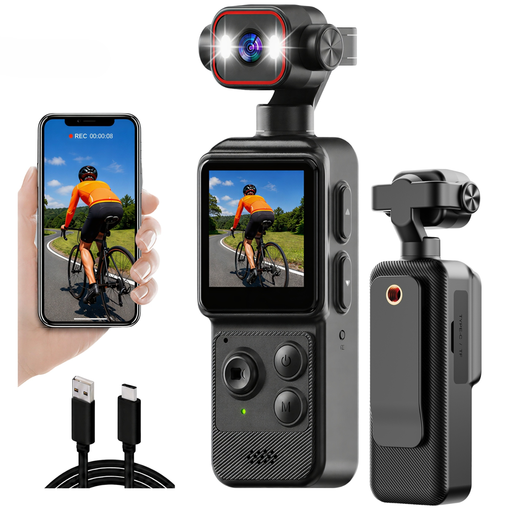
Mini 4K Action Camera with Clip

Mini 4K Action Camera with Clip

The product title lists vlogging and travel as intended uses. Check separately whether its focusing capabilities are suitable for close-ups of fern textures.

The title lists a 1.54-inch display, a 140° field of view, app control, LED light and a 1200 mAh battery.

View on Joybuy
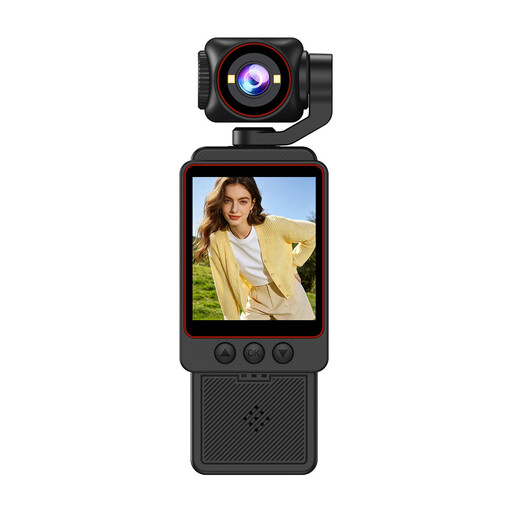
2K Pocket Vlogging Camera, Handheld POV Cam

2K Pocket Vlogging Camera, Handheld POV Cam

The product title describes a portable camera for everyday vlogging. Check whether its focusing capabilities are suitable for close-ups of fern leaves.

The title lists a 360-degree rotating lens and audio and video recording.

View on Joybuy

DJI Osmo Pocket 4 Standard Combo

DJI Osmo Pocket 4 Standard Combo

The product title positions this pocket camera for vlogging and photography. Check separately whether its focusing capabilities are suitable for the fern leaf close-up you want to take.

The title lists a 1-inch CMOS sensor, 4K/240fps, 3-axis stabilisation, 2× lossless zoom, 107GB of built-in storage and a rotating 2-inch screen.

View on Joybuy
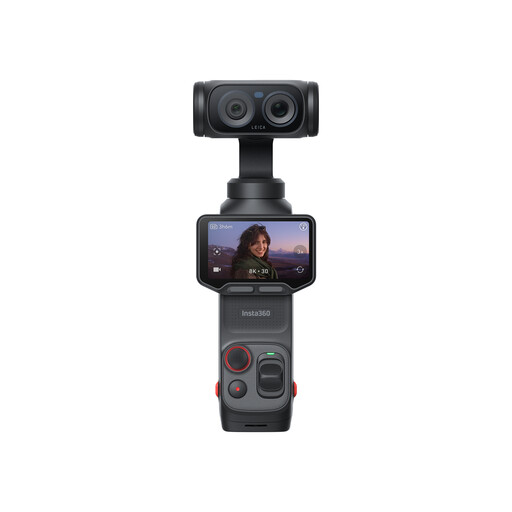
Insta360 Luna Ultra Standard Bundle Cosmic Black

Insta360 Luna Ultra Standard Bundle Cosmic Black

The product information lists vlogging and close-ups as possible uses. For fern textures, check its focusing capabilities and whether the required distance from the subject suits your needs.

The product information lists a telephoto lens, 6× lossless zoom, an f/2.0 aperture for that lens and 3-axis mechanical stabilisation.

View on Joybuy
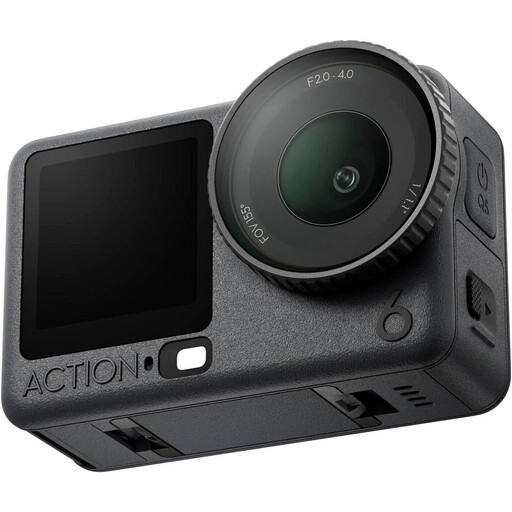
DJI Osmo Action 6 Adventure Combo

DJI Osmo Action 6 Adventure Combo

The product title describes an action camera for adventures. Before choosing it for fern close-ups, check whether its focusing capabilities suit the framing you want.

The product information lists a variable aperture of f/2.0–f/4.0.

View on Joybuy

Frequently asked questions

Do I need a macro lens to photograph a whole fern leaf?

No, not necessarily. First decide how much of the frame you want the leaf to fill. Maximum magnification becomes more important when you want to capture tiny veins. Check the specification for the exact lens, as ‘macro’ doesn’t mean the same magnification for every lens.

Why isn’t the minimum focusing distance the same as the space available to light the leaf?

The minimum focusing distance is measured from the sensor, while the working distance describes the space between the subject and the front of the lens. Sony states that the SEL30M35 has a working distance of approximately 2 cm at maximum close-up. Check whether you can still light the leaf without casting a shadow over it yourself.

Can focus stacking help me capture a sharper fern leaf?

Focus stacking can increase the depth of field in a composite image by combining shots taken at different focus points. You’ll need several shots of the same subject, so consider whether the leaf and camera can stay still enough.

Who should I contact in the Netherlands if my camera turns out to be faulty?

According to the Dutch Government, you should contact the seller if a product is faulty. There is no fixed time limit for the statutory guarantee in the Netherlands. Check the terms of any additional guarantee and what extra rights it provides.

Can I leave the woodland path to photograph a fern leaf?

Don’t assume that you can. Staatsbosbeheer says that most of the areas it manages are accessible only on roads and paths, and that signs at the entrance show the rules in force. This is information from the managing authority for those areas, not a general rule for every woodland location in the Netherlands.
