For spontaneous close-ups on a walk, a camera with a built-in close-up function is practical; if you want more choice of magnification, a mirrorless camera with a suitable lens is a good fit. OM SYSTEM states that the Tough TG-7 can focus as close as 1 cm, but a mirrorless camera body doesn’t automatically come with a macro lens. Focus stacking is most useful when photographing a stationary frond.
Which camera is right for you?
Walker who wants to take close-up photos
You want to capture ferns and their details on a walk in the park without changing lenses. In that case, portability and a built-in close-up function are important; OM SYSTEM describes macro modes like these for the Tough TG-7.
Photographer of fine leaf textures
You want to deliberately capture veins and small leaflets in detail. Compare the magnification and focusing capabilities of the lens you’ll actually use; Nikon, for example, specifies 1:1 magnification for the NIKKOR Z MC 50mm f/2.8.
Photographer looking for a system they can expand
You also photograph other subjects in the park and might want to choose a different lens later. Check what’s included: a Canon EOS R50 kit with an RF-S 18-150mm lens isn’t the same as a kit with the separately sold RF 35mm macro lens.
What should you look for when choosing?
Compact camera with a close-up function
Choose this option: if you want to move from photographing a whole fern to capturing small details while out walking, without changing lenses. OM SYSTEM lists close-up and focus stacking modes for the Tough TG-7.
Bear in mind: the lens is fixed, so you can’t fit a specialist macro lens later.
Mirrorless camera with a chosen close-up lens
Choose this option: if you photograph other subjects in the park as well as ferns and want to choose your lens. Canon lists the RF 35mm F1.8 IS Macro STM as compatible with the EOS R50.
Bear in mind: the lens you need for close-ups may be a separate purchase from the lens included in a camera kit.
Mirrorless camera for a specialist macro system
Choose this option: if you want to build a kit for outdoor use and high magnification. OM SYSTEM lists weather-sealing and focus stacking for the OM-5 Mark II; for the M.Zuiko ED 90mm F3.5 Macro IS PRO lens, the brand specifies 2× magnification.
Bear in mind: a body-only version doesn’t automatically include the specialist macro lens. The weather-sealing of one component doesn’t automatically apply to a different lens.
| What to consider |
What to look for |
Who is this most important for? |
| Fine leaf textures |
Compare the magnification and minimum focusing distance of the built-in optics or the lens actually included. |
If I want to capture veins and small leaflets clearly, I prioritise magnification and focusing capabilities. Around 33% of consumers choosing a camera for this park scenario put fine leaf textures first. |
| Taking it on a walk |
Check the weight of the complete setup and whether you need to change lenses for close-ups. |
If I want to stop and photograph a fern quickly, a built-in close-up function and minimal lens-changing matter. Around 27% of consumers choosing a camera for this park scenario give this convenience top priority. |
| Keeping the whole frond in focus |
Check whether the camera offers focus bracketing or focus stacking, and whether the frond can remain still during the shot. Image stabilisation does not, by itself, increase depth of field. |
If I want to get more of a single frond in focus, I consider the focusing method and how much the subject moves. Around 20% of consumers choosing a camera for this park scenario prioritise keeping the frond in focus. |
| Complete camera kit |
Check the body, exact lens model and included accessories for each offer; assess the kit as a whole. |
If I buy a mirrorless camera, I want to know whether the included lens suits my close-up photography. Around 20% of consumers choosing a camera for this park scenario put the contents and cost of the complete kit first. |
Common pitfalls
-
Assuming a body or standard kit lens makes a complete macro setup
A Canon EOS R50 kit may include the RF-S 18-150mm, while the RF 35mm macro lens is sold separately. The OM-5 Mark II Body is not a kit with the 90mm macro lens mentioned either.
Compare the exact box contents with the kind of detailed photos you want to take, then work out what you need for a complete kit.
-
Assuming a short focusing distance means the whole frond will be in focus
Depth of field decreases when you take close-up photos. Focus stacking can combine several focus positions, but movement of the frond between shots makes this technique less suitable.
First decide whether you want one detail or a larger part of the frond in focus. Then check the magnification, focusing options and practical workflow.
-
Confusing the manufacturer’s warranty with your statutory rights
A commercial manufacturer’s warranty is not the same as your statutory rights against the seller. ACM ConsuWijzer explains that the seller is responsible for the statutory guarantee.
Keep your proof of purchase and contact the seller first if you think there’s a fault.
Camera brands to consider
These brands offer examples of different camera and lens options; the features mentioned apply to the specific models and lenses listed below.
OM SYSTEM
The Tough TG-7 offers close-up capabilities in a fixed-lens camera; the OM-5 Mark II is an expandable mirrorless camera.
- According to OM SYSTEM, the Tough TG-7 can focus as close as 1 cm and has macro modes. For the OM-5 Mark II, the brand lists focus stacking and IP53-rated weather-sealing.
- The TG-7 doesn’t have interchangeable lenses. For a specialist macro setup with the OM-5 Mark II, you’ll need to choose a suitable lens separately; the stated protection doesn’t automatically apply to every lens.
Canon
The EOS R50 is an expandable mirrorless camera for park photography and close-ups with a compatible RF lens.
- Canon lists the RF 35mm F1.8 IS Macro STM as compatible with the EOS R50 and describes automatic depth composition in Advanced A+ mode.
- According to Canon, the EOS R50 doesn’t have in-body image stabilisation. A kit with the RF-S 18-150mm doesn’t automatically include the separately sold RF 35mm macro lens.
Nikon
The NIKKOR Z MC 50mm f/2.8 is a separate lens for fine leaf textures, designed for use with a compatible Nikon Z camera.
- Nikon specifies 1:1 magnification and a minimum focusing distance of 0.16 m for this lens.
- These lens specifications don’t describe a complete camera or bundle; check which body and accessories you need.
Sony
The FE 90mm F2.8 Macro G OSS is an E-mount lens for a compatible Sony camera system, giving you more distance from your subject.
- Sony specifies 1.0× maximum magnification, a minimum focusing distance of 0.28 m and optical stabilisation for this lens.
- These details don’t confirm a camera body or bundle contents, and they don’t, by themselves, show an advantage over other systems for fern photography.
Joybuy products
Joybuy product picks for this topic.
 No image available
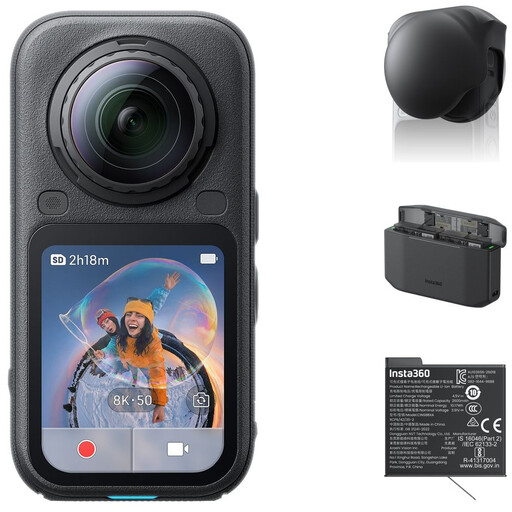
Insta360 X6 All-in-One Bundle (Standard Bundle + Lens Cap + Xtreme Battery + Fast Charge Case)
This is an option if you’re specifically looking for a 360° camera; check separately whether its close-up capabilities suit photographing fern structures.
The bundle name lists a standard bundle, lens cap, Xtreme Battery and Fast Charge Case.
View at Joybuy
Frequently asked questions
Is getting a whole fern frond in focus the same as choosing maximum macro magnification?
No. Magnification describes how large a detail appears in the image, while depth of field decreases when you take close-up photos. Focus bracketing or stacking can help if the frond stays still enough during the shots.
What should I check before getting started with a mirrorless camera?
Check the lens mount, the lens in the box and that lens’s close-up capabilities. According to the box contents, the Canon EOS R50 kit mentioned includes the RF-S 18-150mm, not the separately sold RF 35mm macro lens.
Should I contact the manufacturer directly for a repair under the statutory guarantee?
No. ACM ConsuWijzer says that the seller is responsible for the statutory guarantee. If a product develops a fault sooner than you could reasonably expect under normal use, the seller must offer an appropriate free solution; report the problem to the seller first.
What if recognisable people visiting the park appear in a photo I want to share publicly?
The Dutch Data Protection Authority distinguishes between private use and public sharing. Images of recognisable people are personal data; the exception for personal or household use doesn’t automatically apply when you share beyond a very limited private circle. Check the relevant privacy rules before publishing.


