
Textile maker comparing colours
You photograph samples to compare shades across shots. Consistent lighting, a neutral reference and a consistent approach to colour are all important.


For comparable colours, controllable lighting and a neutral colour reference matter more than a high megapixel count alone. If you mainly want to capture fibres or weave details, choose a lens that offers the magnification and working distance you need. Also check the camera’s lens mount, what’s included in the kit and which manual settings are available.
You photograph samples to compare shades across shots. Consistent lighting, a neutral reference and a consistent approach to colour are all important.
You want to make stitches, fibres or small imperfections visible. So pay attention to the magnification and working distance of the lens you’ll actually be using.
You take photos repeatedly under artificial light and want to minimise differences caused by lighting and camera settings. A consistent process can help.
First, decide whether colour comparison, fine detail, repeatability under artificial light or the cost of the complete set-up matters most to you.
| What to consider | What should you check before buying? | Who is this important for? |
|---|---|---|
| Colour comparison | Check the white balance or RAW shooting options, and whether you can photograph a neutral colour reference under the same lighting. | If I want to compare shades across fabric samples, I want to keep the lighting and colour processing as consistent as possible. Around 36% of consumers in this choice context put colour comparison at the top of their list when buying. |
| Fine weave and fibre details | Check the maximum magnification of the exact lens and confirm the mount and what’s included in the kit. | If I want to fill the frame with stitches or fibres, the lens matters just as much as the camera body. Around 29% of consumers prioritise capturing fine textile details. |
| Repeatable shots under artificial light | Check the available shutter settings and whether flicker-reduction features are included with the exact camera variant. | When taking a series of shots under my own lights, I want to minimise differences between sessions. Around 21% of consumers in this choice context prioritise a repeatable workflow under artificial light. |
| Cost of the complete set-up | Check which lens comes with the kit you’ve chosen, then compare it with what else you need to meet your detail or colour goals. | If I want to put together a complete set, I want to know in advance whether the lens will let me take the shots I need. Around 14% of consumers prioritise the cost of the complete photography set-up. |
Research into digital textile images, published in Scientific Reports, shows that the shooting environment is linked to colour distortion. Camera resolution alone therefore cannot tell you whether your photos are colour-accurate.
Pixel count won’t correct differences caused by lighting, backgrounds or image processing. As a result, it can be harder to compare colours between shots.
Start by assessing your lighting set-up and approach to colour. Photograph a neutral reference under the same lighting and keep your processing consistent.
A consistent process takes time and may require a separate colour reference.
The stated 1:2 and 1:1 magnifications apply to specific lenses, not automatically to a camera body or every kit lens. Without a suitable lens, a small detail may appear smaller in the frame than you’d like.
Before buying, check the exact lens model, mount, magnification and framing you need.
You may need to buy a separate lens to get the magnification you want.
Flickering lights can cause stripes or colour differences. The flicker-reduction features available vary by camera model.
Test your own lights with the shutter settings you intend to use, and check the manual for the exact camera variant.
The EOS R50 uses an RF or RF-S mount. The RF 35mm F1.8 MACRO IS STM, available separately, is one possible close-up lens for this mount.
The Z50II is a mirrorless camera with a Z mount. The NIKKOR Z MC 50mm f/2.8, sold separately, is an option for capturing small textile details.
The X-S20 is an APS-C mirrorless camera with an X mount, giving you the flexibility to put together your own lens and shooting workflow.
The α6400A is a camera with interchangeable E-mount lenses. For small textile details, your choice of lens remains key.
This selection of Joybuy products includes cameras described in their product information as suitable for photography or general sample shots. Check each model’s close-up capabilities and whether it offers the settings you need for your lighting.
 No image available
The product title describes this camera as suitable for photography. Check that its focusing distance is right for the size of your fabric sample.
The title lists 12× optical zoom, 64 MP, 4K and Wi-Fi.
 No image available
The product information describes the Osmo Pocket 3 as suitable for photography. Check that its photo settings and close-up distance are suitable for capturing your sample.
The title lists a 1-inch CMOS sensor, 4K/120fps video and 3-axis stabilisation.
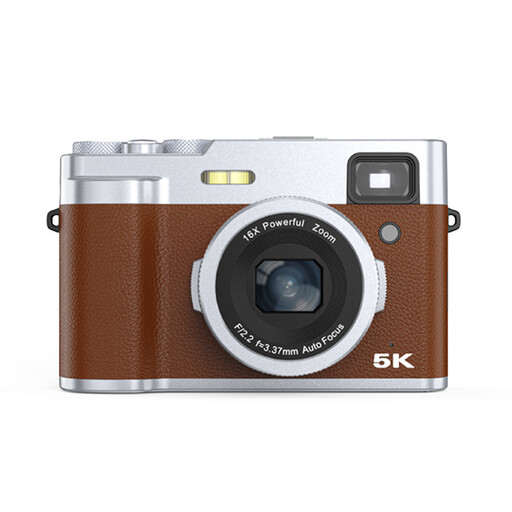 No image available
This compact camera is described as suitable for general sample shots. Check that its close-up capabilities suit the framing you want.
The product title lists 48 MP, autofocus, an optical viewfinder and a 2.8-inch LCD screen.
 No image available
This version is described as suitable for wider shots with the included zoom lens. Check that its minimum focusing distance works for your sample.
The product information lists a 24.2 MP APS-C sensor and a 16–50mm lens.
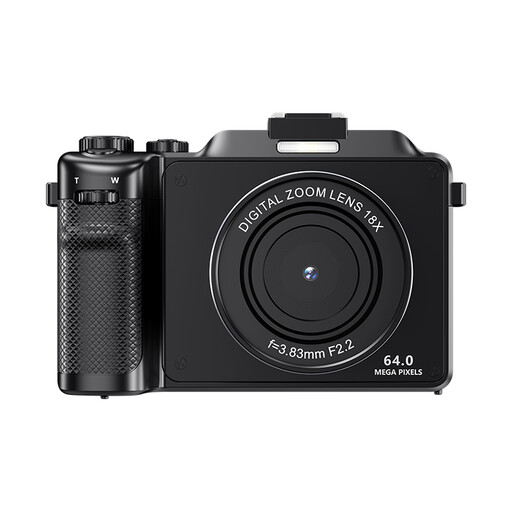 No image available
This compact camera is described as suitable for general sample shots. Don’t rely on digital zoom to capture fine weave details at a larger size.
The title lists 64 MP, autofocus, 4K and 18× digital zoom. The product information warns that digital zoom reduces image quality.
No, not on its own. Lighting, the lens and how you process the images all play a part in colour comparison. Consumentenbond explains that the lens and image sensor work together to affect photo quality; a megapixel count is no proof of colour accuracy.
Keep the light on your sample as consistent as possible and photograph a neutral reference under the same lighting. If you see stripes or colour differences, take some test shots with different shutter settings. Sony notes that flicker-reduction features depend on the camera model.
For a distance purchase from a business, you generally have a 14-day cooling-off period, according to the Dutch government. There are exceptions, and the rules do not necessarily apply to purchases from private sellers. ACM ConsuWijzer distinguishes between the legal guarantee and any additional manufacturer’s or seller’s warranty. With the legal guarantee, what you could reasonably expect from the product is important.
A photo of a sample on its own does not automatically show identifiable people. If people are recognisable in the photo, the images may contain personal data. The Dutch Data Protection Authority distinguishes between limited personal use and, for example, business publication, where the GDPR may apply.