
Fabric bag seller
Takes photos for an online shop regularly and wants to keep colours and framing consistent under the same lights.


Start with a consistent lighting set-up and control over the white balance. Then decide whether you’ll mainly be photographing whole bags or want to capture small seams and fabric weaves too. A mirrorless camera gives you a choice of lenses, while a compact camera with close-up modes is an option if you’d rather not change lenses. Always check which lens or close-up function is included: these vary between kits and don’t, on their own, tell you how colours will look under your lights.
Takes photos for an online shop regularly and wants to keep colours and framing consistent under the same lights.
Wants to show seams, fastenings and fabric weaves up close as well as the whole bag. Lens choice and shooting distance are important considerations.
Wants a compact, straightforward set-up for photographing whole bags and the occasional close-up, and is happy with a fixed lens.
Start with the lighting and white balance for repeatable colours, then choose a camera and lens to suit the framing you want. Canon Netherlands recommends a fixed set-up for consistent product compositions.
| What to consider | What should you check? | Who should prioritise this? |
|---|---|---|
| Colour under artificial light | Check the white balance settings and the file format you want. Take a test shot using the lights you plan to work with. | If I’m photographing several bags under the same lights, I want to capture their colours as consistently as possible. Around 36% of consumers say recognisable fabric colours are their main buying concern. |
| Fabric details | Check the lens mount, focusing distance and magnification of the lens, or the camera’s close-up function. | If I want seams, fastenings or fabric weaves to appear clearly in the image, I’ll pay attention to the lens and the distance from the bag. Around 29% of consumers put these details first. |
| Repeatable series of photos | Check whether you can keep your settings fixed, and how you can review or transfer your images. | When I’m photographing lots of bags one after another, I don’t want to have to set up the camera and framing from scratch each time. Around 21% of consumers prioritise a consistent workflow. |
| Complete kit | Check which lens comes with the offer and whether you’ll need another lens for detail shots. | If I want to get started with a complete, usable set-up, I’ll look at what’s included in the kit, not just the camera body. Around 14% of consumers focus mainly on the total cost of the kit. |
For close-ups of seams or fabric weaves, the lens you choose or the camera’s close-up function matters too. The camera body alone doesn’t determine how large a detail will appear in the image.
Check exactly what’s included in the kit and think about the framing you’ll need for both the whole bag and its smallest details.
You may need a separate, suitable lens for detail shots, which could add to the cost of your equipment.
White balance is affected by lighting conditions. If the lights or settings change between shots, it can make a series of photos less consistent.
Keep your lighting set-up the same and check the colour with a test shot before photographing a whole series.
Changing your set-up can mean spending extra time checking and editing your photos.
A mirrorless camera gives you a choice of interchangeable lenses, while a compact camera with a fixed lens means you don’t have to change lenses. The right option depends on the balance you want between overall shots and close-ups.
Choose based on the framing you want, and check which lens or macro mode is actually included with each kit.
The EOS R50 is a mirrorless camera with an RF mount, compatible with RF and RF-S lenses. This applies to this model, not all Canon cameras.
The Z50II can be paired with a separate macro lens; a macro lens isn’t necessarily included in a standard kit.
The X-S20 offers features for anyone who wants to work with RAW files and app-assisted controls.
The Tough TG-7 is a compact camera with a built-in lens and macro modes, for anyone who doesn’t want to use interchangeable lenses.
Consider these cameras as possible starting points for photography, and check whether each model’s lens, features and controls suit fabric bags and your artificial lighting set-up.
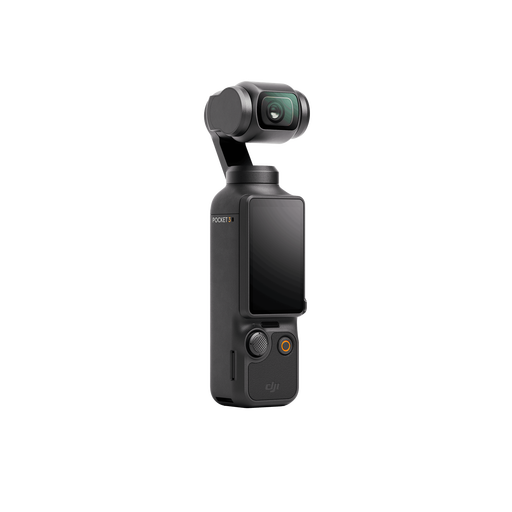
 No image available
The product name describes this model as a vlog camera. Check whether its features and the framing you want are suitable for product photos of bags.
 No image available
The product name describes this as a digital camera for photography. Check the lens and its close-up capabilities to make sure they suit the shots you want to take.
The product name lists 80MP UHD and 18X zoom.
 No image available
The product name describes a zoom camera for photography. Check that its listed features suit your preferred shooting distance and framing for detail shots.
The product name lists 12X Optical Zoom, 4K, WiFi and 64MP.
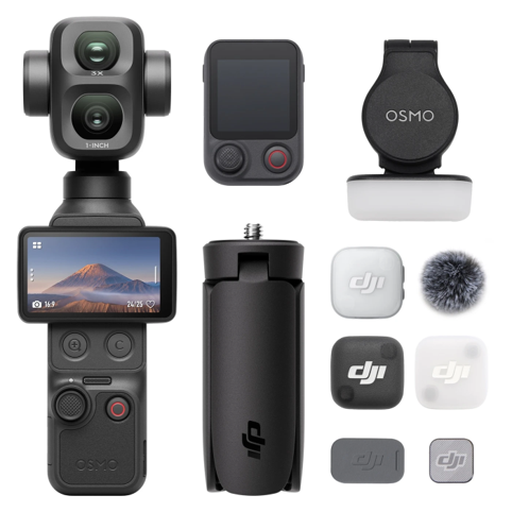
 No image available
The product name describes this model as a vlog camera. Consider whether its features and the framing you want are suitable for still product photography.
The product name lists 1-inch CMOS, 4K/120fps, 3-Axis Stabilization and an included microphone.
 No image available
The product name describes this as a small video camera for photography. Check whether the model suits the framing you want for bags and close-ups.
The product name lists 1-inch CMOS, 4K/120fps and a 2-inch rotating touchscreen.
Use a fixed camera set-up for the series, keep the lighting consistent and check the white balance with a test shot. Canon Netherlands recommends using a tripod to keep your composition consistent. A grey card can help you adjust colours, but it doesn’t guarantee colour accuracy.
No, it depends on how large you want the detail to appear in the image. According to the manufacturer, the OM SYSTEM Tough TG-7 has macro modes. For 1:1 shots, Nikon specifies this magnification for the separate NIKKOR Z MC 50mm f/2.8 lens. Check the lens and working distance for every kit.
For an online purchase covered by Dutch consumer law, you generally have up to 14 days from delivery to change your mind, according to ACM ConsuWijzer. The statutory guarantee doesn’t have a fixed duration of exactly two years: it covers what you could reasonably expect from the product under normal use. If you buy mainly or exclusively for business, this consumer protection doesn’t apply, according to ACM ConsuWijzer.
Take a used camera battery to a suitable collection point, separately from other waste. The Dutch Government specifically includes batteries for still and video cameras among those you can hand in.