
Evening photographer without daylight
You photograph your scarf in the evening and want a repeatable set-up that keeps its colour and shape recognisable.


You don’t automatically need to buy a new camera for overview shots. Start with your existing smartphone or a mirrorless camera with a standard zoom, then assess a test shot in the light available during your evening session. Adobe recommends a controlled set-up and good lighting. For small stitches or fibres, the magnification and lens mount of the lens you choose are particularly important. Canon lists a maximum magnification of 0.5× for the RF 35mm F1.8 MACRO IS STM, while Nikon and Sony list 1:1 for their respective macro lenses.
You photograph your scarf in the evening and want a repeatable set-up that keeps its colour and shape recognisable.
As well as the whole scarf, you want to show individual stitches or fibres up close. The lens helps determine how large these details appear in the image.
You want to find out whether your current camera is good enough first. If you do buy, consider the camera body, lens and other essentials as one complete set-up.
When: if you mainly want to show the whole scarf or larger patterns and would rather avoid extra camera costs for now. Adobe lists a smartphone as an option for those on a limited budget.
Trade-off: the results for small stitches depend on the camera you already have, so take a test shot first.
When: if you want to take overview shots and adjust the framing. The Canon EOS R50 and Nikon Z50II kits are examples of sets that include a standard zoom lens.
Trade-off: the magnification of the included lens helps determine whether small stitches will appear large enough in the image. Also check that the lens is actually included in the kit on offer.
When: if you want to photograph individual stitches or fibres up close. Canon lists a maximum magnification of 0.5× for the RF 35mm F1.8 MACRO IS STM; Nikon and Sony list 1:1 for the Z MC 50mm f/2.8 and E 30mm F3.5 Macro respectively.
Trade-off: these lenses are sold separately. Focusing becomes more critical at close range because the depth of field is shallower. These magnification figures are lens specifications, not test results on a scarf.
| What to consider | What should you check? | Who is this important for? |
|---|---|---|
| Sharp photos in evening light | Check that you can position the camera steadily and light the scarf evenly. Compare a test shot at full size. | If I take photos in the evening, I want to capture the scarf in a similar way each time. Around 36% of consumers prioritise evening lighting. |
| Recognisable colours | Check the custom white balance options and take a test shot under your chosen lighting with a neutral reference. | If the yarn colour needs to remain recognisable, I want to check colour reproduction under my own evening lighting. Around 29% of consumers give colour accuracy top priority. |
| Small stitches and texture | Compare the maximum magnification and lens mount with the detail you want to photograph. Also check whether the whole scarf needs to fit in the frame. | If I want to show individual stitches or fibres, I first look at the lens’s magnification. Around 21% of consumers prioritise stitch detail. |
| A complete set-up | Read the exact list of box contents and check whether the lens you want is included before deciding if you need anything else. | If I don’t want to buy more equipment than my photos require, I consider the body, lens and accessories together. Around 14% of consumers prioritise the total cost of their equipment. |
Maximum magnification applies to a specific lens; it doesn’t automatically come with the camera body. Depth of field gets shallower when you’re close to your subject.
Decide which detail you want to show, then check the magnification and lens mount of the exact lens.
For small details, you may need an additional compatible close-up or macro lens.
For product photography, Adobe recommends controlled lighting and a plain background as part of the set-up.
First, test the lighting, background and camera position with the equipment you already have.
Without a fixed position and manageable lighting, it can be harder to recreate the same shot consistently.
With a mirrorless camera, you choose the body and lens separately; what’s included varies by version.
Check the full product name and box contents before comparing offers.
If a suitable lens isn’t included, you may need to buy one separately.
The EOS R50 with an RF-S standard zoom is one example of a kit for overview shots. Canon also offers separate lenses for capturing smaller details.
The Z50II with a Z DX 16-50mm zoom is a kit that includes a lens for overview shots; a separate macro lens is a different option.
The Dutch specifications for the ILCE-6400AK describe an APS-C camera with an E-mount and RAW support. Sony also offers a separate E-mount macro lens.
The X-S20 is one option to consider if you’re also looking at RAW shooting and sensor-shift stabilisation for these photos.
These cameras and camera kits at Joybuy are worth considering for photographing your scarf. Check whether the controls, lens and listed features of each model suit the way you plan to shoot.
 No image available
The zoom can help you try different framings. Take a test shot to see how the camera performs in the light available during your evening session.
Listed features: 12× optical zoom, 64 MP, 4K and Wi-Fi.
 No image available
The rotating screen can be useful for shooting from different angles. Consider whether a vlogging camera is right for photographing a stationary scarf.
Listed features: 1-inch CMOS sensor, 4K/120fps video, 3-axis stabilisation and a rotating 2-inch touchscreen.
 No image available
The included zoom lens can be handy if you want to switch between different framings.
Listed features: 24.2 MP APS-C sensor and E PZ 16-50mm zoom lens. Memory card and adapter or charger not included.
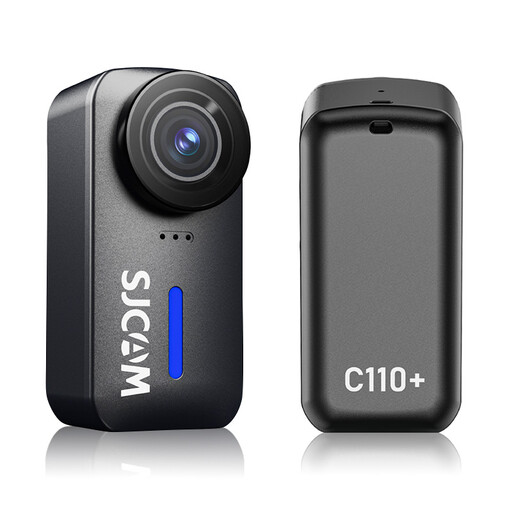 No image available
If you want to adjust colour reproduction during your session, check that the available settings suit the way you work.
Listed features: photos up to 20 MP and adjustable white balance, ISO and exposure compensation.
 No image available
The included zoom lens can help you adjust the framing between an overview shot and a close-up.
Listed features: 24.2 MP APS-C sensor and 16-50mm zoom lens.
Start with a plain background, a fixed camera position and a test shot using the light available to you. Adobe lists a smartphone as an option for those on a limited budget; then consider whether you need more control over your shots or greater magnification.
The light source and selected white balance affect colour reproduction. Nikon shows the differences between automatic and set white balance under different types of light. Check the colour using a neutral reference under the lighting you plan to use.
No. A mirrorless camera may be sold as a body only or as a kit with a lens. Check the box contents for the exact version. According to the product information, the Canon EOS R50 and Nikon Z50II standard zoom kits do include a lens.
According to the Dutch government, many online purchases from a business come with a 14-day cooling-off period, subject to exceptions. You’re also entitled to a product that meets the terms of the agreement. There is no fixed statutory warranty period in the Netherlands of exactly two years for every product; what you can expect depends on factors including the product and the information provided at the time of sale.