Choose your camera equipment according to what you photograph. When capturing musicians in action, the right shutter speed and focusing are important, while for band portraits, the available shooting distance and lens determine how everyone fits in the frame. So compare the complete combination of camera body, lens and any lighting. A fast lens and extra lighting offer different possibilities, but each comes with its own trade-offs.
Who is this guide for?
Photographing musicians in action
You want to capture gestures and facial expressions while someone is playing. The right shutter speed and focusing matter more than resolution alone. Canon Netherlands describes a fast shutter speed as essential for freezing action.
Photographing band portraits
You want to frame one or more musicians, possibly with their instruments, within the available space. So assess the camera and lens as a combination; Canon Netherlands discusses different focal lengths for environmental portraits.
Creating with limited studio lighting
You switch between available light and lighting you set up yourself, and want to know how the lens, shutter settings and lighting setup affect your photos. Canon Netherlands explains how flash units can create studio-style lighting in different locations.
What should you consider when choosing?
Full-frame mirrorless camera with interchangeable lens
A good fit if: you often photograph musicians in motion in limited available light and want the flexibility to choose a suitable lens.
Trade-off: the body alone doesn’t determine the angle of view or maximum aperture. The lens and any extra lighting also affect your setup.
APS-C mirrorless camera with interchangeable lens
A good fit if: you’re looking for a compact body and can choose a lens to suit your actual shooting distance.
Trade-off: assess the angle of view offered by your chosen setup, and treat image stabilisation separately from the shutter speed needed to capture movement.
Compact camera with fixed lens
A good fit if: you don’t want a separate lens and the fixed zoom range gives you the framing you want at the available distance.
Trade-off: you can’t replace the lens later, so check the angle of view and controls in advance. The Consumers’ Association describes compact cameras as cameras with a fixed lens.
| What to consider |
What to look for |
Who should pay particular attention? |
| Capturing movement sharply |
Compare people-tracking autofocus, shutter controls and the maximum aperture of the lens you’re buying. |
If I photograph musicians in action, I want to get faces and hands in focus without relying on stabilisation alone. Around 36% of consumers prioritise capturing movement. |
| Framing musicians and instruments |
Measure the maximum shooting distance and assess the lens’s angle of view on your chosen sensor. Also check whether the offer is for the body only or a kit. |
When I want to photograph a band or instruments at close range, the combination I choose needs to give me the framing I want. Around 29% of consumers give top priority to framing at the available distance. |
| Available light or your own lighting |
Check whether you can and are allowed to use flash. Check the flash and anti-flicker features for the exact camera model and shutter setting you’ll use. |
If I want to control my studio lighting myself, I want to know how the camera works with my lights and any flash unit. Around 21% of consumers prioritise their lighting setup. |
| Putting together a complete kit |
Compare what’s included, such as the body, lens, battery, charger and any accessories you need. Check the lens mount if you want to use lenses you already own. |
When I need a usable kit, I look at what I’ll need alongside the body for my shoots. Around 14% of consumers prioritise the contents of the complete kit. |
Avoiding common buying mistakes
-
Comparing camera bodies alone
The lens affects how much of a musician, their instrument and their surroundings you can capture from the available distance.
Measure your shooting distance and compare complete body-and-lens combinations before considering a body-only offer.
You may need to buy a suitable lens separately, so check which items are included in the kit.
-
Assuming image stabilisation will prevent motion blur
Image stabilisation compensates for camera movement in the relevant conditions, but it doesn’t guarantee sharp hands or faces when musicians are moving.
Choose a shutter speed and lighting setup to suit the movement you’re photographing, and consider stabilisation as a separate aid.
-
Choosing an electronic shutter without checking the lighting
Flickering light sources can cause banding. Features such as flash and anti-flicker shooting may be limited with an electronic shutter; Sony notes this for certain camera functions.
Test the camera with the lights you plan to use, and check which shutter, flash and anti-flicker combinations are available for the exact model.
Camera brands to consider
Canon
The EOS R6 Mark II is a full-frame EOS R body worth comparing for portraits and action. Choose an RF lens separately to suit your shooting distance and lighting.
- Canon specifies approximately 24.2 effective megapixels for the body.
- That figure alone doesn’t determine the lens’s angle of view or maximum aperture.
Nikon
The Z6III is a full-frame Z-system camera worth comparing for portraits and moving subjects, provided you choose a suitable Z lens.
- Nikon lists 24.5 effective megapixels and two card slots: one for CFexpress/XQD and one for SD.
- The lens and any lighting remain separate choices; the specifications aren’t an independent performance test.
Sony
The α7 IV (ILCE-7M4) is a full-frame E-mount option to consider if you’re looking at an interchangeable lens and approximately 33 effective megapixels.
- Sony specifies a full-frame sensor and E-mount for this model.
- Sony warns that features such as flash and anti-flicker shooting may be limited with the electronic shutter. Check the setting you plan to use for your studio setup.
Panasonic
The LUMIX S5II is a full-frame hybrid option to compare if you shoot video as well as stills.
- Panasonic lists a 24.2MP sensor, Phase Hybrid AF and video features.
- Claims about tracking performance are made by the manufacturer and aren’t an independent comparison with other cameras.
Fujifilm
The X-S20 is an APS-C option with interchangeable X-mount lenses to consider if a compact body and a suitable lens are important to you.
- Fujifilm specifies 26.1 megapixels, face and eye detection, and image stabilisation under the stated test conditions.
- Camera stabilisation alone doesn’t prove that movement by musicians will be frozen.
Joybuy products
This selection mainly features vlog cameras, as well as an APS-C camera with an interchangeable lens. Check that each model’s camera type, lens and features are suitable for your studio photography.
 No image available
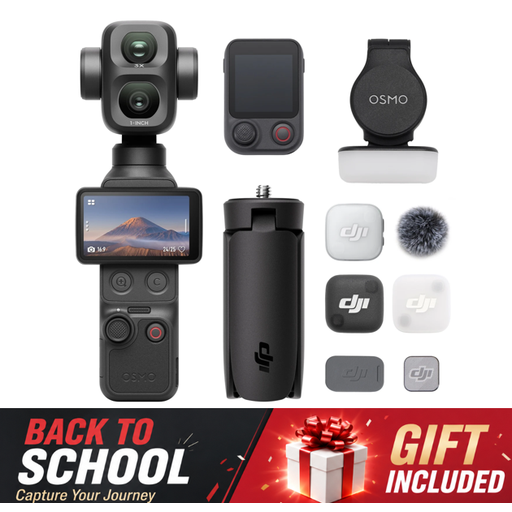
Osmo Pocket 4P Vlog Combo Black
The product description identifies this as a vlog camera. Consider whether this type of camera suits your studio photography.
Listed features: 1-inch CMOS sensor and 20mm f/2 wide-angle lens.
According to the product description, 4K/240fps is only used in slow-motion mode.
View at Joybuy
 No image available
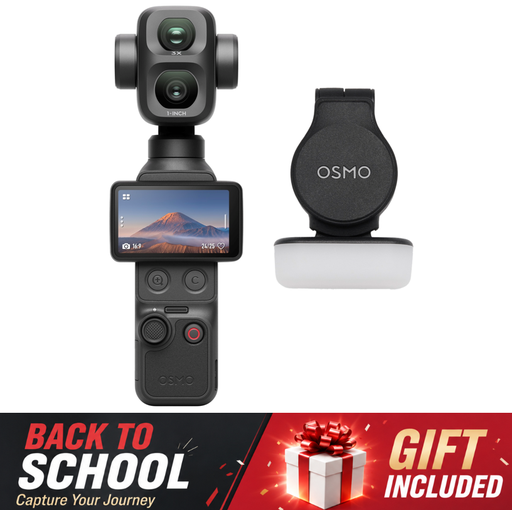
Osmo Pocket 4P Standard Combo Black
The product description identifies this as a camera with a wide-angle lens. Check whether this fixed-lens camera suits the studio shots you have in mind.
Listed features: 1-inch CMOS sensor and 20mm f/2 wide-angle lens.
According to the product description, 4K/240fps is only available in slow-motion mode.
View at Joybuy
 No image available
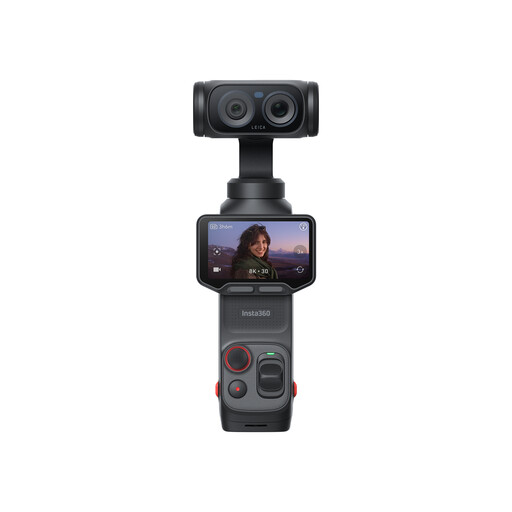
Insta360 Luna Ultra Standard Bundle Cosmic Black
The product title describes a vlog camera with two lenses. Before buying, check that its controls and lens configuration suit the photos you want to take.
The product description lists a 1-inch main sensor, 6× lossless zoom and a detachable 2-inch screen.
Also listed: a telephoto lens with an f/2.0 aperture.
View at Joybuy
 No image available
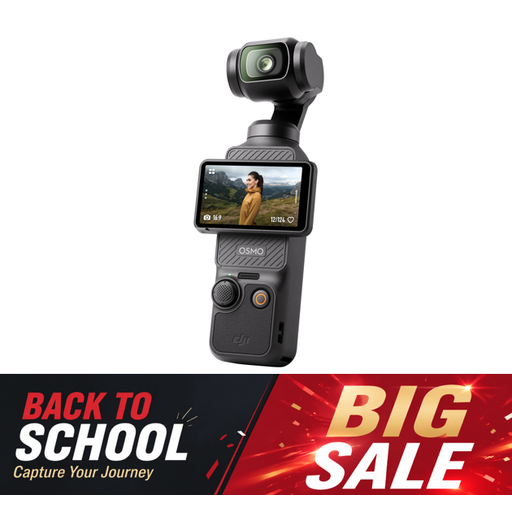
DJI Osmo Pocket 3
The product description mentions photography as well as video. Check whether this compact camera offers the framing you want in your studio.
Listed features: 1-inch CMOS sensor, 2-inch rotating screen and 4K video.
The description also mentions 3-axis mechanical stabilisation and focusing for still images.
View at Joybuy
 No image available
Sony ZV-E10 with 16-50mm Zoom Black
This APS-C camera with an interchangeable E-mount lens is worth considering if you’re looking for a zoom lens to vary your framing.
The kit description lists an E PZ 16–50mm f/3.5–5.6 OSS lens and autofocus with face priority.
According to the product description, an adapter/charger and SD memory card are not included.
View at Joybuy
Frequently asked questions
Does image stabilisation help when a musician is moving?
Image stabilisation is designed to compensate for camera movement, not to freeze a musician’s movements. Also choose a suitable shutter speed and enough light, then test your settings with the movement you’re photographing.
What can I do about banding under studio LED lights?
First check the light source and shutter setting. Sony explains that flickering light can cause banding, and that adjusting the shutter speed or, where available, using an anti-flicker or variable shutter function may help. Check which features your exact camera model supports.
Who should I contact if a camera I bought online is faulty?
For a consumer purchase in the Netherlands, the retailer is your point of contact for your statutory guarantee. The Dutch government states that there is no fixed statutory guarantee period; what you can reasonably expect from the product is what matters. This is separate from any additional manufacturer’s warranty.
Can I publish identifiable photos of musicians taken in a studio online without permission?
First consider which rights and legal basis apply to publishing the photos. The Dutch Data Protection Authority says that publishing other people’s personal data online generally requires consent; different GDPR legal bases may be relevant to processing. Discuss the purpose and use of the photos with the people involved before publishing them.


