
Pin maker who wants to show off the details
Wants to capture the enamel, metal edging and fastening in sharp focus, each on its own. GdeFoto and Canon Europe explain how important accurate focusing is when taking close-ups of small subjects.


A compact camera with a close-up mode is a straightforward option if you want to work without changing lenses. A mirrorless camera with a suitable macro lens gives you more choice over magnification and shooting distance. For capturing small details, check what the exact camera-and-lens combination can do, and bear in mind that neither camera will eliminate reflections on glossy enamel on its own.
Wants to capture the enamel, metal edging and fastening in sharp focus, each on its own. GdeFoto and Canon Europe explain how important accurate focusing is when taking close-ups of small subjects.
Wants to take consistent photos of reflective pins at home, with the flexibility to adjust the lighting, camera angle and shooting distance. GdeFoto and Canon Nederland highlight the importance of controlling light when photographing small products.
Is looking for a practical tabletop set-up and wants to know in advance whether a mirrorless camera comes with just a body or also the lens they need. Canon Europe and OM SYSTEM explain what to consider when taking close-ups and using the TG-7.
Choose this option if: you want to get started without interchangeable lenses and can achieve the framing you want with the fixed lens. OM SYSTEM says that the TG-7 can focus from 1 cm in microscope mode.
Bear in mind: a short minimum focusing distance alone doesn’t tell you how large a pin will appear in the image. You also can’t change the fixed lens.
Choose this option if: you want to show the fastening, edge or relief in close-up, and having a choice of lens or shooting distance matters to you. Canon specifies 0.5× magnification for the separate RF 85mm F2 Macro IS STM; Nikon specifies 1:1 for the separate NIKKOR Z MC 50mm f/2.8.
Bear in mind: magnification is a feature of the lens mentioned, not something you automatically get with the camera body or another kit lens. Also check that your set-up leaves enough room for lighting.
| What to consider | What should you check? | Who is this important to? |
|---|---|---|
| Capturing small details in sharp focus | Check the maximum magnification and focusing distance of the exact lens or close-up mode. Assess a test shot to see whether it gives you the framing you want. | If I want the fastening or relief to be clearly recognisable, I’ll first check how much space the detail takes up in the image. Around 33% of consumers put capturing small details first. |
| Reflections on glossy enamel | Test your intended light, diffusion and camera angle, and check that the colour and metal edging remain clear. | If glare makes parts of my pin unclear, I want to be able to adjust the lighting and camera angle. Around 27% of consumers give controlling reflections top priority. |
| Keeping the whole pin in focus | Check both the front and back in a test shot. If needed, see whether your chosen camera supports focus bracketing. | If my pin has depth, I want to check whether all the important parts will be in focus. Around 20% of consumers prioritise having sufficient depth of field. |
| A complete, usable set-up | Check which lens is included and whether the close-up function comes from that lens. | If I want to get started with a workable set-up straight away, I want to know exactly which parts I’m buying. Around 20% of consumers give a complete set-up top priority. |
A magnification specification for an RF or Z macro lens doesn’t automatically apply to the camera body or another lens in a kit.
Before buying, check what’s in the box, the lens mount and the magnification of the lens actually included.
You may need to buy a separate, compatible macro lens to create a usable close-up set-up.
A camera may be able to focus at close range, but that distance alone doesn’t tell you how large the pin will appear in the image or how much room will be left for lighting.
Compare the maximum magnification too, and test your preferred framing with the lighting you plan to use.
Glare on metal and enamel is also affected by the direction and spread of the light. A different body won’t change your lighting set-up by itself.
Before deciding which camera feature you’re missing, try changing the direction and diffusion of the light with the camera you already have.
The EOS R50 is a mirrorless camera that you can pair with a separate RF macro lens.
The Z50II is a mirrorless camera with a choice of Z macro lenses.
The TG-7 has a fixed close-up lens, while the OM-5 Mark II is a mirrorless camera with interchangeable M.Zuiko lenses.
The α6700 uses an E-mount and can be paired with separate E-mount macro lenses.
The X-S20 is a mirrorless camera with interchangeable X lenses; the XF30mmF2.8 R LM WR Macro is a separate macro option.
These Joybuy cameras are listed for general photography. If you’re photographing enamel pins, check whether the exact model and lens can achieve the close-up and shooting distance you need.
 No image available
The product title mentions photography. Before using it for pins, check that its close-up capabilities and shooting distance are suitable for the detail you want to capture.
The title lists a 1-inch CMOS sensor, 4K/120fps video, 3-axis stabilisation and fast focusing.
The title also mentions face and object tracking, as well as an included microphone.
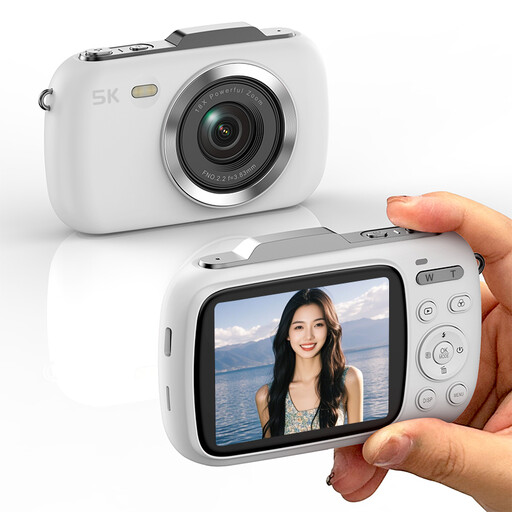 No image available
The product title mentions photography. Check whether this model’s close-up capabilities are suitable for capturing the small details of your pins.
The title lists 80MP UHD and 18X zoom.
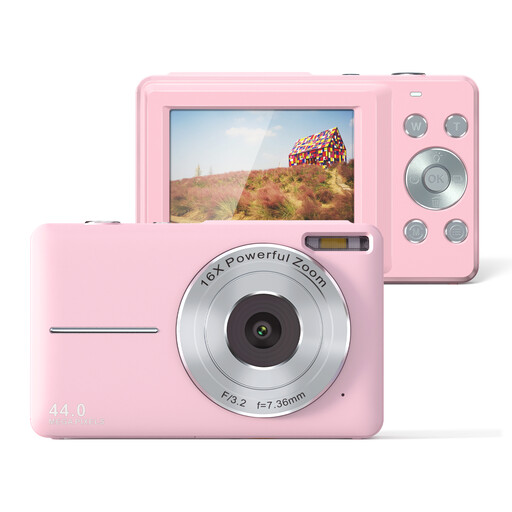 No image available
The product title mentions photography and video. Check whether the camera can capture the framing you want for a small pin.
The title lists 4K, 44MP and 16X zoom.
 No image available
The product description mentions an interchangeable lens. Check whether the included 16–50mm lens can capture the close-up of your pins that you want.
The product description lists a 24.2 MP APS-C sensor and an E PZ 16–50mm lens.
No. Check the maximum magnification of the exact lens included, or the close-up mode. Canon lists 0.5× for the separate RF 85mm F2 Macro IS STM, while Nikon lists 1:1 for the separate NIKKOR Z MC 50mm f/2.8. These specifications don’t automatically apply to other kit lenses.
Start with a stable camera and a soft, diffused light source, then move the light around while checking the reflections. Adjust the camera angle too, so you can see whether the colour and metal edging remain clear.
Not always. First, assess a single test shot to see how much depth your pin has. If important parts fall outside the focal plane, taking a series of shots at different focus points may help. Canon lists focus bracketing for the EOS R50, and OM SYSTEM lists focus stacking for the OM-5 Mark II.
For online consumer purchases, ACM ConsuWijzer generally states that you have up to 14 days from delivery to change your mind, subject to legal exceptions. The Netherlands Authority for Consumers and Markets says that, for a consumer purchase, the seller is responsible for providing a solution if a product doesn’t meet what you could reasonably expect from it. Check the terms if you’re buying in a business name.