
Photographers focusing on stitch details
You want to show individual embroidery stitches and small textures. The magnification of your chosen lens matters here; Canon and Nikon list different magnification specifications for the lenses reviewed.


Choose based on the smallest detail you want to fill the frame, and check the lens’s close-up capabilities rather than just those of the camera body. A compact camera with a fixed lens can be handy if you want to try both wider shots and close-ups without changing lenses. A mirrorless camera offers more lens options, but fine stitches may call for a dedicated macro lens. Whichever route you choose, allow for even lighting and a stable set-up.
You want to show individual embroidery stitches and small textures. The magnification of your chosen lens matters here; Canon and Nikon list different magnification specifications for the lenses reviewed.
You want to photograph complete patches repeatedly, with consistent colours, and have room to set up your camera and lighting in the same way each time. Nikon describes white balance as a setting that compensates for the colour of the light.
You want to use fewer separate components and switch between wider shots and details. The OM SYSTEM TG-7 has a close-up mode; check that it can achieve the framing you want.
When photographing patches on a small table, the main things to consider are lens magnification, the colour of the light and the space available for a stable set-up.
| What to consider | What should you look for? | Who is this important for? |
|---|---|---|
| Magnifying stitch details | Compare the maximum magnification of the specific lens and allow room for lighting. | If I want individual stitches to fill the frame, I look at the lens magnification as well as the space available for lighting. Around 33% of consumers rank stitch detail as their top priority. |
| Keeping colours consistent | Check whether you can adjust the white balance and keep the lighting consistent across successive shots. | When photographing several patches, I want the thread and backing to be shot under similar lighting. Around 27% of consumers put consistent colour reproduction first. |
| Keeping the whole patch in focus | Check which aperture settings or focus stacking features the exact model offers. | When stitches stand proud of the backing, I want both to appear sharp in the way I need. For around 20% of consumers, sharpness across the whole patch is their main concern. |
| Table space | Check what’s included in the kit and whether there’s room for support and lighting. | On a small table, I want to use as few separate components as possible while still leaving room for lighting. Around 20% of consumers put simplicity and table space at the top of their list. |
Maximum magnification depends on the lens. Canon lists a maximum of 0.25× for the RF-S 18-45mm and 1:2 for the RF 35mm F1.8 Macro.
Before buying, check the lens model, its stated magnification and what’s included in the kit.
For greater magnification, you may need a separate compatible macro lens.
Sony lists a minimum focusing distance of 9.5 cm for the SEL30M35 and a working distance of 2.4 cm from the front of the lens. That clearance is particularly useful if you want to position a light beside the patch.
Compare the working distance and map out your camera, subject and lighting on the table before choosing a lens for very close-up shots.
The colour of the ambient light affects white balance; changing the camera body alone won’t make the lighting consistent.
Take test shots under the lighting you’ll actually use and adjust the white balance accordingly, as Nikon recommends.
A repeatable lighting set-up may require extra time and space.
The Tough TG-7 reviewed is a compact camera with a fixed lens, close-up mode and focus stacking.
The EOS R50 with RF-S 18-45mm is a mirrorless camera kit for wider shots and flexible framing. The RF 35mm F1.8 Macro is a separate lens option.
The Z50II is a mirrorless camera that can be paired with a suitable Z lens. The NIKKOR Z DX MC 35mm f/1.7 is a separate lens for close-up work.
The E 30mm F3.5 Macro (SEL30M35) is a separate APS-C lens for a compatible Sony camera with an E-mount.
Joybuy product picks for photographing patches; check whether each model’s close-up capabilities suit your subject.
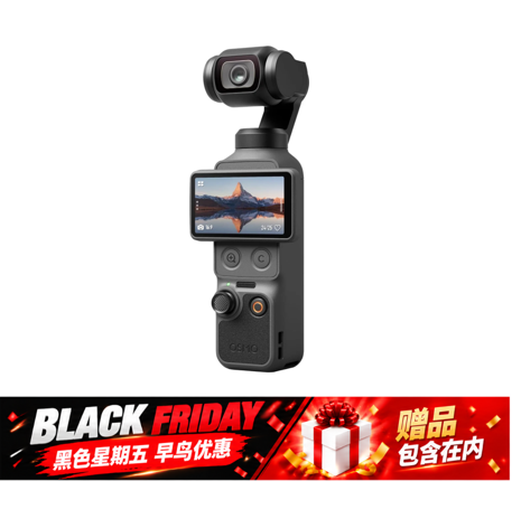 No image available
Check whether the close-up distance and space for lighting suit your table set-up.
1″ CMOS sensor; 4K/240fps; 3-axis stabilisation; 2× lossless zoom; 107GB built-in storage; 2″ rotating screen.
 No image available
For close-ups, check whether the shooting distance and space around the lens work with your lighting.
1″ CMOS sensor; 4K/120fps; 3-axis stabilisation; fast focusing; face and subject tracking; 2″ rotating touchscreen.
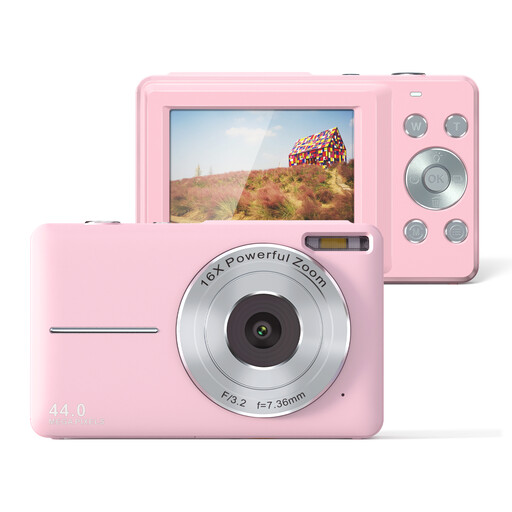 No image available
Check whether its close-up capabilities are suitable for the small embroidery details you want to photograph.
4K; 44MP; 16× zoom; pink finish.
 No image available
Check whether the included zoom lens offers enough close-up versatility for the framing you want.
Includes 16–50 mm zoom lens; black finish.
 No image available
Check whether the included lens’s close-up capabilities suit the smallest detail you want to capture.
Includes 16–50 mm f/3.5-5.6 OSS II lens.
No, it depends on the detail you want to fill the frame. Canon lists a maximum of 0.25× for the RF-S 18-45mm kit lens reviewed; compare it with a suitable macro lens if you need greater magnification.
Place the patch in the same spot, support the camera and keep the lighting consistent. Adjust the white balance for the light you’re using; Nikon describes this setting as a way for the camera to compensate for the colour of the light.
First, check what’s included in the kit. The Canon EOS R50 kit reviewed includes the RF-S 18-45mm lens, while the RF 35mm F1.8 Macro is a separate product. Also allow for camera support and lighting, and check which components are included with each offer.
According to ACM ConsuWijzer, online consumer purchases generally come with a statutory 14-day cooling-off period from the date of delivery. You’re also entitled to a product that, under normal use, meets what you could reasonably expect; this is separate from any manufacturer’s warranty.
No. According to the European Commission, CE is not a certificate issued by a central authority; for products covered by the relevant harmonised EU rules, the mark is the manufacturer’s declaration. On its own, CE says nothing about whether a camera is suitable for photographing patches.