Who is this choice for?

A maker who wants to show off the stitching

You want to photograph the whole bag as well as sharp close-ups of the thread and stitch texture. Canon Europe, Canon Nederland and Nikon Nederland highlight details, close-up lenses and macro magnification as important considerations.

An online shop owner who takes product photos regularly

You photograph bags in similar conditions and want to keep the framing, background and lighting consistent. Canon Europe and Shopify Nederland recommend a tripod and a fixed setup as practical aids.

An occasional bag photographer

You want to take an overall shot now and then, and work out whether your current smartphone or camera is good enough before buying extra equipment. Shopify Nederland describes a simple product photography setup; Canon Nederland lists specifications for a compact camera as a separate camera option.

What should you look for?

Start with your smartphone

Choose this if: you mainly take overall shots and your current phone captures enough detail in good light.

Bear in mind: focusing and magnification depend on your phone’s capabilities.

Compact camera with a fixed lens

Choose this if: you want one camera for both overall bag shots and close-ups, without having to choose separate lenses.

Bear in mind: you can’t replace the fixed lens with a specialist macro lens.

Mirrorless camera with a close-up lens

Choose this if: capturing individual stitches in sharp, enlarged detail is your top priority.

Bear in mind: you’ll need to check the camera body, lens mount and kit contents together; a macro lens may be sold separately.

What to consider What to check before buying Who should prioritise this?
Capturing stitches clearly and in close-up Check the specifications for the exact lens, mount and kit contents. Canon Nederland lists a maximum magnification of 1:2 for the RF 35mm F1.8 IS Macro STM and says it is compatible with the EOS R50; Nikon lists 1:1 magnification for the NIKKOR Z MC 50mm f/2.8. For the PowerShot G7 X Mark III, Canon specifies 5 cm at the wide-angle end and 40 cm at the telephoto end. If I want to show individual stitches clearly, I look at magnification and how close the camera can focus at the distance I plan to shoot from; around 31% of consumers say capturing embroidery details is their main concern.
Consistent framing and background Consider whether you can position the camera securely and use a plain background and an even light source. A tripod can help you keep the framing consistent. When I want to photograph several bags in the same way, I don’t want to work out the framing again each time; around 25% of consumers prioritise repeatable shots.
Fabric and thread colour Check the white balance settings and whether you can edit RAW images if you want to adjust the colour afterwards. Nikon explains how white balance affects the appearance of white and other colours. If the fabric and thread need to look true to life in the photo, I also consider the light source and colour settings; around 25% of consumers say colour reproduction is their main concern.
Easy to buy and use Compare the complete setup you’ll need and first decide whether you really need frame-filling close-ups. A compact camera has a fixed lens; with a mirrorless camera, you choose a suitable lens. If I mainly want the occasional overall shot, I’d rather start with minimal extra equipment; around 19% of consumers prioritise simplicity and keeping purchases to a minimum.

Common buying mistakes

  • Assuming a camera body is a complete setup for stitch detail

    The stated macro magnification applies to the lens, not the camera body. With a mirrorless camera, you’ll need to check whether a suitable lens is included.

    Before buying, check the exact kit contents, lens mount and magnification specification.

    A separate close-up lens may be an additional purchase.

  • Assuming a short minimum focusing distance guarantees frame-filling macro shots

    For the Canon PowerShot G7 X Mark III, the specified minimum focusing distances vary by zoom setting. The distance alone doesn’t tell you how large an individual stitch will appear in the finished photo.

    Consider the framing you want and the specifications for the zoom setting you plan to use.

  • Buying a new camera when the setup is the real issue

    For consistent product photos, a stable camera, plain background and suitable light source all matter too.

    First, try a setup with your current device and see which details you still can’t capture well.

    You may find that a tripod or materials for controlling the light are worth buying later.

  • Confusing the manufacturer’s warranty with your statutory rights

    A commercial warranty doesn’t automatically replace your statutory rights if a product doesn’t perform as you could reasonably expect under normal use.

    Check the manufacturer’s warranty terms, and assess any fault in light of your statutory rights against the seller, as explained by ACM ConsuWijzer.

Brands to consider

Canon

Canon offers examples here of both a compact camera with a fixed lens and a mirrorless camera for which you can choose a separate close-up lens.

  • Canon Nederland lists different minimum focusing distances for the PowerShot G7 X Mark III, depending on the zoom setting.
  • Canon specifies a maximum magnification of 1:2 for the RF 35mm F1.8 IS Macro STM and says the lens is compatible with the EOS R50.
  • The RF 35mm F1.8 IS Macro STM is a separate lens; check whether it’s included in the kit you choose.

Nikon

The Nikon Z50II is a mirrorless camera option for anyone considering a Nikon Z setup with a separately selected lens.

  • Nikon lists a Z mount for the Z50II and 1:1 magnification for the separate NIKKOR Z MC 50mm f/2.8.
  • Check the specific combination and kit contents; the lens specifications aren’t a comparison of bag photos taken in identical conditions.

Sony

The ILCE-6400 is an E-mount mirrorless camera body for anyone who wants to put together their own lens setup.

  • Sony Nederland lists an E-mount, approximately 24.2 effective megapixels and 14-bit RAW for the ILCE-6400.
  • These body specifications alone don’t tell you whether a particular lens is suitable for photographing small embroidery stitches.

Cameras at Joybuy

This selection includes standalone cameras and a Sony ZV-E10 kit with a listed 16–50mm lens. For each model, check whether the lens can focus closely enough to capture the embroidery details you want, and what accessories are included in the kit.
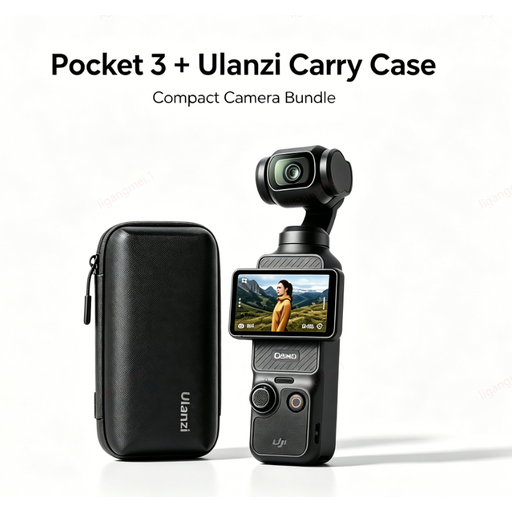
DJI Pocket 3 camera with Ulanzi Custom Storage Carry Case

DJI Pocket 3 camera with Ulanzi Custom Storage Carry Case

The product title mentions photography; check whether the camera can focus at the distance you need to show the embroidery stitches.

Joybuy
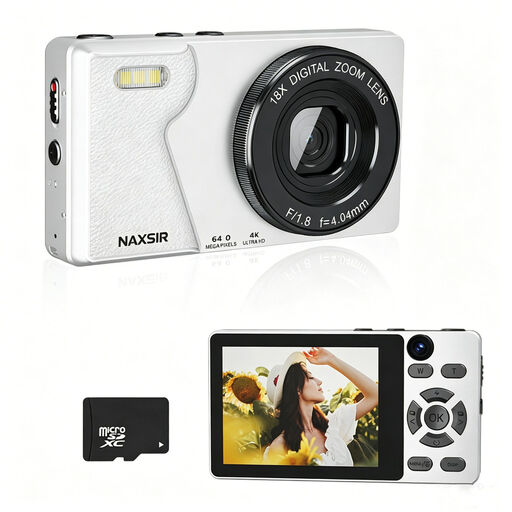
NAXSIR digital camera, 4K Ultra HD, 64 MP, 18x digital zoom, autofocus and 32 GB memory card

NAXSIR digital camera 4K Ultra HD, 64 MP, 18x digital zoom

Autofocus can be useful when focusing on a bag; also check whether the camera can focus closely enough to capture individual stitches.

The product title lists 4K Ultra HD, 64 MP photo resolution, 18x digital zoom, autofocus and a 32 GB memory card.

Joybuy

Komery W6 camera, 12x optical zoom, 4K, WiFi and 64 MP

Komery W6 camera, 12x optical zoom

Take the stated optical zoom into account when choosing, and check whether the camera can focus at the distance you need to capture the stitches.

The product title lists 12x optical zoom, 4K, WiFi and 64 MP.

Joybuy
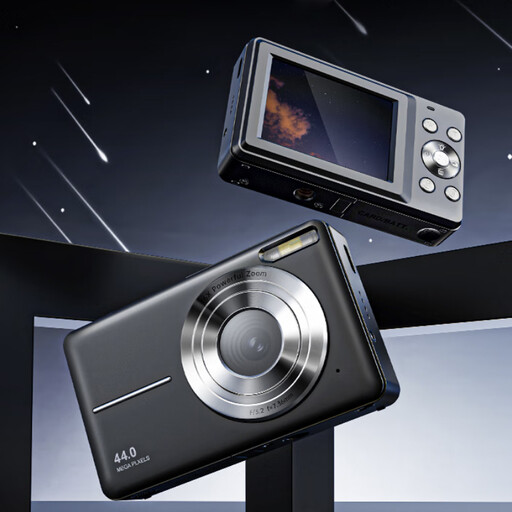
Songdian Pocket Camera, black, 4K, 44 MP and 16x zoom

Songdian Pocket Camera, black

The product title mentions autofocus; check whether the camera can focus closely enough to photograph the embroidery details you want to show.

The title lists 4K, 44 MP and 16x zoom.

Joybuy
Sony ZV-E10 with 16–50mm zoom lens, black

Sony ZV-E10 with 16–50mm zoom lens, black

This kit is worth considering if you’re looking for a mirrorless camera with a listed 16–50mm lens; check whether the lens can focus closely enough to capture stitch details.

According to the product information, an adapter/charger and SD memory card are not included.

Joybuy

Frequently asked questions

Do I need to photograph the whole bag with a macro lens?

No, you don’t automatically need a macro lens for an overall shot. First choose the distance and framing for the whole bag; a suitable close-up lens is mainly useful if you want to show individual stitches in close-up. Canon lists the RF 35mm F1.8 IS Macro STM as a lens for general photography and close-ups.

How can I keep photos of different bags consistent?

Keep the camera and bag in fixed positions, and make the lighting as consistent as possible. Canon Europe and Shopify Nederland recommend a tripod and a fixed setup to help you repeat the same framing.

Can I use a mirrorless camera body without a lens?

Not if the kit you choose doesn’t include a lens: check what’s in the box and whether the lens fits the body. Canon documents the EOS R50’s RF mount; the RF macro lens is a separate product.

What are my rights when buying a camera online in the Netherlands?

If you buy remotely from a business as a consumer, you generally have a 14-day cooling-off period, according to the Rijksoverheid. You may also have statutory rights if a product used normally doesn’t meet what you could reasonably expect; ACM ConsuWijzer explains that there is no fixed period of exactly two years. These consumer rules don’t necessarily apply in the same way to business purchases or purchases from a private individual.

Can I put someone else’s photo on my product page?

Not without permission. According to the Rijksoverheid, you may only use copyrighted photos with the creator’s permission. For publication, it’s best to use your own photos or arrange the necessary permission in advance.
