For tiny labels and solder joints, the camera and lens combination is crucial. Check the magnification ratio, working distance and whether you can capture the component in sufficient focus. A compact camera with built-in macro capabilities keeps your set-up simple; a mirrorless camera with a suitable macro lens gives you more choice, but you’ll need a compatible lens. For components with varying heights or changing window light, a stable set-up, exposure control and possibly focus bracketing are also important.
Which camera set-up is right for you?
Detail checker
You want to capture small markings, solder joints or component features clearly. Look for a macro lens with a suitable magnification ratio. Nikon Netherlands and Sony Netherlands specify 1:1 for certain macro lenses; always check that the lens in question is compatible with your chosen camera body.
PCB documenter
You photograph components at different heights or want to repeat your shots. A stable set-up helps you keep the composition and position consistent. Also check the depth of field and focusing options of the exact camera model. Canon Netherlands describes a tripod as a useful aid for consistent product photography.
Quick close-up photographer
You want to switch between wider shots and details without changing lenses. A compact camera with built-in macro modes could suit you, provided a test shot shows that the smallest component is clear enough. OM SYSTEM lists macro modes for the Tough TG-7.
What should you look for in a camera for electronic components?
Mirrorless camera with a macro lens
Best if: you want to capture tiny details at a larger size and choose a lens with the magnification and working distance you need.
Trade-off: the lens is a separate component, so check the mount and the full combination rather than judging the camera body on its own.
Compact camera with macro modes
Best if: you want to take both wider shots and close-ups without changing lenses.
Trade-off: the fixed lens limits your options. Check that the smallest component is clear enough in the frame.
The percentages show the top purchasing priority for consumers choosing between these options. They relate to the same group and add up to 100%.
| What to consider |
What should you check? |
Who is this most important for? |
| Capturing small details clearly |
Check the magnification ratio of the exact lens and test whether the smallest label is legible. Also check the lens mount and the clearance in front of the lens. |
If I want to read markings or solder joints clearly, I check the lens and review a test crop. Around 29% of consumers prioritise detail clarity. |
| Focus at different heights |
Check whether the camera model offers focus bracketing and whether the shots need to be merged afterwards. A stable set-up helps when taking a series of photos. |
If I need components at different heights to appear sharp, I look at the focusing options and make sure the camera is set up securely. Around 23% of consumers prioritise depth of field. |
| Window light and shadows |
Test the exposure and white balance by the window you plan to use. A reflector or diffuser can help you control the available light. |
If the daylight changes or components cast shadows, I want to be able to adjust the exposure while taking photos. Around 18% of consumers put light control first. |
| Complete set-up |
Compare the camera body, compatible lens and any accessories as one complete set-up. A body-only version is not the same as a camera with a fixed lens. |
If I want to weigh up all the components I need, I look at the complete combination rather than just the camera body. Around 18% of consumers prioritise total cost. |
| Working without changing lenses |
Check whether the built-in macro function gives you the close-up you need. If possible, take a test shot of the smallest component. |
If I want to switch quickly between wider shots and details, I prefer simple controls, but I don’t want to compromise on clarity. Around 12% of consumers prioritise convenience without changing lenses. |
Common macro photography mistakes
-
Assuming all lenses labelled ‘macro’ are equivalent
The lenses mentioned have different magnification ratios: Canon specifies a maximum of 1:2 for the RF 35mm F1.8 MACRO IS STM, while Nikon and Sony specify 1:1 for the macro lenses mentioned. The ratio applies to the exact lens, not automatically to every lens used with the same camera body.
Check the specifications of the lens you actually plan to use and, if possible, take a test shot of the smallest relevant component.
If you can’t achieve the crop you want, you may need a different lens. Check the complete set-up before choosing.
-
Comparing a body-only version with a camera that has a fixed lens
A camera body on its own isn’t a complete macro set-up. Sony lists the α6400A version mentioned as body only, whereas the Tough TG-7 has a built-in lens.
Check which lens comes with the camera body, whether you need to buy one separately and whether the body and lens mounts are compatible.
With a mirrorless camera, you may need a suitable macro lens as well as the body. A tripod may also be part of the set-up you need.
-
Assuming a wider aperture will keep the whole component in focus
Close-ups can have a limited area in focus. Taking a series of shots at different focus positions can help, but you’ll need a stable camera and may have to edit the images afterwards.
Choose your focusing method and aperture to suit the component, and check that the bracketing and processing steps you need are supported by the exact model. Canon Netherlands and Nikon explain the considerations around macro focusing and focus stacking.
Brands and macro lenses to consider
Nikon
The Z series offers a mirrorless camera system with interchangeable lenses. Consider the Z camera body and macro lens as separate, compatible components.
- Nikon specifies 1:1 for the NIKKOR Z MC 50mm f/2.8 and lists compatibility with DX-format Z cameras.
- For the NIKKOR Z DX MC 35mm f/1.7, Nikon specifies a maximum actual magnification ratio of 0.67x. The stated 1:1 equivalent applies to FX format and is not the same ratio.
Canon
The EOS R50 is a mirrorless camera with an RF mount. Consider the body alongside the lens you want to use for close-ups.
- Canon lists focus bracketing for the EOS R50.
- Canon specifies a maximum of 1:2 for the RF 35mm F1.8 MACRO IS STM. This lens specification is not the same as 1:1.
Sony
The E-mount α6400A can be paired with a separate macro lens. Check which components are included with the version you’re buying.
- Sony specifies 1:1 for the E 30 mm F3.5 Macro lens, SEL30M35.
- Sony lists the α6400A version mentioned as body only. Don’t attribute the separate lens’s macro capabilities to the camera body.
OM SYSTEM
The Tough TG-7 has a fixed lens and macro modes. For a mirrorless camera system, OM SYSTEM also offers separate macro lenses.
- OM SYSTEM lists a 12-megapixel sensor and macro shooting modes for the Tough TG-7, which doesn’t need a separate lens.
- The fixed lens limits your choice of lens. The M.Zuiko Digital ED 60mm F2.8 Macro is a separate lens, not an accessory for the TG-7; OM SYSTEM specifies 1:1 for it.
Joybuy products for this camera set-up
The Joybuy products below are instant cameras. Before photographing electronic components, first check whether the close-up you need is clear enough. The product information doesn’t confirm that these cameras offer a macro solution.
 No image available
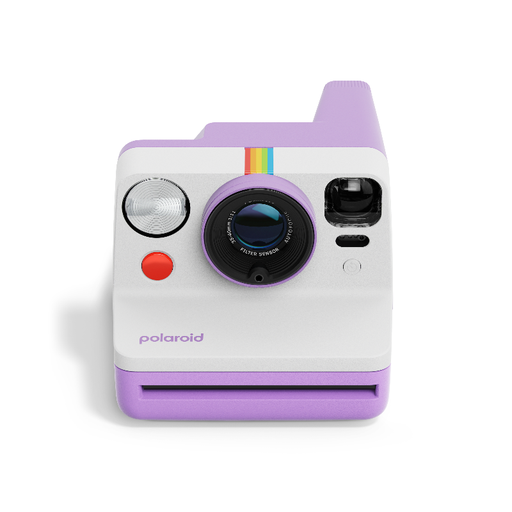
Polaroid Now Generation 3, purple
The built-in tripod mount could be useful for a fixed set-up, but it doesn’t confirm that the camera can capture small components clearly.
The product description lists a built-in tripod mount, self-timer and double exposure.
Joybuy
 No image available
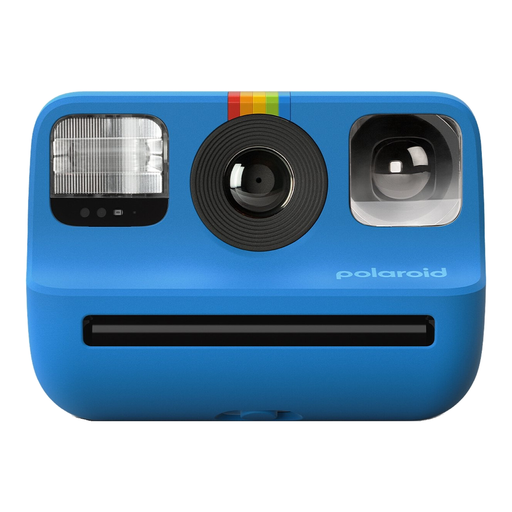
Polaroid Go Gen 2, blue
According to the product description, its compact design is made for use on the go. Check separately whether the camera can capture the close-up you need of your component.
The product description lists manual exposure settings, a light sensor and a self-timer.
Joybuy
 No image available
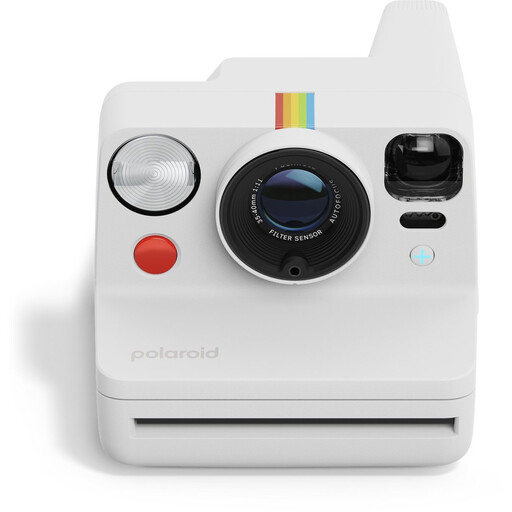
Polaroid Now+ Generation 3, white
The listed tripod mount could be useful if you want to keep the camera in a fixed position. Take a test shot to check that the details you need are clear.
The product description lists a built-in tripod mount, self-timer and double exposure.
Joybuy
 No image available
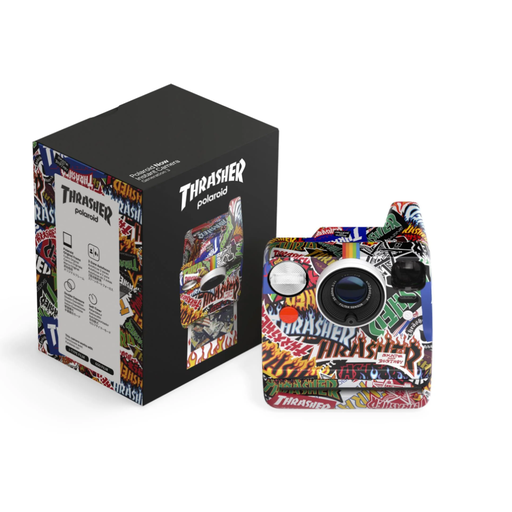
Polaroid Now Gen 3 Thrasher Edition
The built-in flash is a listed product feature, but that alone doesn’t tell you whether the camera is suitable for clear macro photos of electronic components.
The product description lists a built-in flash and Bluetooth connectivity.
Joybuy
Frequently asked questions
Is a macro lens more important than extra megapixels for small labels?
Consider the lens and sensor together, and check whether the label is legible in a test crop. The magnification ratio indicates how large a small subject appears on the sensor; more pixels alone don’t guarantee that the image will meet your needs.
How do I set up a camera by a window for repeatable photos?
Keep the camera, background and component in the same positions as far as possible, for example by using a tripod. Check for shadows in a test shot and, if needed, use a reflector or diffuser to control the available light. Review the shot again when the daylight changes.
Do I need to process focus-bracketing shots?
It depends on the features and workflow of the exact camera model. A series of photos taken at different focus positions can be merged to create a larger area in focus; don’t assume the camera will automatically create a merged file.
What cooling-off period and warranty apply to an online purchase in the Netherlands?
According to the Dutch government, as a consumer you generally have 14 days to change your mind when buying online from a business. You’re also entitled to a product that is fit for purpose. The Netherlands has no fixed statutory warranty period, and the seller is your point of contact if something is faulty. Check who the seller is and which terms apply to your specific purchase.


