
Photographers capturing distant dune lines
You stick to permitted paths and want to frame a distant dune ridge or a pattern in the sand tightly. Compare the optical telephoto range and the lens that actually comes with the camera.


When photographing distant dune lines, focus on the optical telephoto range of the complete camera and lens combination, not just the camera body. A bridge camera gives you reach without changing lenses; a mirrorless camera offers more choice, but you’ll need to check the telephoto lens included, the weight you’ll be carrying and the protection offered for both the body and lens. For long walks, a compact camera may be a good fit if its shorter telephoto range is enough for the composition you want from an area where photography is permitted.
You stick to permitted paths and want to frame a distant dune ridge or a pattern in the sand tightly. Compare the optical telephoto range and the lens that actually comes with the camera.
You take photos on longer walks and weigh up the zoom range against what you’re willing to carry for the whole journey. A compact camera or a combination with one fixed zoom lens may be worth considering.
You expect dust, wind or rain and want to know what protection is specified for both the camera and the lens you’ll be using. Check the specifications for both components and allow for careful maintenance.
A good fit if: you want to frame distant dune details without changing lenses on the go. Sony specifies a fixed 24–600 mm full-frame equivalent range for the RX10 V.
Bear in mind: the lens isn’t interchangeable; Sony’s stated dust- and moisture-resistant design is no guarantee against sand or seawater.
A good fit if: you want to choose your own lenses or use different focal lengths later. According to their manufacturers, the Canon EOS R50 kit with RF-S 55–210 mm and the Nikon Z50II twin-zoom kit with 50–250 mm both include a telephoto zoom lens.
Bear in mind: a body or standard zoom alone may not give you the composition you want; check the protection offered for the body and lens separately.
A good fit if: you want to carry less on a walk and 200 mm full-frame equivalent is enough; Sony specifies a 24–200 mm range for the RX100 VII.
Bear in mind: the lens isn’t interchangeable and its telephoto end is shorter than the 600 mm full-frame equivalent Sony specifies for the RX10 V.
First, compare the composition you want from the place where photography is permitted. Then look at the complete lens kit, carrying comfort, protection and the cost of a ready-to-use combination.
| What to consider | What should you check? | Who should pay extra attention? |
|---|---|---|
| Narrow angle of view | Compare the focal length in full-frame equivalent or the stated angle of view. With a mirrorless camera, check which lens is included in the exact kit. | If I want to fill the frame with a distant dune line from a permitted path, I’ll look at the optical range first. Around 29% of consumers prioritise this kind of distant composition. |
| Image quality and lens choice | See which lenses are compatible with the camera and which are actually included; compare sample images for the composition you need. | If I want to use different focal lengths later, the choice of interchangeable lens matters more than the body alone. Around 23% of consumers prioritise lens choice and room to expand their kit. |
| Portability | Compare the size and weight of the complete combination you’ll carry, along with the range it offers. | On a long walk through the dunes, I want to keep my kit light without losing sight of the composition I need. Around 18% of consumers prioritise portability once the range is sufficient. |
| Protection and maintenance | Read the specifications for both the body and lens, and follow the maintenance instructions for the exact model. | If I regularly take photos in changeable coastal weather, I want to know which components have a stated level of protection and how to maintain them. Around 18% of consumers prioritise protection and maintenance. |
| Cost of the complete kit | Compare ready-to-use kits and check which lenses and accessories are included, as well as the seller’s terms. | If I want to buy a camera ready to use with a suitable telephoto lens, I’ll compare the complete combination rather than just the body. Around 12% of consumers focus mainly on the total purchase cost and service. |
A narrow angle of view also depends on the lens you actually use. With a mirrorless camera, the body listed may be different from a complete kit that includes a telephoto zoom.
Check the full model name and what’s included in the advertised kit before comparing options.
Sony lists optical and digital zoom separately; a zoom factor is not the same as a stated focal length.
First, compare the optical range or stated angle of view at the resolution you need.
Weather protection specifications can vary between cameras and lenses. A protection rating doesn’t automatically mean the combination can withstand sand or salt water.
Check the information for both the body and lens, and follow the model-specific maintenance instructions.
Sony’s fixed-lens models offer a choice of ranges for dune photography.
Canon offers an EOS R50 kit that includes a telephoto zoom as well as a standard zoom.
The Z50II twin-zoom kit offers an interchangeable-lens option with both wide-angle and telephoto ranges.
The OM-5 Mark II with M.Zuiko 40–150 mm F4.0 PRO offers a specified telephoto range and weather protection.
The XF70–300 mm telephoto zoom is an option if you want to choose your lens separately for an X system.
Cameras at Joybuy that are relevant to this topic; check whether the stated range suits the composition you want to capture in the dunes.
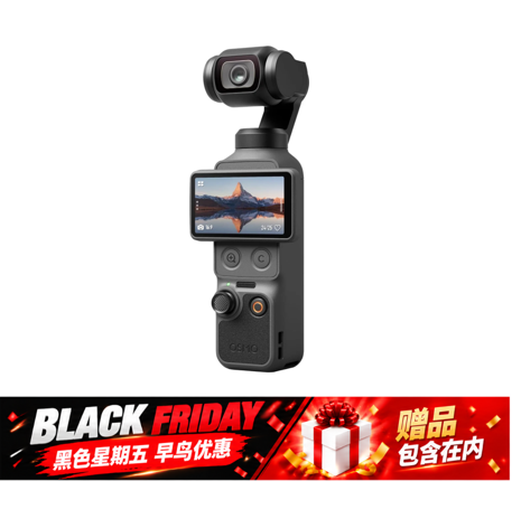 No image available
The stated zoom information doesn’t make clear what optical telephoto range is available for a tight composition of the dunes, so check the angle of view you need.
The product name lists a 1-inch CMOS sensor, 2× lossless zoom and 107 GB of built-in storage.
 No image available
If you’re considering a camera with optical zoom for capturing dune details, check that its telephoto end suits the distance you’ll be photographing from on a permitted path.
The product name lists 12× optical zoom, 4K and 64 MP; it doesn’t give the focal length in millimetres.
 No image available
For a tight composition of the dunes, it’s important to check the angle of view and optical telephoto range; the product name doesn’t specify the focal length.
The product name lists a 1-inch CMOS sensor, 4K/120fps video and 3-axis stabilisation.
 No image available
If you’re considering this camera for distant dune lines, check its telephoto end and angle of view; the zoom factor alone won’t tell you how your subject will be framed from your chosen spot.
The product name lists 8× optical zoom, 5K, 64 MP and a dual lens. The product description advises keeping the camera away from dusty environments.
 No image available
For dune photography, suitability depends on the range you need from a permitted location; check the corresponding focal length and angle of view.
The product name lists 10× optical zoom, 56 MP and front and rear cameras.
Compare the optical telephoto end and, for different sensor formats, the stated focal length in full-frame equivalent or the angle of view. With a mirrorless camera, check the lens included in the exact kit: Canon lists an RF-S 55–210 mm lens for kit 5811C023, while Sony specifies 24–600 mm full-frame equivalent for the fixed lens on the RX10 V.
Follow the maintenance instructions for the exact model. Sony warns that dust or marks on the lens or sensor can affect photos and explains how to clean the camera carefully; a weather-resistance rating doesn’t replace those instructions.
It depends on the kit being sold. Canon lists both an 18–45 mm and a 55–210 mm lens with kit 5811C023; Nikon lists both a 16–50 mm and a 50–250 mm lens for its Z50II twin-zoom kit. Check what’s included in the version on offer rather than relying on the camera body’s model name alone.
According to the Dutch government, you’re entitled to a product that works as it should. If a product is faulty, you may be entitled to a free repair, replacement or refund. The Netherlands has no fixed statutory warranty period. According to the Dutch government, damage caused by you and normal wear and tear aren’t covered by free repairs.
No, don’t assume you can go wherever you like. Staatsbosbeheer says its areas are generally accessible only on roads and paths, with possible exceptions, and advises visitors to check the signs for the specific area. The Dutch government says provinces decide what is and isn’t allowed in their nature reserves, so check the rules for the location where you want to take photos.