
Anyone wanting to capture small signs of repair
You want to photograph a fine surface texture or a small trace of the repair clearly. So compare the magnification of the lens you’ll actually be using, not just the camera body.


Choose based on the smallest detail you want to show and how much space you need for the camera and lighting. A compact camera with a built-in close-up mode can be a simple starting point. A mirrorless camera lets you change lenses, but check whether the supplied lens offers enough magnification or whether you’ll need a macro lens.
You want to photograph a fine surface texture or a small trace of the repair clearly. So compare the magnification of the lens you’ll actually be using, not just the camera body.
You want to capture both the shape and condition of the complete desk lamp and a few close-ups. Check whether the same camera setup can handle both types of shot.
You want to take several shots with similar framing and focus, and can position the lamp and camera securely.
Best for: anyone wanting to take full shots and close-ups without changing lenses; OM SYSTEM says the TG-7’s microscope mode can focus from as close as 1 cm.
Keep in mind: when you’re this close to the subject, there may be less room to light the surface; the LG-1 light guide mentioned is included with the kit version reviewed.
Best for: anyone wanting to photograph the whole lamp and have the option to change lenses later; the Canon EOS R50 kit reviewed includes an RF-S 18-45mm lens.
Keep in mind: Canon lists maximum magnification for this lens at 45 mm as 0.16× with autofocus and 0.26× with manual focus; a separate RF 35mm F1.8 MACRO IS STM offers up to 1:2.
Best for: anyone wanting to fill the frame with small signs of repair; Nikon lists 1:1 for the NIKKOR Z MC 50mm f/2.8, and Sony for the FE 50 mm F2.8 Macro on compatible E-mount cameras.
Keep in mind: check the mount and what’s included in the kit; Nikon lists around 5 cm of space in front of the lens at the closest focusing distance, which can limit room for lighting.
| Buying concern | What should you check? | Who is this important to? |
|---|---|---|
| Fine details | Compare the maximum magnification of the lens you’ll actually use and try framing the smallest detail that matters. | I want a small scratch or repair seam to be clearly visible, so I compare the magnification of my lens. Around 31% of consumers give fine-detail magnification top priority. |
| Lighting and working space | Test the framing on your actual table and see whether you can still light the part well enough. | I want enough room to light the lamp’s surface when taking close-ups. Around 25% of consumers prioritise being able to light the lamp effectively. |
| Consistent focus | Check the focus across the part and whether manual focusing or focus bracketing suits the way you work. | I want to take consistent detail shots, so I position the camera securely. Around 25% of consumers give consistent focus top priority. |
| Complete starter setup | Read the exact list of what’s included in the kit and compare it with the full and detailed shots you want to take. | I want to get started without choosing an extra lens, so I check what’s in the kit. Around 19% of consumers prioritise a simple starter setup. |
A kit zoom lens may offer different magnification from a dedicated macro lens. For example, Nikon’s stated 1:1 magnification applies to the NIKKOR Z MC 50mm f/2.8, not automatically to any Nikon kit.
Check the exact kit contents and the magnification of the lens you’ll actually be using.
Getting close to your subject can make it harder to position a lamp or other light source effectively. OM SYSTEM says the TG-7’s microscope mode can focus from 1 cm; Nikon lists around 5 cm in front of the NIKKOR Z MC 50mm f/2.8 at its closest focusing distance.
Try the framing you want on your actual table and see whether you can still light the part properly.
With close-ups, only a small part of a three-dimensional object may be in focus at once. Canon describes focus bracketing and the use of a sturdy support when taking a focus-bracketed series.
Take separate full and detail shots. If you need a detail to be in focus from front to back, use a stable series of images with different focus points if necessary.
The TG-7 offers a compact option, with a built-in microscope mode for close-ups.
The EOS R50 can be paired with a kit zoom lens; separate RF lenses are available for stronger close-ups.
The separate NIKKOR Z MC 50mm f/2.8 is a 1:1 macro lens for a compatible Nikon Z camera.
The FE 50 mm F2.8 Macro is a separate lens for compatible full-frame and APS-C cameras with a Sony E mount.
These Joybuy cameras are general photography options; check each camera and lens to see whether they can capture the close-up you want of the repaired lamp.
 Image unavailable
The product title describes this camera as being for photography and video; check whether the supplied setup can capture the detail you want.
The title lists a 1″ CMOS sensor, 4K/240fps, 107GB of built-in storage and a 2″ rotatable screen.
 Image unavailable
The product title describes a pocket camera for photography and video; check whether it can capture the smallest detail of your lamp at a large enough size.
The title lists 4K, 44MP and 16X zoom.
 Image unavailable
The title describes a Sony ZV-E10 kit with a 16-50mm zoom lens; check whether the lens offers enough magnification for the smallest detail you want to photograph.
 Image unavailable
The product title describes a Sony Alpha A6100 kit with a 16-50mm lens; check whether the lens offers enough magnification for the close-up you want.
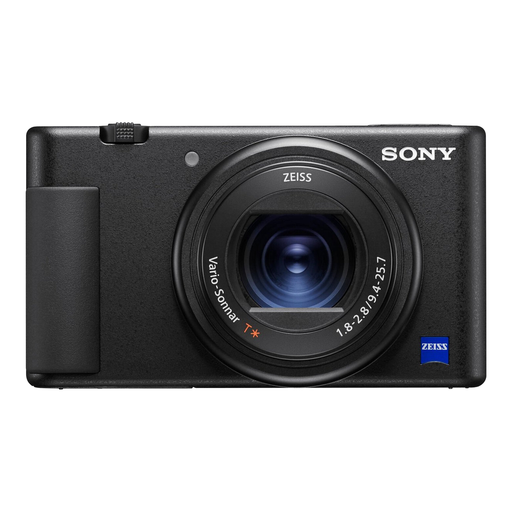 Image unavailable
The product title identifies this model as a compact camera; check whether its close-up capabilities are suited to the fine details of your repair.
No, it depends on how large the smallest relevant detail needs to appear in the photo. For the RF-S 18-45mm kit lens at 45 mm, Canon lists maximum magnification of 0.16× with autofocus and 0.26× with manual focus; for the separate RF 35mm macro lens, Canon lists 1:2. Consider a macro lens if the supplied lens doesn’t show the detail large enough.
Position the camera and lamp securely, then check where the focus falls. For close-ups, taking a series of photos at different focus points and combining them later with focus stacking can increase the depth of field. Canon recommends a sturdy tripod as an aid and lists focus bracketing for the EOS R50.
It varies by kit, so check the exact product contents. The EOS R50 kit reviewed includes the RF-S 18-45mm; the RF 35mm F1.8 MACRO IS STM is a separate lens.
According to ACM ConsuWijzer, online product purchases generally come with a cooling-off period of up to 14 days after delivery; check whether an exception applies. This is separate from your statutory guarantee: if a product develops a fault sooner than expected under normal use, the seller must offer an appropriate remedy free of charge, according to ACM ConsuWijzer.