
Photographers capturing fast dance moves
If you want to capture jumps and rapidly changing poses sharply, focus on shutter speed and subject-tracking autofocus.


Start by considering the movement you want to capture and the stage lighting available. Then check whether a suitable lens will frame the dancer from your fixed tripod position. A tripod keeps the camera steady, but it won’t freeze the dancer: shutter speed, focus and exposure still matter. LED stage lighting can also cause banding in photos.
If you want to capture jumps and rapidly changing poses sharply, focus on shutter speed and subject-tracking autofocus.
If you’re shooting from a fixed position in low or changing light, you’ll need to consider the lens aperture, exposure and the possibility of LED banding.
If you can’t move around with the dancer, choose your field of view in advance and decide whether to freeze the movement or show it with motion blur.
| What to consider | What to look for | Who is this important for? |
|---|---|---|
| Capturing fast movement sharply | Check for continuous autofocus for people and find out which shutter mode the stated shooting speed applies to. | I want to capture jumps and fast poses sharply, so subject-tracking focus and shutter mode matter. Around 33% of consumers make sharp dance action their top priority. |
| Low or changing stage lighting | Check the lens’s maximum aperture and take test shots under the venue’s lighting. Also check the shutter and anti-flicker options. | On a dark stage, I want a usable exposure without compromising my preferred shutter speed. Around 27% of consumers prioritise shooting in low or changing light. |
| Framing from a fixed position | Work out your shooting distance and preferred field of view, and check that the lens mount is compatible with your chosen lens. | If I can’t move my tripod, I want to know in advance how much space the dancer will take up in the frame. Around 20% of consumers prioritise getting the right framing from a fixed position. |
| Showing movement creatively | Check whether you can set the shutter speed manually, then try different exposure times from the same tripod position. | Sometimes I want to show motion blur rather than freeze every pose. Around 20% of consumers prioritise this creative effect. |
A tripod reduces camera movement, but the dancer can still move during the exposure.
First decide whether you want to freeze the movement or show it, then test your shutter speed and exposure.
Shooting speeds can vary depending on the shutter mode. LED stage lighting can also cause banding in images.
Compare the shutter modes of the exact model and take test shots under the lighting you expect to encounter.
The lens mount, maximum aperture and field of view all affect how the dancer will appear in the frame from a fixed position.
Before buying, check that the body and lens are compatible and suit your distance from the stage.
You may need to buy a suitable lens separately to get the field of view you want.
The EOS R10 is an APS-C option worth considering if subject-tracking autofocus and continuous shooting with the mechanical shutter are important to you.
The Sony α6700 is an APS-C camera with an E-mount, which you can assess alongside a lens suited to your distance from the stage.
The Z6III is a full-frame option featured by Nikon in an article about photographing breakdancing.
The LUMIX G9II is a Micro Four Thirds option worth considering if subject-tracking focus and fast bursts are important to you.
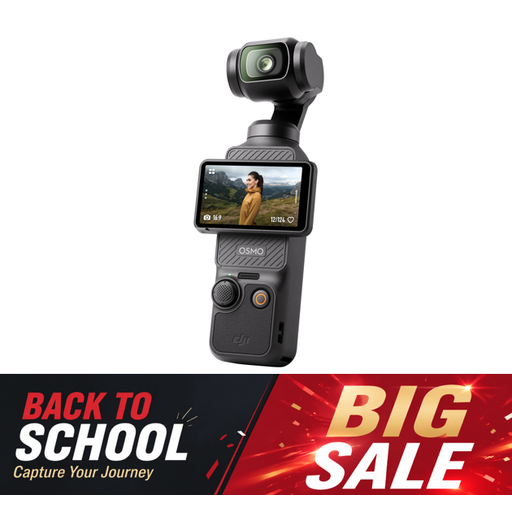
This product selection includes a compact video camera. Check whether its vlogging-focused features suit your needs for photographing dancers from a fixed tripod position.
 No image available
This compact video camera could suit anyone looking for a small setup. Check in advance whether its features match the way you want to photograph dance from a tripod.
The product name specifies a 1-inch CMOS sensor and video up to 4K/120fps.
It also features 3-axis stabilisation, a 2-inch rotatable touchscreen, and face and subject tracking.
No. A tripod keeps the camera steady, but the dancer can still move during the exposure. Choose a shutter speed that suits the way you want to capture the movement, and test your settings under the venue’s lighting.
First, work out how far you’ll be from the stage and how much space the dancer needs in the frame. Then choose a suitable lens and framing. Also check whether the venue allows tripods and photography.
Take test shots under the lighting in question. In its concert photography guide, Sony recommends trying a mechanical shutter and testing different shutter speeds. Also check whether your exact camera model has a suitable anti-flicker or variable shutter function.
There is no fixed legal guarantee period in the Netherlands. According to the Dutch government, what you can expect from a product depends, among other things, on its price, the information provided by the seller, and whether the product is new or second-hand. If a product is faulty, contact the seller.
For strictly personal use that remains private or is shared only with a very limited group, the Dutch Data Protection Authority describes a household exemption. For commercial or organisational event photography and wider publication of identifiable people, you need a lawful basis under the GDPR; consent is one possible basis. Also check the venue’s terms and conditions.