
Seller of crocheted toys
If you regularly update product pages, a consistent composition and true-to-life yarn colours can make a difference. Canon Netherlands describes a tripod as a useful aid for keeping product compositions consistent.


When photographing crocheted toys under artificial light, choose a camera based on colour control, the close-up detail you need and the complete setup – not just the camera body. For consistent product photos, adjustable white balance and a stable setup are important. Tiny stitches may call for a built-in close-up mode or a suitable macro lens. A mirrorless camera gives you a choice of lenses, but check whether the one you need is included in the bundle.
If you regularly update product pages, a consistent composition and true-to-life yarn colours can make a difference. Canon Netherlands describes a tripod as a useful aid for keeping product compositions consistent.
If you want to capture individual stitches and small finishing details, check the camera’s and lens’s close-up capabilities together. OM Digital Solutions’ manual describes a close-up mode on the TG-7 for subjects at short distances.
If you’re shooting under artificial light, consider both white balance and what’s included in the camera bundle. Canon Netherlands explains how artificial light can create a colour cast; with a mirrorless camera, the close-up lens you want may not be included.
| Key consideration | What should you check? | Who is this important for? |
|---|---|---|
| Yarn colour under artificial light | Check whether the camera has adjustable white balance and, if you want to edit your photos, supports RAW capture. Test the settings under the light you use. | If I want the yarn to look true to life under my lights, colour control comes first. Around 31% of consumers prioritise colour accuracy. |
| Crochet stitches and small finishing details | Check the focusing distance and magnification of the specific close-up mode or lens, and make sure the lens mount is compatible with the camera. | If you want to capture individual stitches and small details, close-up capability is the deciding factor; around 31% of consumers consider this their top priority. |
| Consistent product photos | Check whether you can set the camera up securely and achieve the framing and focus you want with your chosen lens. | If I want to photograph several toys in a similar way, I look for a consistent workflow and the same framing. Around 23% of consumers put consistency first. |
| Complete kit | Check what the bundle includes and whether you need a separate macro lens. If buying a lens separately, make sure it has the right mount. | If you want to know in advance whether the camera comes with the lens you need, check the complete kit; around 15% of consumers make a complete purchase their top priority. |
The ability to capture stitches in detail depends on the combination of camera and lens. You may need to buy a compatible macro lens separately.
Check what’s included in the bundle and the lens mount before comparing models. For RF, Z and E systems, make sure the lens you choose has the right mount.
Artificial light can create a colour cast, even when the toy is in sharp focus.
Take test shots under the lights you actually use. Check whether you can adjust the white balance and whether RAW suits the way you edit your photos.
A different camera body won’t automatically give you consistent framing or reduce camera shake across a series of product photos.
First, see what you can achieve with your current equipment using a fixed camera setup, consistent framing and the same lighting.
The EOS R50 is an RF-system mirrorless camera that you can compare with a close-up lens chosen separately.
The Z50II can be compared with the separately available NIKKOR Z MC 50mm f/2.8 as a macro option.
The ILCE-6400 is an E-system mirrorless camera to compare with a suitable lens, such as the SEL30M35.
The Tough TG-7 is a compact alternative with a built-in close-up mode.
The X-S20 is an X-system option to compare if you want to shoot in RAW and choose a lens later.
These cameras are options to compare for photography and video. For each model, check whether the lens and close-up capabilities are right for the photos you want to take of toys and crochet stitches.
 No image available
If you’re considering this camera for crochet details, first check whether its close-up capabilities suit your subject.
The product title lists 5K, 80MP and 18X zoom.
 No image available
If you’re comparing a pocket camera for photographing toys, check whether its focusing distance is suitable for the details you want to capture.
The product title lists 4K, 44MP and 16X zoom.
 No image available
If you want to adjust the framing between product photos, the zoom lens described offers different framing options. Also check whether it can focus close enough to capture stitches.
The product details list a 16–50mm zoom lens and an APS-C sensor.
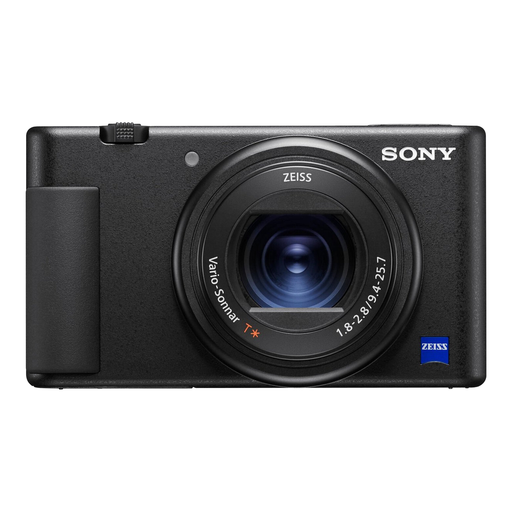 No image available
If you want to adjust the white balance later, RAW can give you more flexibility. Also check whether the close-up capabilities suit your subject.
The product details list RAW photo format.
No, it isn’t essential, but RAW gives you more flexibility to adjust the white balance afterwards. Try your own lights and yarn colours, and set the white balance so you can assess the shot properly as you take it.
A tripod can help you keep the framing and background consistent, while reducing camera shake. If you’re focus stacking a stationary toy, a sturdy setup is important for aligning the consecutive shots.
Don’t assume it does. Check the bundle and lens mount: the Canon, Nikon and Sony macro lenses mentioned are separate products and aren’t necessarily included with every camera kit.
According to the Dutch Government, distance purchases generally come with a 14-day cooling-off period. You’re also entitled to a product that’s fit for purpose. The Netherlands has no fixed statutory guarantee period, and the seller is your point of contact if something is faulty. This information applies to consumer purchases, not necessarily business purchases.
If people are identifiable in a photo, the GDPR may apply. The Dutch Data Protection Authority explains that you need a valid legal basis for images in which people are identifiable, such as their consent. This applies to identifiable people, not automatically to a photo showing only a toy.