For a fixed tabletop setup, a mirrorless camera with a suitable lens is a good fit if you want to adjust the framing. A compact camera needs less setting up, but its fixed angle of view must give you a clear view of your hands and stitches from your working position. Test the complete setup at the intended distance and in the window light you’ll be using: Canon, Sony and DJI specifications don’t guarantee that stitches will remain sharp and clearly visible in every setup. For lessons with spoken instruction, clear audio and practical recording time matter too. Consumentenbond discusses using an external microphone for better sound, while Nikon lists a maximum continuous recording time of 125 minutes for the Z 30.
Who is this guide for?
Crochet teacher at a table
You film your hands and stitches from a fixed angle and want to check that your work remains sharp and easy to see. Consumentenbond discusses the benefits of using a tripod, particularly when filming at home; Canon and DJI provide product specifications you can compare with your tabletop setup.
Creator of lessons with spoken instruction
You record your explanations and demonstrations at the same time, so clear audio and uninterrupted recording matter too. Consumentenbond discusses using an external microphone as an option, while Nikon lists recording and microphone features for the Z 30.
Creator with changing setups
You switch between a wide view of the table and close-ups of stitches, so you want to be able to adjust the framing. Canon, Sony and DJI describe cameras with different lens and angle-of-view options.
What should you consider when choosing?
Start with the distance and angle of view needed to show your hands and stitches. Then check that the setup works with changing window light, spoken instruction and the length of your lessons.
| What to consider |
What should you check? |
Who is this most important for? |
| Seeing stitches and hands clearly |
Record a test video from the planned distance, with your hands moving. Check the angle of view and minimum focusing distance, and whether the camera keeps focusing on your crochet while recording video. |
I want stitches to remain easy to follow while my hands are moving; around 33% of consumers prioritise a clear view of hands and stitches. |
| Changing window light |
Compare test videos recorded at different times of day, looking out for shadows, bright areas and how the yarn colours appear. Canon points out that natural light changes throughout the day. |
If the light through the window changes, I want details and colours to remain visible; around 27% of consumers put managing window light first. |
| Clear spoken instruction |
Listen to a test recording made from the intended camera position. If necessary, check whether your chosen model has a suitable connection or supports a compatible microphone. |
I want viewers to be able to follow my explanations while the camera is on the table; around 20% of consumers give clear spoken instruction top priority. |
| Long, straightforward recording |
Check the recording time at the settings you plan to use, as well as storage, power and whether you can check the frame while crocheting. A maximum figure provided by the manufacturer isn’t a guarantee for every setting or environment. |
For a lesson recorded in one take, I want as few interruptions as possible and an easy way to check the frame; around 20% of consumers prioritise long, straightforward recording. |
Common buying mistakes
-
Comparing only the camera body or video quality
Without a suitable lens, you can’t be sure your hands and stitches will appear clearly from the distance you’ve chosen.
Compare what’s included with the exact model you’re considering, then test the complete setup from the distance you’ll be filming at.
A interchangeable lens or suitable mount may mean extra choices and preparation for your tabletop setup.
-
Assuming 4K/120 fps is the standard video mode
On the DJI Osmo Pocket 3, 4K/120 fps is a slow-motion mode; DJI specifies a maximum of 60 fps for standard 4K video.
Compare the specifications for the standard video mode you plan to use for a full lesson.
-
Choosing stabilisation to fix framing that’s too tight
On the DJI Osmo Pocket 3, stabilisation that compensates for camera movement doesn’t change its fixed angle of view or minimum focusing distance.
First, try framing the table from the intended mounting position, and bear in mind that DJI specifies a minimum focusing distance of 0.2 m.
If the framing doesn’t work, you may need to move the camera or table.
-
Confusing the manufacturer’s warranty with all your legal rights
A commercial or manufacturer’s warranty doesn’t replace your statutory rights against the retailer. ACM ConsuWijzer distinguishes between the retailer’s warranty and the statutory guarantee.
Keep your proof of purchase and assess any fault in light of the applicable statutory rights and the retailer’s responsibilities.
Camera brands to consider
Canon
Canon offers mirrorless cameras with interchangeable lenses, as well as the separate EOS R50 V, which is more strongly focused on video.
- Canon specifies subject-tracking autofocus and 4K/30p for the EOS R50.
- The EOS R50 V is sold as a body only; check which lens is included with the model you choose. These are Canon specifications, not test results for filming crochet.
Sony
The ZV-E10 II is a vlogging-focused mirrorless camera with an interchangeable lens, for anyone who wants to choose a lens to suit their tabletop setup.
- Sony offers the ZV-E10 II with, among other options, a 16–50mm power zoom lens.
- What’s included varies by model; check whether you’re choosing a body only or a kit with a lens. This information comes from Sony.
DJI
The Osmo Pocket 3 is a compact camera with a fixed lens and mechanical gimbal, also suitable for filming moving footage.
- DJI specifies a rotating screen, microSD storage and focusing from 0.2 m.
- The fixed lens limits your choice of angle of view. Check that your hands and stitches appear large enough from your table; the details listed are manufacturer specifications.
Nikon
The Z 30 is a mirrorless camera that Nikon targets at video creators and may be a good option for lessons recorded in one take.
- Nikon lists 4K UHD/30p and the option to use an external microphone.
- Nikon lists a maximum continuous recording time of 125 minutes. Check the conditions and make sure the lens and power supply you choose are suitable for your lesson.
Cameras for crochet lessons on Joybuy
This selection includes compact vlog and gimbal cameras, a mirrorless camera with a zoom lens, and a desktop webcam. Before buying, check that the type of camera you choose suits your mounting position and how you plan to record.
 No image available
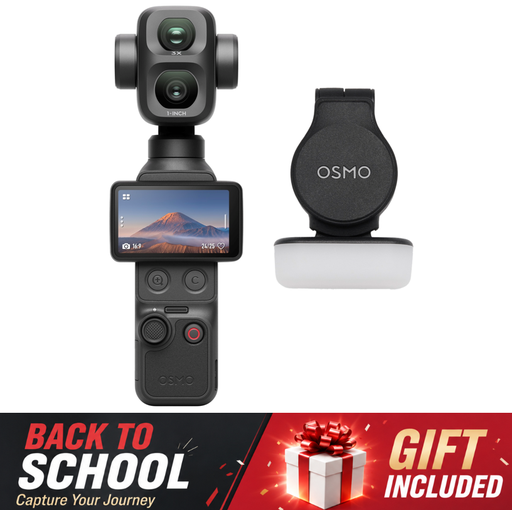
DJI Osmo Pocket 4P Standard Combo – Black
This pocket-sized camera may suit you if you’re looking for a compact video setup; check the framing from your working position.
The product description lists 4K video and a 20mm f/2.0 wide-angle lens. It describes 4K/240fps as a slow-motion mode.
View on Joybuy
 No image available
DJI Osmo Pocket 4 Standard Combo
This pocket gimbal camera may suit you if you’re looking for a compact camera; check that its fixed angle of view covers your tabletop setup.
The product title lists 4K video, 107GB of built-in storage and a rotating screen.
View on Joybuy
 No image available
Philips 4000 Series 4K UHD Webcam – SPL6408BT/00
This webcam may suit you if you record lessons using a desktop computer or laptop; check that your mounting position gives you the tabletop angle you want.
The product title lists 4K UHD, autofocus, two built-in microphones and a privacy cover. The model is listed as an EU version.
View on Joybuy
 No image available
Sony ZV-E10 + 16–50mm Zoom – Black
The zoom lens may suit you if you want to adjust the framing for a wide view or close-ups; test it at the distance you’ll use for your crochet.
The product information lists a 16–50mm lens, 4K video and a vari-angle screen.
View on Joybuy
 No image available
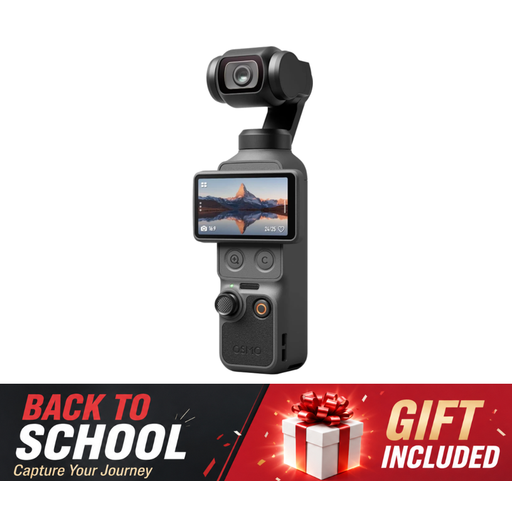
DJI Osmo Pocket 3 Creator Combo
This compact gimbal camera may suit you if you also film moving footage; check that its fixed angle of view works for your tabletop setup.
The product title lists 4K/120fps, three-axis stabilisation and an included microphone. DJI specifies a fixed 20mm-equivalent angle of view and focusing from 0.2 m for the Osmo Pocket 3.
View on Joybuy
Frequently asked questions
How can you stop stitches disappearing into shadow in window light?
First, record a test video from the final camera angle and check both light and dark stitches. If necessary, move the table or camera, then check the colours again as the daylight changes.
Do you need an external microphone for a spoken crochet lesson?
Not always; first, listen to a test recording from where the camera will be placed. If your voice doesn’t sound clear enough, check whether your chosen camera or kit has a suitable connection or supports a compatible microphone. Consumentenbond mentions an external microphone as one way to improve sound quality.
What should you check about the camera model and warranty?
Check whether the model you’ve chosen includes a lens, and whether you need storage, a mount or a microphone for your setup. If you buy in the Netherlands, the statutory guarantee applies alongside any manufacturer’s warranty; ACM ConsuWijzer states that the statutory guarantee exists alongside the retailer’s warranty. If a product is faulty, the retailer is responsible for providing an appropriate solution under the applicable conditions.
Can you post a crochet lesson online if other people or someone else’s music are recognisable?
Recognisable people in published footage may be covered by privacy rules; the Dutch Data Protection Authority states that you generally need permission to publish images on social media. You need permission from the creator to distribute or make someone else’s copyright-protected music available to the public, according to the Dutch Government.


