Who is this camera choice for?

Photographer of creator portraits

You want the creator to be clearly visible while showing enough of their workspace to tell the story of their craft. The distance available and the lighting both affect your choice of lens. Canon UK and Nikon UK describe standard zooms as suitable for framing these different types of shot.

Photographer of craft details

You want to capture hands, tools or small pieces of work on their own. A lens’s maximum magnification helps determine how large these details appear in the frame. Canon UK describes different magnification options for its RF-S zoom and separate RF macro lens.

Filmmaker documenting the creative process

You film people at work and may want to switch between the creator and an object held up to the camera. As well as framing, consider the video features and the lens. Sony UK describes features including a Product Showcase mode for the ZV-E10 II.

What should you look for when choosing?

Mirrorless camera with standard zoom

Best for: framing the creator, their hands and part of the workspace in different ways.

Trade-off: you can adjust the framing without changing lenses, but a standard zoom won’t necessarily magnify small details enough. Canon UK gives a maximum autofocus magnification of 0.14–0.16× for the RF-S 18-45mm F4.5-6.3 IS STM, depending on the zoom setting.

Mirrorless camera with close-up lens

Best for: capturing small joins, tool details or material textures prominently in the frame.

Trade-off: an extra lens means changing lenses and potentially carrying more kit. With a single focal length, it’s harder to switch between wide shots and close-ups. Canon UK specifies a maximum 1:2 magnification for the separate RF 35mm F1.8 MACRO IS STM.

Video-focused mirrorless camera

Best for: filming the creative process, especially if you regularly switch between the creator’s face and the object they’re showing.

Trade-off: video features alone won’t tell you whether the included lens can make small pieces of work appear large enough. Sony UK lists features including 4K 60p and a Product Showcase mode for the ZV-E10 II. Check the lens and field of view of the exact kit too.

Compact camera with fixed lens

Best for: using a compact, all-in-one camera without changing lenses.

Trade-off: you can’t replace the lens if the framing or magnification isn’t right. Sony describes the RX100 VII as a compact camera with a built-in zoom lens.

What to consider What to look for Who is this important to?
Showing the creator and workspace together Try the wide-angle setting from the spot where you plan to position the camera. Nikon UK says the wide-angle setting on the Z DX 16-50mm is suitable for confined spaces. I want to show the creator and enough of their workspace to understand their craft. Around 33% of consumers prioritise a portrait showing both the creator and their workspace.
Small movements and materials Compare the maximum magnification at each zoom setting and check whether a close-up lens is included in the kit. Canon UK lists 0.14× at 18mm and 0.16× at 45mm for the RF-S 18-45mm with autofocus; the separate RF 35mm F1.8 MACRO IS STM offers a maximum of 1:2. If small joins, hands or material textures are the subject, I want to know how large they’ll actually appear in the frame. Around 27% of consumers prioritise these craft details.
Filming the creative process Check the video modes, focusing features, included lens and field of view from your planned filming position. Sony UK lists 4K 60p and a Product Showcase mode for the ZV-E10 II. I want to film movements and sometimes show an object without having to reframe the shot every time. Around 27% of consumers prioritise process videos.
Compact kit Check what’s in the box and test whether you can frame both wide shots and details with the included or fixed lens. I want to position the camera easily and spend as little time as possible changing lenses. Around 13% of consumers prioritise a compact setup and complete kit.

Buying mistakes to avoid

  • Assuming a kit zoom will fill the frame with every tiny detail

    Minimum focusing distance and maximum magnification are different things. Canon UK gives a maximum autofocus magnification of 0.14–0.16× for the RF-S 18-45mm, compared with up to 1:2 for the separate RF 35mm macro lens.

    Try framing your smallest piece of work from the distance you’ll actually have in your studio, and check which lens comes with the kit.

    If the kit zoom doesn’t offer enough magnification, you may need a separate close-up lens. That means more kit and potentially changing lenses.

  • Assuming image stabilisation will solve the problem of moving hands

    Nikon describes the VR in the Z DX 16-50mm as reducing camera shake. That doesn’t tell you how sharply moving hands will appear in your footage.

    Test the movement in the lighting you plan to use, and assess exposure and shutter speed separately.

  • Assuming every camera kit includes everything you need

    Nikon states that a charger isn’t included with the Z50II kit with 16-50mm VR.

    Check what’s included with the exact version before choosing a kit.

    For that Nikon kit, you’ll need to arrange a suitable charger.

Camera brands to compare

Canon

Worth considering if you’re looking at an EOS R50 with a standard zoom, or want to capture small details with a separate RF lens.

  • Canon UK specifies a 24.2-megapixel APS-C sensor and an RF mount for the EOS R50.
  • The RF-S zoom and separate RF macro lens mentioned have different maximum magnifications, so check which lens is included with your purchase.

Nikon

Worth considering if you’re looking at the Z50II with the NIKKOR Z DX 16-50mm VR as a standard zoom option.

  • Nikon UK says the lens’s wide-angle setting is suitable for confined spaces and lists a minimum focusing distance of 0.2 m.
  • The Z50II kit reviewed here is listed as not including a charger. The wide-angle setting doesn’t guarantee that your entire workspace will fit in the frame.

Sony

Worth considering if you’re comparing video-focused features with a compact camera that has a built-in zoom lens.

  • Sony UK lists features including 4K 60p and a Product Showcase mode for the ZV-E10 II.
  • According to Sony, the RX100 VII has a built-in zoom lens that can’t be replaced with another lens. Manufacturer specifications alone don’t prove which camera is best for your studio.

Joybuy products

These products are relevant to photography or filming the creative process based on their product names or stated uses. Compare the lens, equipment and listed features with the framing and distance you need in your studio.

KOMERY G7 5K digital camera, white

KOMERY G7 5K digital camera, 80MP, 18X zoom, white

An option to consider if you’re looking for a compact camera for shooting at different distances.

The product name lists 80MP and 18X optical zoom; compare the framing you need with the zoom specification.

View at Joybuy
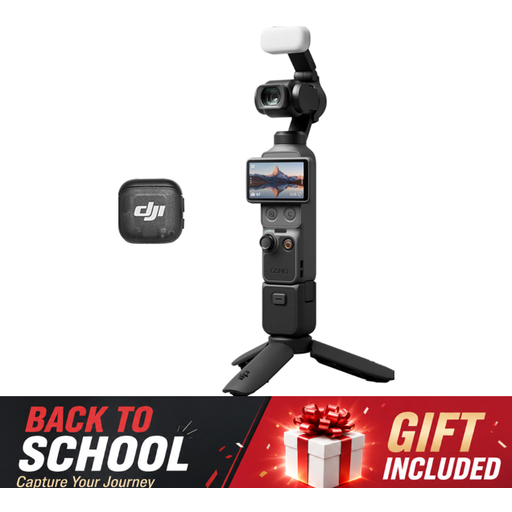
DJI Osmo Pocket 3 Creator Combo

DJI Osmo Pocket 3 Creator Combo

An option to compare if you want to film the creative process as well as take photographs.

The product name lists 4K/120fps, a 1-inch CMOS sensor and an included microphone.

View at Joybuy
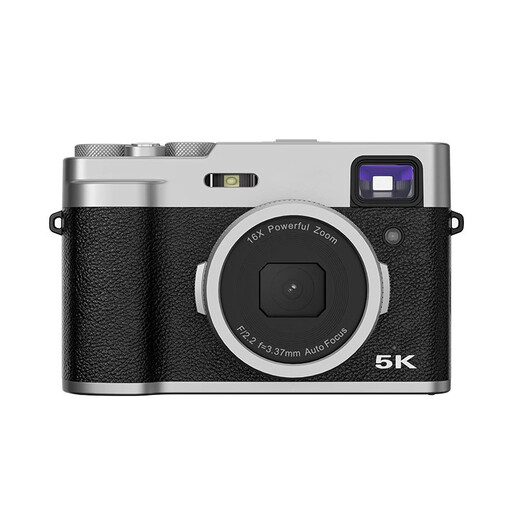
Songdian retro camera, black

Songdian retro camera, 48MP, 5K, 2.8-inch LCD screen, black

An option for anyone looking for a digital camera to photograph creators and their work.

The product name lists autofocus, an optical viewfinder and a 2.8-inch LCD screen.

View at Joybuy
Sony ZV-E10 with 16-50mm zoom lens, black

Sony ZV-E10 + 16-50mm zoom lens, black

An option to compare if you want to frame the creator and their workspace with a zoom lens.

The product name lists a 16-50mm zoom lens. According to the product information, an adapter or charger and an SD card are not included.

View at Joybuy
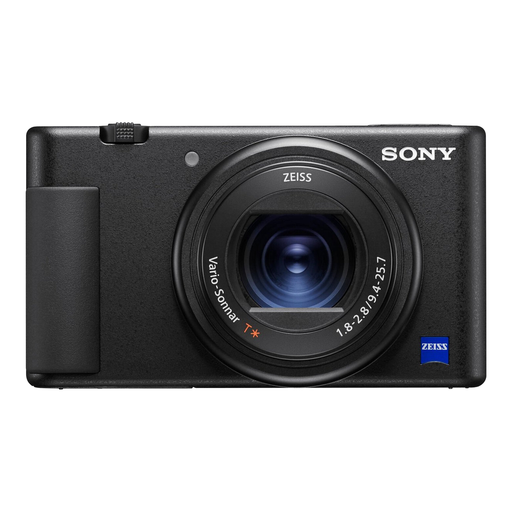
Sony ZV-1 compact camera

Sony ZV-1 compact camera

An option to consider if you’re looking for a compact camera for photos and videos.

View at Joybuy

Frequently asked questions

How can I check whether both the creator and workspace will fit in a small studio shot?

Position the camera where you plan to shoot and test the widest setting on your chosen lens from there. Nikon UK says the wide-angle setting on the Z DX 16-50mm is suitable for confined spaces, but that doesn’t guarantee your entire workspace will fit in the frame.

Is a short minimum focusing distance enough for small details in my work?

No. Check the maximum magnification at the zoom setting you want to use as well. Canon UK lists different figures for each setting on the RF-S 18-45mm; according to Canon, the separate RF 35mm macro lens offers a maximum magnification of 1:2.

What should I check when setting up and maintaining my camera?

Before your first shoot, check what’s included in the kit, how the camera is powered and where you’ll position it. Nikon UK states that a charger isn’t included with the Z50II kit with 16-50mm VR. Follow the manual for the camera and lens you buy when cleaning and maintaining them.

Does the legal guarantee in the Netherlands always last exactly two years?

No. The Dutch government does not specify a fixed legal guarantee period for consumer purchases in the Netherlands. You’re entitled to a product that works properly, and its expected lifespan is one of the factors taken into account. If you’re buying on behalf of a business, check the contractual terms separately; the same consumer rights don’t automatically apply to business purchases.

Can I photograph recognisable creators and publish their images for my business?

According to the Dutch Data Protection Authority, the GDPR applies to photos and videos made and published professionally or commercially on behalf of a business or organisation, and you need a lawful basis under the GDPR. Consent is one possible example. Don’t assume there’s a general exemption for a small studio; establish your lawful basis before filming and publishing.
