Who is this camera guide for?

Portrait and process photographer

You photograph a craftsperson both in portraits and at work, with their hands in motion. A viewfinder, focusing and a suitable lens are important considerations. The Consumentenbond, Canon Nederland and Nikon Nederland outline points to consider when choosing a camera and lens, and when taking photographs in a range of lighting conditions.

Craft detail photographer

You want to capture texture, tools or small stages of the making process up close. Focus on which lens or fixed-lens camera suits the shooting distance you need. The Consumentenbond and Nikon Nederland cover the role of the lens and close-up photography.

Mobile reportage photographer

You visit craftspeople at their workplaces and weigh up a lightweight fixed-lens camera against the flexibility of a mirrorless system camera. The Consumentenbond and Sony Nederland describe both camera types in their product and buying information.

What should you consider when choosing?

What to consider What should you check? Who should give this more weight?
Framing in bright daylight Check whether the exact model has an electronic viewfinder and whether you find its display easy to see. Also consider how the exposure controls work. When I take portraits outdoors, I want to judge my framing clearly and adjust my shots to changing natural light. Around 33% of consumers prioritise daylight and framing.
Focusing on the craftsperson and their work Check the focusing modes and controls on the exact model, and assess how they work for both faces and hands or pieces of work. When I switch between a craftsperson and their moving hands, I want to choose what the camera focuses on. Around 25% of consumers give process and portrait photography top priority.
Small details of materials and tools Check the focusing capabilities of your chosen lens, or the closest focusing distance of a compact camera. If I want to show small details, the camera needs to focus from the distance I require. Around 25% of consumers put close-up capabilities at the top of their list.
Portability and equipment Compare the weight of the camera body with the lens you need attached. Remember to factor in the battery, memory card and any extra lenses. When visiting several workplaces, I want to carry as little as possible and switch quickly between shots. Around 17% of consumers put portability and simplicity first.

Pitfalls to avoid when buying

  • Choosing a camera body without checking the close-up lens you need

    A camera body on its own doesn’t tell you whether you can focus on small subjects from the distance you want. A standard zoom lens isn’t automatically suitable for macro photography.

    Before you buy, work out how small your subject is and how far away you want to photograph it from. Then check the lens mount and the capabilities of your chosen lens.

    You may need to buy a separate compatible lens, which also means carrying extra equipment.

  • Assuming every compact camera has a viewfinder

    The Sony RX100 VII has an electronic viewfinder; Canon lists a tilting screen for the Canon PowerShot G7 X Mark III. These are features of specific models, not all compact cameras.

    If you often frame shots in bright light, check the specifications for the exact version on offer.

  • Looking at the model name without checking the camera body and lens bundle

    Where an offer includes different variants, the camera body and lens combination may vary. An unclear bundle could mean you don’t get the lens you need for portraits or details.

    Before ordering, check the full model code and exactly what’s included in the variant you’ve selected.

    If the lens you need isn’t included, you may have to buy one separately. Another lens supplied with the camera may also be less suitable for the shooting distance you need.

Camera brands to consider

Canon

Canon’s models mentioned here include both a mirrorless camera with an interchangeable RF lens and a compact camera with a fixed lens.

  • Canon specifies an APS-C sensor, electronic viewfinder and Dual Pixel CMOS AF II for the EOS R50.
  • The EOS R50 body doesn’t have in-body image stabilisation. The PowerShot G7 X Mark III has a fixed 4.2× zoom; check that its focusing range suits your smallest details.

Nikon

The Nikon Z50II is a mirrorless camera for anyone who wants to frame craftspeople and their work in changing light during a reportage shoot.

  • Nikon describes the electronic viewfinder and autofocus as useful for situations including backlighting and small subjects.
  • These are Nikon’s claims, not the results of an independent performance test. Nikon lists separate macro lenses for photographing small craft details.

Fujifilm

The Fujifilm X-S20 is an APS-C mirrorless camera with an X mount, for anyone who wants the option of using different lenses.

  • Fujifilm specifies built-in five-axis sensor stabilisation.
  • The stated 7.0-stop compensation is a manufacturer figure under the CIPA test conditions listed. It doesn’t indicate how much motion blur it will prevent when photographing moving hands.

Sony

The Sony models mentioned here offer two different options: the α6400A with interchangeable E-mount lenses and the RX100 VII with a fixed lens.

  • Sony specifies an electronic viewfinder and fixed zoom for the RX100 VII.
  • You’ll need a suitable E-mount lens for the α6400 series. When checking an offer, confirm the full model code and whether a lens is included.

Joybuy products for this topic

This selection includes pocket cameras and a mirrorless camera with a zoom lens. Check that the listed features and lens bundle suit the portraits, work processes and smallest details you want to photograph.
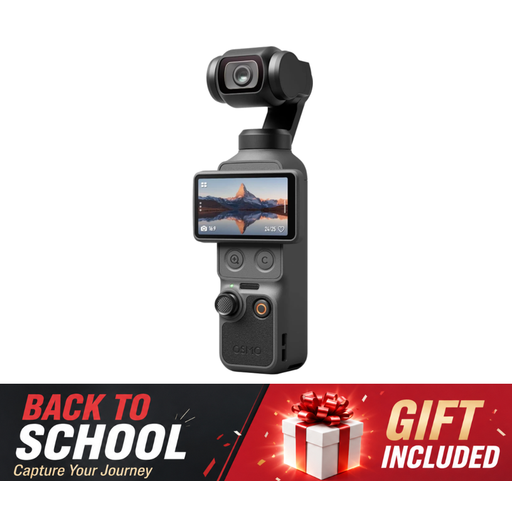
DJI Osmo Pocket 4 Standard Combo pocket gimbal camera

DJI Osmo Pocket 4 Standard Combo

The product title mentions photography, but this model is positioned mainly as a pocket gimbal camera. Check that its features meet your needs for still portraits and close-up shots.

The title lists a 1″ CMOS sensor, 2× lossless zoom, 3-axis stabilisation, 107GB of built-in storage and a 2″ rotating screen.

The stated 4K/240fps specification relates to video. Check separately whether the camera suits your photography needs.

Joybuy
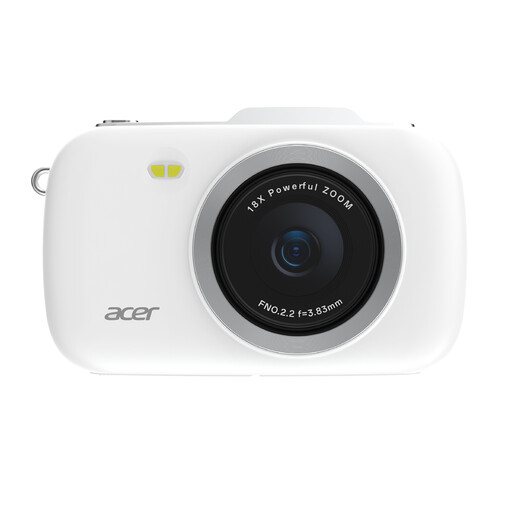
KOMERY G7-A 4K digital camera, white

KOMERY G7-A 4K Digital Camera, white

The title describes this as a portable point-and-shoot camera. Before buying, check that its focusing distance is suitable for small details of materials or tools.

The title lists 4K, 80MP and 18× zoom. The product name doesn’t specify a focusing distance or viewfinder.

Joybuy
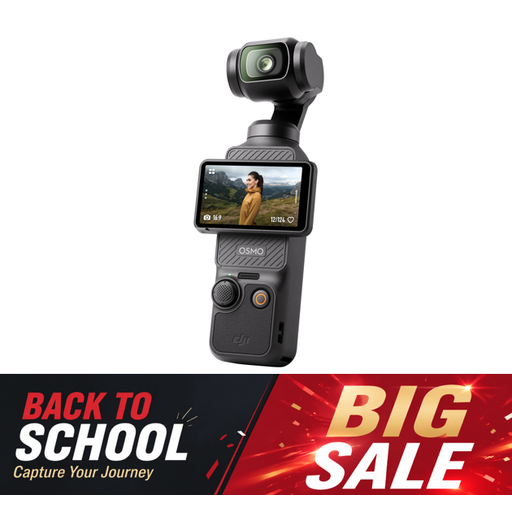
DJI Osmo Pocket 3 pocket camera

DJI Osmo Pocket 3

The product title and description position this model mainly for video and subject tracking. Check that it suits your focus on still portraits or craft details.

The product information lists a 1″ CMOS sensor, 3-axis stabilisation and a rotating 2″ touchscreen. The description also mentions fast focusing and ActiveTrack 6.0.

The title lists 4K/120fps video. This video specification alone doesn’t determine whether the model is suitable for your photography.

Joybuy

Songdian Pocket Camera 4K, pink

Songdian Pocket Camera 4K, pink

The product title mentions photography and a pocket camera. Check that the focusing range and controls suit portraits and the details you want to capture.

The title lists 44MP and 16× zoom. The product name doesn’t specify a viewfinder or closest focusing distance.

Joybuy
Sony Alpha A6100 with 16–50mm f/3.5-5.6 OSS II lens

Sony Alpha A6100 + 16-50mm f/3.5-5.6 OSS II

This mirrorless camera kit suits anyone who wants to photograph portraits and work processes using an interchangeable lens. Check whether the supplied lens range is sufficient for your smallest details.

The product title lists a 16–50mm f/3.5-5.6 OSS II lens. Check the full model and bundle details for the version you’ve selected.

Joybuy

Frequently asked questions

Do I always need a macro lens to photograph tool details?

No, not for every detail shot. Consider how small the subject is and how close you need to focus, then check the lens or the fixed lens on a compact camera. For very small subjects, a suitable macro lens may be the right option for a mirrorless camera.

How can I deal with harsh shadows in an outdoor portrait?

First, consider the location and the direction of the natural light. In a practical article from Canon, a photographer uses a diffuser or reflector, among other things, to adjust contrast and shadows. This is a photography technique, not a guaranteed camera feature.

What should I check before my first photo session?

Check that your chosen lens fits the camera body, and bring the memory card you need and a fully charged battery. Take a test shot beforehand of both a portrait and the smallest detail you want to show.

What are my rights when buying a camera online in the Netherlands?

For online purchases by consumers, there is usually a statutory 14-day cooling-off period after delivery; ACM ConsuWijzer also explains the exceptions. Your statutory guarantee is separate from any manufacturer’s warranty. If a product used normally doesn’t meet what you could reasonably expect, the seller is responsible for providing an appropriate solution.

Can I photograph identifiable craftspeople and publish their portraits online?

First consider the purpose and how you plan to use the images. According to the Dutch Data Protection Authority, GDPR rules apply when taking and publishing photographs professionally or commercially; you’ll need a valid legal basis. Private images that remain private may fall under a different exception.
