
Maker with a fixed product setup
You photograph your work on the same table each time and want consistent framing and manageable lighting. Canon Netherlands explains how a tripod can help you take product photos with a consistent composition.


Start with what you want to capture. If you’re photographing a maker at work, reliable focus and a screen you can use comfortably are important. For small details, lens magnification and working distance matter more. A tripod helps you repeat a composition, but it won’t freeze moving hands or replace suitable lighting. So check exactly what’s included in the kit, how you can control the camera remotely and whether you might need additional lenses.
You photograph your work on the same table each time and want consistent framing and manageable lighting. Canon Netherlands explains how a tripod can help you take product photos with a consistent composition.
You want to capture hands, activities and recognisable makers while work is in progress. Focus and privacy when publishing images both deserve consideration. The Dutch Data Protection Authority (Autoriteit Persoonsgegevens) explains that identifiable people in images are personal data.
You want to photograph textures, tools or small finishing touches up close. Nikon USA and Canon Netherlands identify lens magnification and working distance as important considerations for close-up shots.
Choose this if: you switch between photographing a maker, the workbench and small products in the same workshop.
Trade-off: a kit zoom lens isn’t automatically suitable for macro details. Check whether you’ll need a different lens later.
Choose this if: you want a single package and the fixed lens suits your desired working distance and framing.
Trade-off: the lens can’t be changed. Also check the screen position and how you can operate the camera on a tripod.
Choose this if: you already have suitable lenses, or prefer an optical viewfinder and larger controls.
Trade-off: check that the screen position and remote controls suit your setup. In its buying guide, Cameranu generally describes DSLR cameras as larger; that doesn’t mean every model is less suitable.
Your priorities depend on what you’re photographing: repeatable product framing, a moving activity, small details or the overall cost of a practical setup.
| What to consider | What should you check? | Who is this important for? |
|---|---|---|
| Repeatable framing | Check how the screen moves, which remote controls are compatible and how much room you have around the workbench. | When I photograph several pieces, I want to be able to repeat my framing and tripod setup. Around 33% of consumers give repeatable framing and tripod controls top priority. |
| Keeping the maker and activity in focus | Compare the focus controls and assess the setup with the actual activity and lighting. | When hands and tools are moving, I want to focus on what the image needs to show. Around 27% of consumers prioritise capturing the maker and the making process. |
| Capturing small details | Check the maximum magnification and focusing distance of the exact lens, as well as the space available for hands and lighting. | When I photograph small materials or finishing details, I want to know whether the lens will make them large enough in the frame. Around 27% of consumers give fine product details top priority. |
| Total cost of the setup | Compare exactly what’s included in the kit and allow for any lens, lighting or remote control you might need. | When I put together a working setup, I want to know what I’ll need in addition to the camera. Around 13% of consumers prioritise keeping overall spending under control. |
For close-up shots, the lens’s magnification and working distance also affect how well you can frame your subject.
Compare the specifications of the exact lens with the dimensions of the smallest piece you want to photograph.
A tripod can reduce camera movement, but hands and tools can still move.
Assess the shutter speed and lighting while carrying out the activity in the setup you intend to use.
The contents of a kit don’t automatically tell you whether you have all the accessories you need for your workbench.
Read the details of the exact offer and check that any accessories you might need will work with the camera.
The EOS R50 range is worth considering if you’re looking for a mirrorless camera with an interchangeable lens and a movable screen.
The Z50II range is worth considering if you want to photograph makers and their work with an interchangeable lens.
The X-S20 with XC15-45mm kit lens is a mirrorless camera option to compare if you’re looking for a hybrid camera body.
The Alpha 6400 range has an interchangeable E-mount lens and is an option for capturing makers and their activities.
The Lumix G100D is a compact mirrorless camera worth considering if both photography and video are part of the job.
The products shown include cameras and a tripod accessory. Check each model to see whether its features suit your workbench, preferred framing and photography style.
 No image available
A tripod accessory to consider if its size and connection suit your camera and workbench.
The product name specifies a 1/4-inch screw and compatibility with, among others, DJI Pocket 4/3, Sony ZV1/RX100 VII/RX1R II, Canon G7X Mark, Fujifilm X100V and Leica Q2. Check the connection on your exact camera.
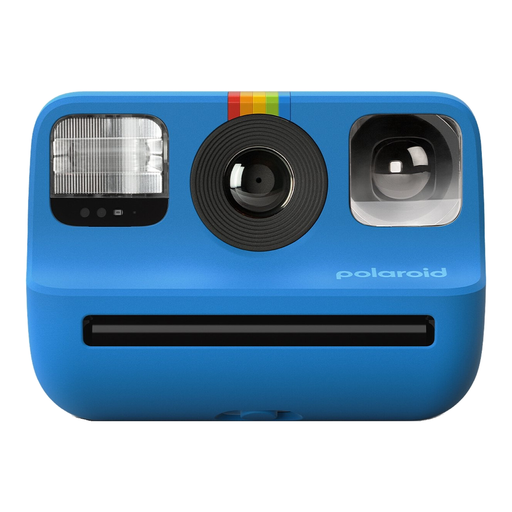 No image available
Check that this model and your preferred photography style are suitable for the maker and work you want to capture on a tripod.
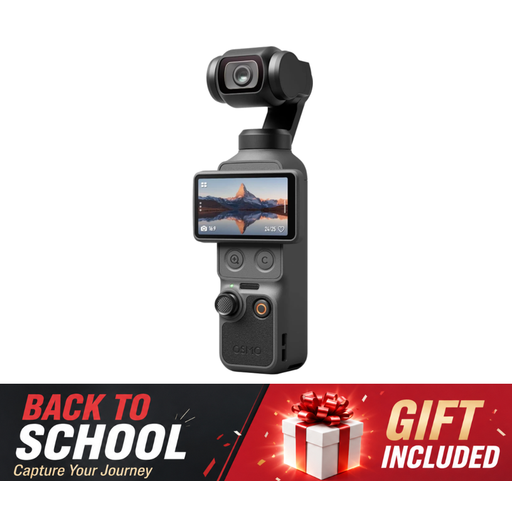 No image available
This pocket camera is worth considering if you’re looking for a compact model. Assess separately whether its controls suit your tripod setup.
The product name specifies a 1-inch CMOS sensor, 3-axis stabilisation and a 2-inch rotating screen.
 No image available
This pocket camera is worth considering if you’re looking for a compact model. Check whether the controls and framing you need will work with a tripod setup.
The product name specifies a 1-inch CMOS sensor, 4K/120fps video, 3-axis stabilisation and a 2-inch rotating touchscreen.
No. A tripod helps reduce camera movement and keep the composition steady, but hands and tools can still move. Adjust the shutter speed and lighting to suit the activity, and assess the setup in the workspace.
First, decide on your framing and keep the background and camera position the same; adjust the lighting for each object. Canon Netherlands describes this as an approach to product photography. Check separately which remote control or app works with your camera model.
It depends on the exact lens and the size of the piece. Compare the maximum magnification and focusing distance. For example, Canon specifies a maximum of 0.25× for the RF-S 18-45mm. That specification applies to this lens, not to all kit lenses.
According to the Government of the Netherlands, the seller must provide a product that works properly; statutory guarantees in the Netherlands have no fixed end date. What you can reasonably expect depends, among other things, on the product and the information provided at purchase. This concerns consumer rights; for a business purchase, you should assess the applicable contract separately.
You need an applicable legal basis under the GDPR. The Dutch Data Protection Authority (Autoriteit Persoonsgegevens) regards identifiable people in photos as personal data and lists consent as one possible legal basis. Discuss the intended use with the person beforehand, and don’t assume that consent is the only possible legal basis in every situation.