Camera brands to consider
The features mentioned apply to the specific cameras and lenses below, not to every product from each brand.
Canon
The EOS R50 is an RF/RF-S mirrorless camera body; the RF 35mm F1.8 MACRO IS STM is a separate macro lens.
- Canon specifies 24.2 effective megapixels for the EOS R50 and a maximum magnification of 1:2 for the RF macro lens mentioned.
- Canon does not list sensor-shift image stabilisation for the EOS R50. The macro lens’s magnification does not apply to another lens in a kit.
Nikon
The Z50II is a mirrorless camera; the NIKKOR Z MC 50mm f/2.8 is a separate close-up lens.
- Nikon specifies 1:1 magnification for the NIKKOR Z MC 50mm f/2.8.
- Check which lens is included with a Z50II offer and whether the working distance leaves enough room for lighting.
Sony
The E-mount system offers a choice of lenses, including the FE 90mm F2.8 Macro G OSS.
- Sony specifies a maximum magnification of 1.0× and a minimum focusing distance of 0.28 m for the SEL90M28G.
- The minimum focusing distance is not the clear space in front of the lens. Check the working distance and whether the lens you choose suits your set-up.
OM SYSTEM
The Tough TG-7 is a compact camera with built-in macro modes, including a Microscope mode.
- OM SYSTEM lists focusing from 1 cm in Microscope mode, RAW shooting and focus stacking for the TG-7.
- The lens is fixed. For very close-up shots, check whether you can still light the costume sufficiently.
Cameras on Joybuy
This selection includes cameras for photography, including vlogging and mirrorless cameras. For costume details, check whether the camera can focus at your desired distance with the supplied lens. Product names and video features alone don’t prove that a camera is suitable for macro photography.
 No image available
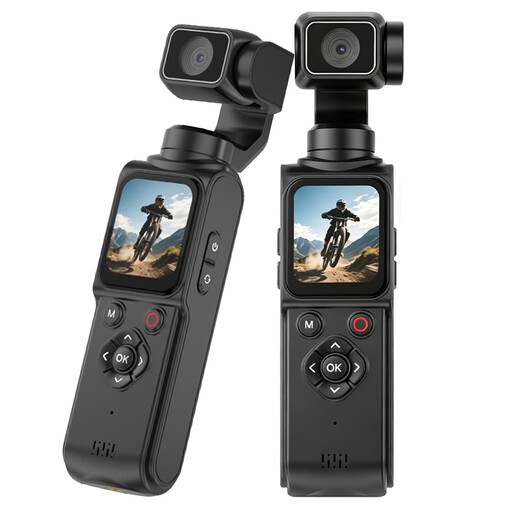
KINSI Mini Vlog Camera 4K, 64 MP
Consider it for costume details only if the camera can focus at your desired distance with the supplied lens; check this before choosing.
The product name lists 64 MP, 4K, Wi-Fi, a 330° rotating lens and a 1.72-inch touchscreen. These specifications don’t indicate macro magnification.
View on Joybuy
 No image available
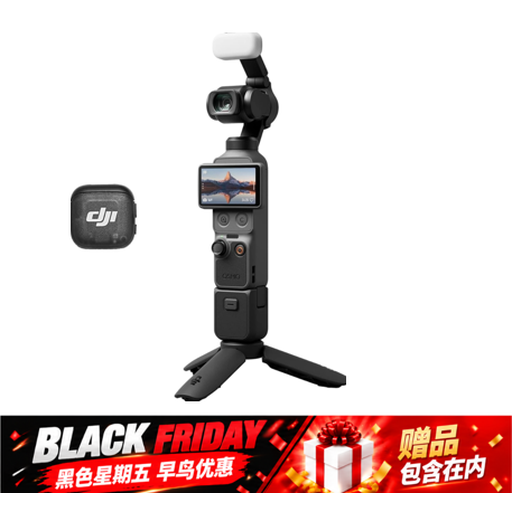
Osmo Pocket 4 Creator Combo
First check whether the camera can focus at your desired close-up distance with the included components; the product name doesn’t indicate macro magnification.
The product name lists a 1-inch CMOS sensor, 4K/240fps, 3-axis stabilisation, 2× zoom and 107 GB of built-in storage.
View on Joybuy
 No image available
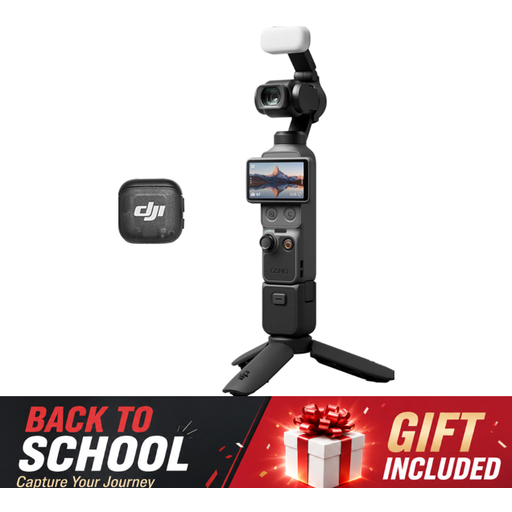
DJI Osmo Pocket 3 Creator Combo
For detail shots, check whether the camera can focus at the close distance you need; the listed fast autofocus doesn’t in itself indicate macro magnification.
The product name lists a 1-inch CMOS sensor, 4K/120fps, 3-axis stabilisation and fast autofocus.
View on Joybuy
 No image available
Sony ZV-E10 with 16-50mm zoom lens, black
The listed zoom lens makes this a mirrorless camera set-up. Check whether it can focus on your desired costume details at the shooting distance your studio allows.
The product information lists a 24.2 MP APS-C sensor and a 16–50mm lens.
View on Joybuy
 No image available
Sony Alpha A6100 with 16-50mm f/3.5-5.6 OSS II
Check whether the supplied zoom lens gives you the detail framing and focusing distance you need; this combination isn’t described as a macro kit.
The product information lists a 24.2 MP sensor, a 16–50mm lens, a touchscreen and an electronic viewfinder.
View on Joybuy
Frequently asked questions
Do I need a macro lens for every embroidered detail?
No, it depends on the framing you want and the magnification offered by the lens or built-in close-up mode. The 1:1 figure for Nikon’s NIKKOR Z MC 50mm f/2.8 and 1:2 for Canon’s RF 35mm F1.8 MACRO IS STM apply to those specific lenses; the OM SYSTEM Tough TG-7 has a built-in Microscope mode.
How can I keep multiple layers of embroidery in focus?
Keep the costume and camera steady, then use test shots to assess how much depth of field you need. The OM SYSTEM manual describes focus stacking for the TG-7, which combines shots taken at different focus points. Check whether the result suits your fabric’s texture.
What extra equipment and warranty rights should I check?
Check which lens and other components actually come with the camera; a body or standard zoom isn’t automatically a macro kit. If you buy as a consumer in the Netherlands, you’re entitled to a product that meets legal requirements under the statutory guarantee, separate from any manufacturer’s warranty. The Dutch government says that online purchases from a business generally come with a 14-day cooling-off period, subject to exceptions.
Can I publish photos featuring a recognisable model?
If people are recognisable, consider which privacy rules apply to publishing the images. For the event scenario described by the Dutch Data Protection Authority, a lawful basis is required and consent is often the appropriate basis; this does not automatically apply to every costume photo.


