
A student who needs to show tiny details
You want to photograph stitches, beads or textures so they’re clearly distinguishable. So, look at the close-focusing capabilities of the complete camera-and-lens combination, not just the camera.


First, see if your current phone can capture the tiniest stitches, beads and other embellishments clearly enough; you don’t automatically need a new camera for a school project. If it can’t, a compact camera with a macro mode could be a simple next step. An interchangeable-lens camera only makes sense if you also want to use a suitable macro lens. Take some test shots and check the sharpness, exposure and fabric colour.
You want to photograph stitches, beads or textures so they’re clearly distinguishable. So, look at the close-focusing capabilities of the complete camera-and-lens combination, not just the camera.
You want to check whether your current device will do the job before buying a camera, lens or other equipment.
You’re taking both wider shots and close-ups, and want to keep an eye on the exposure, sharpness and fabric colour throughout the series.
When: if your phone supports macro photography and a test shot shows the smallest detail clearly enough for your assignment.
Trade-off: you won’t need to buy a new camera, but not every phone has a macro function. Apple Support describes this feature for supported iPhone models.
When: if you want to use a separate camera without interchangeable lenses.
Trade-off: the minimum focusing distance depends on the mode and zoom setting. OM Digital Solutions lists a close-up mode on the TG-7 that focuses as close as 1 cm; Panasonic lists 3 cm at the wide-angle end and 200 cm at the telephoto end for the DC-TZ99.
When: if tiny details need to fill a large part of the frame and you want to keep using the camera after this project.
Trade-off: you’ll need to choose both a camera body and a compatible lens. Canon lists a maximum magnification of 1:2 for the RF 35mm F1.8 MACRO IS STM; Nikon lists 1:1 for the NIKKOR Z MC 50mm f/2.8.
| What to consider | What should you check? | Who is this important for? |
|---|---|---|
| Getting small details in focus | Take a test shot of the smallest embellishment. Check the macro mode, the focusing distance at the zoom setting you’re using and, if listed, the maximum magnification. | If I need to show a bead or stitch clearly on its own, I want to know how it will look in the final image. That’s why around 33% of consumers put detail visibility first. |
| Spending on a single project | Test your current phone first. If you’re looking at an interchangeable-lens camera, compare the complete setup and check which lens and accessories are included. | For a one-off school assignment, I want to know whether my own device will do the job before buying anything new. Around 27% of consumers put the total cost of the project first. |
| Fabric colour and a series of photos | Check the white balance and focusing options. Take test shots of both wider views and details in the same lighting, then compare them. | When taking a series, I want to avoid the fabric looking different from one photo to the next. Around 20% of consumers give consistent colour and sharpness top priority. |
| Working quickly | Try switching between wider shots and close-ups, using the controls and transferring images. | If I want to switch quickly between wider views and details during the project, ease of use matters a lot. Around 20% of consumers put ease of use first. |
Focusing distance and maximum magnification describe different things. With a zoom camera, the listed close-focusing distance may also apply only at a particular zoom setting.
Check a test crop of the smallest embellishment and look at the macro and zoom specifications for the setting you plan to use.
The listed magnifications of 1:2 and 1:1 apply to specific lenses sold separately; you can’t automatically expect the same from every camera body or kit lens.
Check the full model name, lens mount and what’s included in the offer before choosing a setup.
The Tough TG-7 is a compact camera with a built-in close-up mode, for anyone who wants to photograph details without a separate lens.
The LUMIX DC-TZ99 has a fixed zoom lens and a macro mode, for anyone who wants to take both wider shots and close-ups.
An EOS R body with the RF 35mm F1.8 MACRO IS STM is an interchangeable-lens option for both detailed and general photography.
Z system cameras can be paired with the NIKKOR Z MC 50mm f/2.8 to photograph small details.
The ZV-1F has a fixed wide-angle lens and could suit anyone who wants to make presentation videos as well as take photos.
Joybuy camera picks for this topic. For close-up photos, take a test shot to check whether the smallest embellishment appears sharp and large enough in the frame.
 No image available
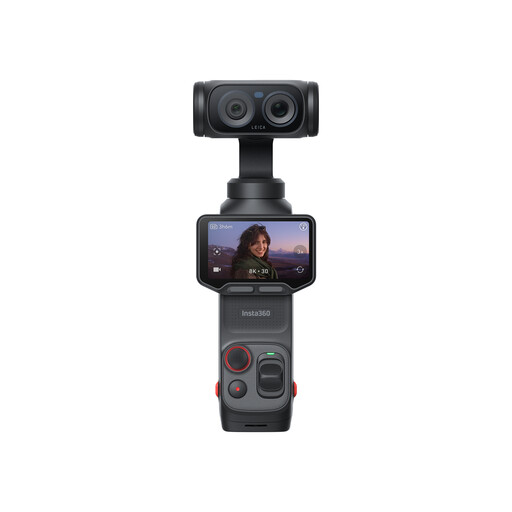
Consider this model if the zoom and video features listed suit your project; take a test shot to see how the smallest embellishment appears.
The product description lists two lenses, up to 6× zoom and 8K HDR video. These specifications alone don’t tell you how much magnification you’ll get when photographing a costume detail.
 No image available
If you’re considering this camera for costume details, first take a photo of the smallest embellishment and check the final crop.
The product description lists 12× optical zoom, 64 MP and Wi-Fi. The zoom factor alone doesn’t tell you how large a small detail will appear in the frame.
 No image available
If you want to shoot video as well as take photos, use a test shot to check whether the smallest costume detail appears sharp and large enough in the frame.
The product name lists a 1-inch CMOS sensor and a 2-inch rotating touchscreen; the product description mentions fast focusing.
 No image available
For close-up photos with the included lens, check whether you can capture the detail you need in focus; also take a test shot of the smallest detail.
The product information lists an APS-C sensor and a 16–50mm kit lens. It also mentions a setting that shifts focus from a face to a subject.
 No image available
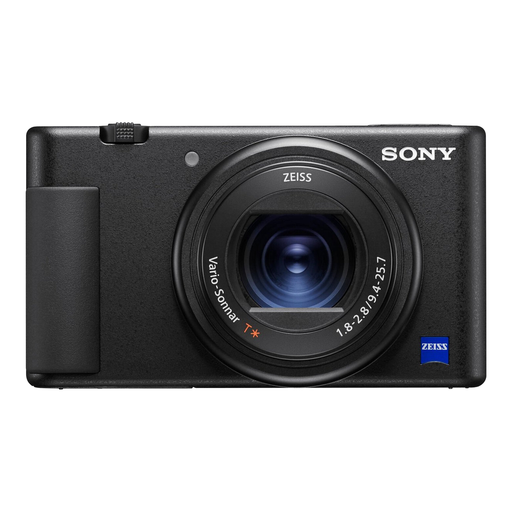
If you’re considering this compact camera for your school project, test whether the smallest embellishment is clear enough to recognise in a photo.
The product information lists JPEG and RAW files, 20 Mpx and a tilting screen. Take a test shot to check whether the level of detail meets your assignment’s requirements.
Not until you’ve checked how large and sharp the detail looks in the photo. A supported phone or a compact camera with a macro mode may be enough; a separate macro lens is an option if test shots don’t show the smallest details clearly.
You may be closer than the minimum focusing distance for the mode and zoom setting you’re using. Move back a little or choose the right macro mode, steady the camera and check the sharpness on screen.
Where possible, use the same lighting and background, take a test series and check the white balance settings on your chosen device. Having an adjustment option doesn’t, by itself, guarantee accurate colour reproduction.
ACM ConsuWijzer distinguishes between the legal guarantee and any additional seller’s guarantee. For a standard online purchase, you generally have a cooling-off period of up to 14 days after delivery, although exceptions may apply.
The Dutch Data Protection Authority says that a school needs consent to take and publish images of a recognisable pupil: from the age of 16, the pupil gives consent themselves; for a pupil under 16, their parents give consent. This applies to images in which someone can be recognised, not automatically to photos showing clothing details only.