
Maker of small costume details
You want to photograph embroidery, seams or small embellishments individually. Compare the magnification and working distance of the actual lens or close-up mode, not just the camera body.


For tiny stitches and embellishments, the close-up mode or the camera-and-lens combination is what matters most, so don’t look at the camera body alone. A compact model is easier to carry, while a system camera with a suitable macro lens gives you more choice but may mean buying an extra lens. Bright midday sun can create harsh contrasts in fabric, so also consider how you can control the light while shooting.
You want to photograph embroidery, seams or small embellishments individually. Compare the magnification and working distance of the actual lens or close-up mode, not just the camera body.
You photograph both costumes being worn and details outdoors. Consider ease of handling, zoom options and the harsh contrasts that direct midday sunlight can create.
You want to take both wide shots and close-ups without buying several lenses straight away. Check what’s included in the kit and how close the supplied lens can focus.
First, decide how small the detail you want to capture is, and whether you’ll need a dedicated macro lens. Then compare portability, what’s included in the kit and how you’ll handle bright sunlight.
Canon Europe notes that direct midday sunlight can create harsh contrasts. Accurate focusing is important for close-ups, as the depth of field can be shallow. Take test shots of both light and dark fabric, then check that the detail is sharp.
| What to consider | What should you check? | Who is this important for? |
|---|---|---|
| Small details | Magnification, focusing distance and working distance of the chosen lens or close-up mode. | If I want to capture individual stitches or beads, I want to know how large they’ll appear in the frame and how much room there’ll be in front of the lens. Around 36% of consumers put detail magnification first. |
| Bright sunlight | Take test shots of light and dark fabric; check the shadows and highlights, and adjust your position or the light if needed. | If I want to show the texture and colour of a costume in sunlight, I want to see how the light falls on the fabric. For around 29% of consumers, daylight rendering is the top priority. |
| Portability and zoom | Compare the weight and check the minimum focusing distance at the zoom settings you want to use. | If I want to switch quickly between a wide shot and a tighter frame at an event, I weigh portability against close-up capabilities. Around 21% of consumers put portability first. |
| Complete kit | Check which lens and any accessories are included with that exact version. | If I want to choose all the equipment I need in one go, I want to know what’s in the kit and which parts I’ll still need. For around 14% of consumers, the contents of the complete kit are the main priority. |
The stated 1:1 and 1:2 magnifications apply to specific lenses and don’t automatically apply to every lens used with the same body.
Before buying, note the exact body-and-lens combination and check that lens’s magnification.
These distances are measured from different points. When shooting close up, the front of the lens can also block some of the light.
Check how much space there’ll be between the lens and the costume at the magnification you want.
For the Sony RX100 VII, Sony states a focusing distance of around 8 cm at the wide-angle end and around 100 cm at the telephoto end, measured from the front of the lens.
Compare the focusing range at the focal length you want to use for costume details.
The TG-7 is a compact option for very close-up details. The Micro Adventure Kit combines the camera with an LG-1 light guide.
The EOS R50 is a system camera with interchangeable lenses. The RF 35mm F1.8 Macro is an optional lens for close-ups.
The X-S20 with the XF30mmF2.8 R LM WR Macro is an interchangeable-lens combination with a specified 1:1 macro magnification.
The Z50II with the NIKKOR Z DX 16–50mm VR kit lens is designed for switching between wide shots and larger details.
The RX100 VII has a built-in zoom for anyone who doesn’t want to change lenses. Sony also offers a separate macro lens for compatible E-mount cameras.
This Joybuy selection includes cameras with different zoom and shooting features. For small costume details, also check the magnification and focusing distance of your chosen camera-and-lens combination separately.
 No image available
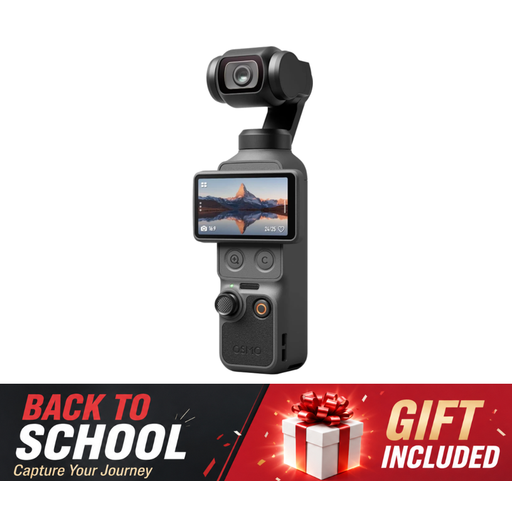
If you want to capture different framing on the go, check that the zoom and close-up capabilities suit your subject.
1-inch CMOS sensor; 4K/240fps; 3-axis stabilisation; 2× lossless zoom; 107GB built-in storage; 2-inch rotatable screen.
 No image available
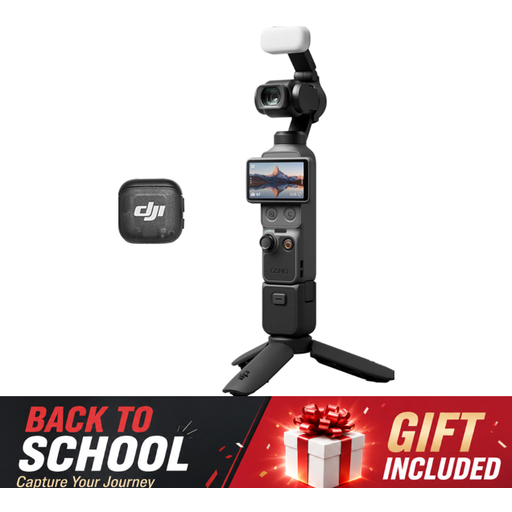
If you’re considering a compact camera for different framing, check separately whether its close-up capabilities suit the details you want to capture.
1-inch CMOS sensor; 4K/240fps; 3-axis stabilisation; 2× lossless zoom; 14-stop dynamic range; 107GB built-in storage; handle with 1/4-inch thread.
 No image available
The zoom specification may be useful if you want to switch between different framings; for small details, also check the focusing distance and magnification.
12× optical zoom; 4K; 64 MP; WiFi.
 No image available
If you’re considering a compact model with zoom, check that the focusing distance suits the size of your costume details.
4K; 44 MP; 16× zoom; colour: Pink.
 No image available
A kit with a zoom lens may suit you if you want to switch between wide shots and tighter framing; for small details, check the close-up limits of the supplied lens.
16–50mm zoom lens; colour: Black.
No. Also check the magnification and focusing distance of the lens or close-up mode you’ll actually use. Focusing accurately takes extra care when shooting close up.
Direct midday sunlight can create strong contrasts. Take a test shot of light and dark areas and adjust your position or the light if needed. For close-ups, also check whether the lens is casting a shadow on your subject.
After focusing, check the detail on the screen and, if necessary, take shots with different aperture settings. Depth of field can be shallow in close-ups; if you have a camera with interchangeable lenses, also check which lens provides the magnification you want.
According to the Dutch Government, there’s no fixed statutory guarantee period in the Netherlands: you’re entitled to a product that’s fit for purpose. If a fault isn’t due to misuse or normal wear and tear, repair, replacement or a refund may be possible. Contact the seller to discuss this.
Not necessarily if the person is recognisable. The Dutch Data Protection Authority points out that recognisable images are personal data, and taking and publishing them may involve privacy rules. Whether publication is permitted in a particular case depends on the circumstances; a close-up of fabric alone isn’t automatically the same as a recognisable portrait.