Who is this choice relevant to?

Photographer capturing live performances

You photograph musicians moving in low or changing light and want to capture sharp moments. Shutter speed, focusing and lens brightness matter more to you than an image stabilisation specification. Canon Netherlands and Canon Europe highlight movement and exposure as important considerations.

Photographer shooting from a fixed position

You stay in one spot with a permitted tripod and choose your framing and lens to suit the distance from the stage. LensReviews.nl points out that your position and the available space influence your choice of lens.

Concert-goer subject to camera restrictions

You want to take photos during a performance, but first need to check which cameras and set-ups the venue and organiser allow. The house rules at Ziggo Dome are one example of venue-specific restrictions.

What should you consider when choosing?

Consideration What to look for Who is this important for?
Getting sharp shots of musicians in motion Compare the focusing options and maximum aperture of the lens you’ll actually use. Canon Europe explains that a fast shutter speed can freeze movement; Canon Netherlands describes the challenges of shooting in low light. If I want to capture musicians in motion sharply, I look at focusing, shutter speed and lens brightness. Around 33% of consumers prioritise this combination.
Getting the right framing from one spot Work out your usual distance and the framing you want. Compare the focal-length range and the maximum aperture at the long end; LensReviews.nl highlights how your position affects your choice of lens. If I want to frame a musician or a wider section of the stage from my tripod position, the range I need is key. Around 27% of consumers prioritise this framing.
Being allowed to use your equipment Check the venue’s and organiser’s current rules before the event, and ask separately about cameras, tripods and any accreditation requirements. Ziggo Dome’s house rules specify compact digital cameras with fixed lenses as the general rule, and list cameras with detachable lenses as prohibited items unless stated otherwise. If I really want to take my camera to a particular performance, I check the event rules first. Around 20% of consumers prioritise being allowed to bring their equipment.
Shooting from a tripod under stage lighting Check the shutter settings and any flicker settings available on the exact model. Sony Support explains that ways to tackle banding caused by flickering light can vary by model and scene. If I’m shooting from a fixed tripod set-up, I want to be able to adjust the shutter settings to suit the stage lighting. Around 20% of consumers prioritise this way of working and having this control.

Buying pitfalls

  • Assuming stabilisation guarantees sharp shots of musicians

    A tripod and image stabilisation reduce camera movement, but they won’t stop an artist moving during the exposure. A longer shutter speed can still result in motion blur.

    Assess the focusing and maximum aperture of the complete set-up, and choose a shutter speed suited to the movement you want to capture.

    For the body-only offer reviewed, you’ll need to arrange charging equipment separately if you don’t already have a suitable charger.

Camera brands to consider

Canon

The EOS R6 Mark III and PowerShot G7 X Mark III illustrate the difference between an RF mirrorless camera that lets you choose a lens and a compact camera with a fixed lens.

  • Canon specifies subject-tracking autofocus and an RF/RF-S mount for the EOS R6 Mark III. The stated stabilisation depends on the lens used and applies to camera movement.
  • Canon lists a 24–100 mm equivalent lens with f/1.8–2.8 for the PowerShot G7 X Mark III.
  • The PowerShot does not have an interchangeable lens. These specifications are not an independent comparison of concert photography results.

Nikon

The Z6III is a full-frame Z mirrorless camera for anyone looking to choose an interchangeable lens for moving subjects.

  • Nikon lists 3D-tracking and a 24.5 MP sensor for the Z6III.
  • You’ll need a suitable Z lens for your distance from the stage and the brightness you need. For the Dutch body-only offer reviewed, Nikon states that a charger is not included.
  • The tracking information comes from Nikon and does not, on its own, prove how reliably the camera will focus under your stage lighting.

Panasonic

The LUMIX S5II is a full-frame L-mount camera for anyone considering a hybrid photo and video set-up.

  • Panasonic specifies a 24.2 MP sensor and phase-detection autofocus for the S5II.
  • The stabilisation Panasonic highlights for walking has not been shown to offer an advantage for still photography from a tripod.
  • Check which L-mount lens suits your distance from the stage and the brightness you need.

Sony

The RX100 VII is a compact camera with a fixed lens to consider when zoom range from a fixed position matters.

  • Sony lists a 24–200 mm equivalent range, f/2.8 at the wide end, f/4.5 at the telephoto end and continuous autofocus.
  • At the telephoto end, its maximum aperture is smaller than the f/2.8 Canon lists at the telephoto end of the G7 X Mark III. This difference alone doesn’t determine which camera takes better pictures.

Joybuy cameras

These Joybuy cameras are listed with a zoom range and may suit anyone who wants to choose their framing from a fixed position. For each model, check that the stated range and available lens brightness suit your distance from the stage and the venue’s rules.
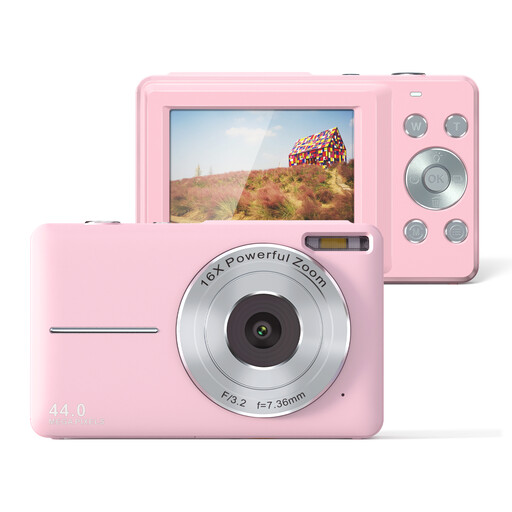
Songdian Pocket Camera 4K 44MP 16X Zoom, Pink

Songdian Pocket Camera 4K 44MP 16X Zoom, Pink

The product name lists 16× digital zoom. Check that this range suits your fixed position and the framing you want.

The product name lists 4K, 44 MP and the colour Pink.

View at Joybuy

Sony ZV-E10 with 16–50mm zoom lens, black

Sony ZV-E10 with 16–50mm zoom lens, black

The product name lists a 16–50mm zoom lens. Compare this range with the framing you need from your position at the venue.

View at Joybuy

Frequently asked questions

Will a tripod automatically keep moving musicians sharp?

No. A tripod reduces camera movement, but to freeze a musician, the exposure time needs to suit their movement. You can also deliberately use a longer exposure to create motion blur.

Can I bring my mirrorless camera and tripod as an ordinary visitor?

It depends on the venue and event. The Ziggo Dome house rules reviewed list cameras with detachable lenses as prohibited items and specify compact digital cameras with fixed lenses as the general rule, unless stated otherwise. This does not mean tripods are generally allowed: ask specifically about both your camera and your set-up for your event.

What can I do if stage LEDs cause banding in my photos?

Check whether your camera model has a suitable shutter or flicker setting, and try a different shutter speed if the event rules allow it. Sony Support explains that the options available vary by model and scene; a longer shutter speed can also result in more motion blur.

What are my rights if a camera I bought online disappoints or breaks too soon?

According to ACM ConsuWijzer, for a standard online consumer purchase you will generally have a statutory 14-day cooling-off period after delivery, with some exceptions. You are also entitled to a statutory guarantee if a product does not perform as you could reasonably expect under normal use; the seller is responsible for this. Check who the seller is and which returns terms apply to your purchase.

Can I publish concert photos showing identifiable audience members?

According to the Dutch Data Protection Authority, businesses and organisations that photograph or film identifiable people need a lawful basis for taking and publishing the images. This is different from using the images solely for personal or household purposes. Consider how you intend to use the photos separately from whether you’re allowed to take them at the venue.
